What My Childhood Fairytale Book Taught Me

Long before I knew what the inside of a classroom looked like, and even longer before children became tablet aficionados at age three, my childhood nights were spent tucked under pink covers as my dad read from my storybook. An old thing, it shined with gold-foiled edges and was held together with duct tape and prayers. It was during those late nights that my love of reading fostered, but that wasn’t the only seed planted in my developing mind. The worlds I’d never visit had a lesson to teach me—a lesson I’d carry with me for the rest of my life.

The practice of telling stories has been in existence for the entirety of human history. It doesn’t matter what side of the globe our ancestors came from, stories have always been how we share history. Some were told orally, evolving with each new person who told the story. Some were written down to maintain their integrity long after their writers had passed. Despite these differences, one important aspect remains the same—stories are told to bring us together.

My parents were busy people, which was fitting, for I was a very independent child. I got myself up and ready for school, I informed my parents about teacher workdays so they could find childcare for me and my brother, and I completed schoolwork without them having to ask. Both my parents worked long shifts in hospitals early in their careers, which didn’t leave much time during the day for us to be together as a family. But even after a long, stressful day, my dad still made the time to read a story to me before I fell asleep. We read every tale in that book more times than I could count, and eventually, I even began to read some to him.

To be part of a community is to be a village; to be part of a village is to be a villager. My parents could have stopped reading to me when I learned to do it myself, but part of being a family—of being a parent—is being a villager. Even if it didn’t serve them the way it did me, they still laid by my side every night. There can be no true community if people are unwilling to sacrifice their time to bond with another. Hence why storytelling has always brought us together, forging the strong links that would last for generations to come.

There is one story in particular I remember the clearest. The Princess and the Pea follows a girl who stumbles upon a royal family searching for a wife for the young prince. The prince believes the girl is a princess, but his mother is unconvinced. As many likely know, she places a single pea beneath twenty mattresses, because only a princess would be able to feel the pea that lay below. And you may ask, why did this story stick out to you? Because, this is the story that gave me one of the best experiences in my high school career.

Storytelling comes in more forms than words on a page. In this case, musical theater was my medium of choice. However, I didn’t always feel a sense of belonging within the theatre community. I was the socially-awkward, introverted band kid who practically lived in the band room down the hall—what place did I have on stage? Who was I to believe I deserved a place in a musical portrayal of a story I’d read more times than I could count?

I’d thought my place in storytelling lay with words on the page, but the storytelling on stage felt just as much like home. There was something comforting about shedding the frustrations of the day and donning a new character’s skin. It was by stepping into the shoes of new characters that I formed some of the closest bonds in my high school career. We were all taking a collective journey into this new world, preparing the performance for our entire school community to enjoy. To become someone new meant gaining a further understanding of ourselves and how we fit into each other’s lives. Even if many of our paths will likely not cross again, there’s nothing more freeing than the family I’d joined because of our desire to tell our characters’ stories.

During this time, my fairytale book with its tearing cover had been switched for the fantasy stories I still carry with me to this day. However, it made its comeback in a way I never would have guessed—summer camp. Not a summer camp I attended, but one at which I worked. It was my first ever job, working as a youth counselor at the local YMCA, specifically with rising first and second graders.

Anyone who has worked in childcare knows this age group is one of the more difficult. Most of them have only been through kindergarten, so they’re still learning to navigate an impossibly large and confusing world. Though as rowdy as they could be, the one thing that could calm them down and bring them together was story time. In a world of screens, it was heartwarming to see twenty-some pairs of eyes staring up at me while they voted on which story to read that day. For that twenty-minute period in our long day, they listened to the same stories my dad had read to me when I was their age—about worlds of magic carpets, sea witches, hair long enough to climb a tower, and a princess tested with a pea under twenty mattresses. 

Storytelling is a practice that has carried through time and will carry through the lives of those who engage with it. Though it’s not the story itself that makes it such a transformative experience, but rather the bonds formed in those intimate moments. Would I have met the incredible artists and musicians without joining the Once Upon a Mattress cast? Would I have found a new way to tell stories and express myself if I hadn’t taken the leap into musical theater? And would I have fallen in love with the fantasy genre without those nights spent with my dad reading a taped-together storybook? There’s no way to know, and I don’t care to know, because the communities I have touched and been part of are worth more than the answers to those questions.

Now, I’m entrusting you to find a community for yourself. Find people who love the same stories as you—the same storytelling method as you. It can be as easy as talking to that person on the bus reading one of your favorite books, going to see a local production, or even looking through F(r)iction and its website. There’s no right way to go about it, look at my roundabout journey! As hard as life can get, I know I will always have my community to fall back on, and in the future, it just might make for a fun story.

An Interview with Alexis Henderson

What is your writing routine like? Do you have rituals, times of day, or environments that help you write your best work?

 My writing routine changes with each book. I really try to listen to what each story is asking of me, but I’ve also become better about working with my body instead of against it. There are a few constants though. I always have a cup of tea beside me when I’m working. The hours when I get my best work done tend to be between 12:00 p.m. and 4:00 p.m. I need natural light, so I’m always working near a window and when I get stuck on a sentence, or just need a bit of a brain break, I like to watch the birds fly around outside. 

You mention book ideas often come to you in dreams—was this the case with The Year of the Witching? How do you transform your dreams into fleshed-out narratives?

The Year of the Witching first came to me as a really searing daydream. I saw the image of Immanuelle with Lilith—a creature with the body of a woman and the head of a deer skull—standing in a dark forest. When I see something like that—whether in a daydream, an actual dream, or even a nightmare—I immediately begin to ask myself questions about the sort of scenario or world that would produce that kind of imagery. I paid specific attention to what Immanuelle was wearing: a simple dress that almost looked pioneer-esque. That helped me to nail down a time and place, sort of widening my perspective a bit and giving me insight into the world she might’ve come from. It’s kind of like detective work in the beginning. It feels like the story/world already exists in its entirety, and I’m trying to explore it. 

What is your process for research (historical, cultural, mythological) when writing your novels, especially given the gothic and speculative elements you include?

 My research process is sporadic and probably a bit disorganized. Because I write speculative fiction, and specifically a lot of second-world fantasy, I don’t necessarily prioritize historical accuracy. I tend to research the things that fascinate me most. Then, while I’m writing, I can pull from that knowledge and use it in a way that serves the story.

From The Year of the Witching to your upcoming novel, When I Was Death, how has your mindset as a writer evolved?

I think I’ve become more protective of myself. I’ve realized the joy is in the process of writing and editing. It’s an honor to be published, of course, but the real fulfillment comes from the doing of the thing, and so I must protect myself, creatively. I make sure to take time off and fill my well so that when it’s time for me to do the vital work that is telling stories, I’m not too drained to give it my all. 

When I Was Death is your YA debut, what inspired you to write YA?

 I’ve always wanted to write YA. I love that age category, in large part because the books I read as a teen had such a profound effect on me and my creative sensibilities. As a teen, I remember wanting to write books like the stories that had moved and changed me. So, in many ways, writing and publishing When I Was Death has felt a lot like keeping a promise to a past version of myself.

How do you feel about the role of horror and speculative fiction in exploring real-world issues, such as gender, power, trauma, or community?

Speculative fiction has a long history of speaking to real-world issues and I’m so happy modern-day writers have continued to carry that torch. Writing stories that challenge us to examine real-world issues is vital work, but—speaking only for myself here—it can also be a very heavy responsibility and one that comes with its share of pressure. Sometimes, when I’m feeling particularly pessimistic about the current state of the world, I want to escape these issues instead of feeling like I have to confront them in fiction. It’s a bit of a balancing act between my desires to confront the real world and to run away from it. But I try to remind myself books don’t have to be any one thing. I can write novels that speak to real-world issues and also offer some means of fictional escape. That’s the beauty and strength of speculative fiction.

How did living in the South shape your relationship with horror and Gothic fiction?

I grew up in Savannah, Georgia, which is a notoriously haunted city. The atmosphere there has informed so much of my writing. It’s such a beautiful place, but it also has an incredibly dark history. I think my fascination with the contrast between beauty and horror was inspired, in large part, by Savannah and the South broadly.

If you could go back and tell your “aspiring author” self one thing, what would it be?

I would tell myself to focus less on what’s happening with publishing and prioritize the freedom and joy of writing when no one else is watching or anticipating anything.

What other forms of media (music, film, art) inspire you the most?

This is such a tough question! I’m really inspired by film. Recently, I watched the movie Weapons, which was the creative equivalent of several shots of espresso. I also really love music. Florence + the Machine’s new album, Everybody Scream has been such a massive source of inspiration. My editor, Polo Orozco, put me onto the artist Rosalía recently and I really do think she’s a generational talent. 

What advice would you give to aspiring authors about to start or in the midst of the publishing phase?

Write for yourself, first and foremost. I won’t warn anyone against chasing trends…but I will suggest, at the very least, you try to subvert them. Instead of writing to tropes, twist and critique them. Make them your own. It’s possible to create something that feels fresh and new while still writing to the market, if that’s what you want to do. But also, and this is probably my most important piece of advice, don’t be afraid to ignore the market entirely and write books that are specific to you and your interests.

A Review of Hearts of Bark and Scale by Nicole Leland

Nicole Leland’s latest publication, Hearts of Bark and Scale, transported me to a fascinating world of magic, betrayal, and love as sweet as wolfberries. Hearts of Bark and Scale takes place under the harsh desert environment where everyone’s trying to survive—including the poachers on the hunt for magic users.

With magic users considered rare and valuable, Kvisti, a dryad, is trafficked from her village home by poachers to sell her for profit. Gravely injured and grief-stricken over her capture, she finds herself locked in a magic-sealed cell in the poacher’s basement only to discover she’s not alone. Iason, a magic-possessing human and forcibly transformed snake shifter, is trapped with her. As the only snake shifter able to use magic from his human genes, he fears he will be taken to the exploitative snake den by his abusive captors. With Iason’s rare, birth-given magic, they discover the key to unlocking Kvisti’s suppressed power and the cruel truth of its diminishment.

My favorite aspect of Hearts of Bark and Scale is its worldbuilding and how main characters utilize magic to craft creative solutions to overcome obstacles and conflicts. The world’s vast lands and society harmonize with the magic system to feel realistic. With the ingenuity the soft magic system enables, it’s easy to understand why nonmagic users exploit and fear their power.

An example of this was when Kvisiti’s origins with the Mother Tree were established to explained why she and her other siblings/clones were kidnapped (so nonmagic users could have a guardian to protect their village). Further, the way characters share their interactions with other characters and their treatment helps boost the complexity and intrigue of the world. Like when Iason gets picked off the streets as a child to be groomed into the snake shifter’s healer and a vessel to produce more offspring carrying his magic. This was also shown when villagers treated Kvisti with reverence and fear because of her immense abilities yet sold her to poachers once they learned of the potential destruction of her power. Both examples reveal the unilateral, inequitable relationship between nonmagic and magic users, and how they’re often, unwillingly, used as tools to support/protect the lives of the nonmagic majority.

Kvisti and Iason individually serve as a great main cast with their own motivations, fears, and way of thinking. You have Kvisti, whose consideration can be sacrificial; and Iason, whose defense mechanisms are also his tormentor. The POV switch between chapters show how their characteristics help and hinder them, making them multifaceted and relatable.

Regarding their eventual relationship, I appreciated how different yet similar they are to each other and how they help each other face the truth about themselves and their realities. In particular, Iason’s understanding he has agency over his life despite experiencing sexual assault, and Kvisti’s decision to step out of the Mother Tree’s shadow and live on her own terms. Both characters realize others’ inflicted trauma doesn’t define them or their lives. Through understanding each other, they learn they’re capable of love and being loved despite their pasts. It’s an empowering message that feels authentic and realistic, acknowledging trauma doesn’t automatically disappear once you’re in a better place; it’s a long, slow process.

Despite this, I found their relationship rushed at times. In particular, the placement of their first kiss felt too early, taking away the buildup of one of the significant stakes within the novel. This made Kvisti’s discovery that her villagers intentionally suppressed her powers and sold her to magic poachers, and the tension of Iason helping to unlock her suppressed power less emotional than intended. If they didn’t kiss or admit their attraction before the point of no return it would’ve felt more high stakes for Iason and Kvisti.

In the end, it’s their love for each other that frees themselves from their cage, and the permission to accept themselves as they are. This is emphasized by the multiple antagonists who physically and emotionally haunt the duo. Each antagonist approaches Kvisti and Iason with the traumas they’re forced to confront while showing diversity in their level of animosity and the methods used to threaten them. Surprisingly, I didn’t find the numerous antagonists stifling. In fact, they brought more potential for the main cast to show their growth while including additional lore to enrich the narrative.

Hearts of Bark and Scale was an enjoyable read with moments of sympathy, anger, and joy. The chapter and book length kept me invested, and there weren’t any areas that dragged or felt slow, making every moment impactful, important, and invigorating. Character development was realistic without feeling melodramatic, especially once I understood their pasts and traumas.

Ultimately, Hearts of Bark and Scale was a fantastic way for me to settle down in bed while capturing my heart in the process. If you love dark fantasy romance, shorter reads, and complex characters who tackle their traumas in a realistic, mature light, this was written for you!

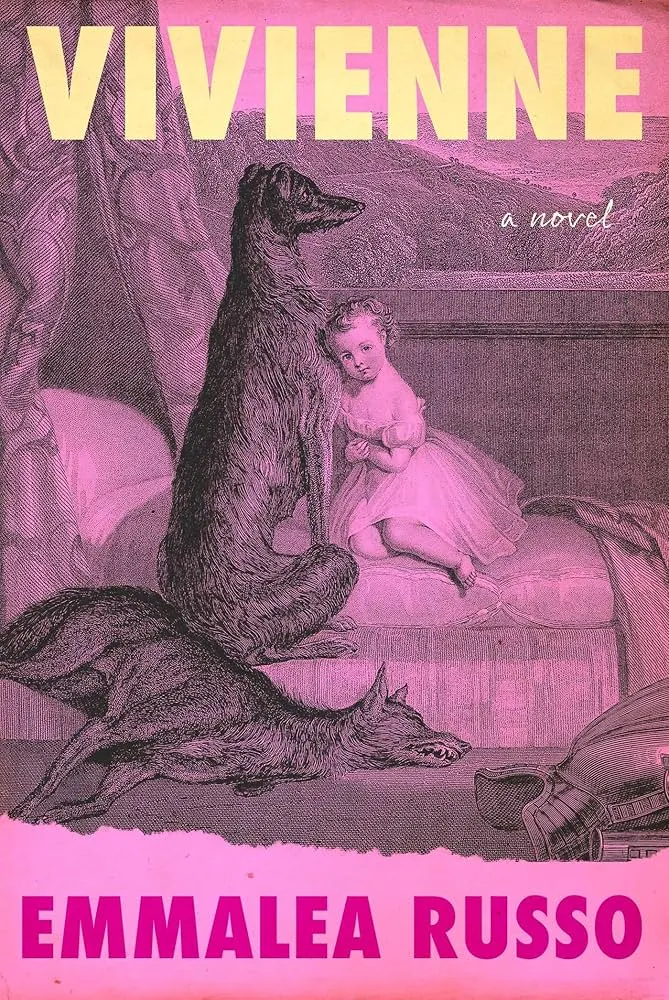
A Review of Vivienne by Emmalea Russo

This title was published on September 10, 2024 by Arcade Publishing.

*SPOILER ALERT* This review contains plot details of Vivienne.

Vivienne sort of fell into my lap, and I am so happy it did. I love a debut fiction novel written by a poet, partially because I am also a poet working on a novel, and because I know even if I don’t enjoy the story, it will always give me food for thought. I am delighted to report the latter was not true: this novel checked nearly all my boxes—it felt almost written for me. It was strange, artistic, lyrical, experimental; most of all, it was full of weird, memorable women, which as I’ve mentioned before, is one of my favorite topics in the world to read about.

Vivienne is a novel that primarily tells the story of three generations of women. The first and the namesake, Vivienne Volker, is an artist who creates surrealist clothing, lover to Hans Bellmer, and the maybe-murderer of Wilma Lang. Did she murder Wilma Lang? Who knows. Wilma could have fallen out of that window on her own, and as Vivienne puts it, was of weak temperament. By and large, the novel doesn’t want to give the reader an answer, and seems to ask instead: does it matter—would it color your perception of her work? Secondly, is Velour Bellmer, Vivienne’s long-suffering daughter and foremost scholar on her work, who lives in a tatty, white bathrobe and spends long hours making photo slideshows of her mother’s clothing, which she posts to YouTube. The last is Vesta Furio, Velour’s seven-year-old daughter, Vivienne’s granddaughter and devoted acolyte. She dresses like her grandmother, speaks like her grandmother, watches Ingmar Bergmann films with her grandmother, and follows her to and from Mass—pausing only to baby the massive family greyhound, Franz Kline. The only nonfemale and nonVolker perspective the novel explores is that of Lars, the owner of a gallery preparing to display Vivienne’s first exhibition in several years. Lars stands in powerful contrast to the Volker women; he is vulgar, pretentious, and overwhelmingly creepy, particularly towards Vesta. These perspectives converge in the days before the exhibition debuts, and all the creepy, sculptural baggage the display brings with it.

The plot is almost secondary in Vivienne—it’s important and it keeps the story chugging along its trajectory, but the real treat was the language and structure. You can tell Russo is a poet. She refuses to play by the rules of the novel; it is part prose, part poetry, part internet forum. Time speeds up and slows down. We float between perspectives seamlessly and skip from prose poem to group chat in a moment’s breath. The best part is it felt effortless; not once did it feel like experimentalism for the sake of it, or like Russo was shoehorning in a format change to be different. All the hybrid moments had purpose, from the “comment sections” creating the blathering cacophony of opinions on Vivienne, to the prose-poetry illustrating Vivienne’s slippery memories of the moments leading up to Wilma Lang falling (or shove) out of that window.

One character I have not seen extolled nearly enough was Velour. I love that tired, irritated woman—trapped in the shadow of her mother holding hands with her daughter, yet somehow content to stay there. Velour, the fabric, is imitation velvet; Velour, the woman, is imitation Vivienne, dressed in terrycloth white to her mother’s, and daughter’s, black shrouds. Always the art critic and never the artist, but too tired to resist anymore. She’ll settle for having sex with her mother’s boyfriend under the grotesque supervision of The Machine-Gunneress In A State of Grace, and eventually selling Vivienne’s comatose body to a biotechnology startup.

Which leads me to my biggest question: the ending. To summarize, at the opening of the exhibit, an angry onlooker throws a brick through the front window of the gallery, which hits Vivienne in the head and puts her into a coma. Vivienne remains comatose for years, until Velour sells her body to a biotechnology startup to be used as a human incubator. The startup aims to breed more artists. This is the point of the novel where I wondered if we were veering too far into the surrealism. I understood the purpose—the gutting of the artist’s humanity in the name of commercial reproduction and capitalist profit—but I wonder if there’s a way this could be explored that didn’t feel so disjointed. I feel this could be achieved with Vesta and Lars in some way. Their relationship made my skin crawl, and I wonder if that effect could be exploited further. I know this may be a stretch but make Lars grosser. Emphasize Vesta’s artistic inclinations more; maybe invoke Vivienne. For me, the icky relationship between them was the clearest representation of exploitation of the artist by capitalist profit: Vesta is a would-be artist, groomed by a pedophilic, disgusting gallery owner.

This ending felt almost sci-fi in its tone, when up to that point, Vivienne was a family drama exploring the nature of art and its consumption. At the last moment, it introduced the larger worldbuilding element of this startup when the novel was largely contained to the Volker household, the gallery, and the three Volker women. It left me questioning and drew focus from the book’s core strengths, its commentary. In some ways, this works; it is incredibly jarring and there is a sudden loss of warmth and charm, but it also left me feeling unsatisfied. There was an experimentalism that was intriguing, but I could not find a solid conclusion to the experiment.

Vivienne is a book about artists, their art, and those who discuss and criticize and obsess over their art. It is about women—as humans, as creators, as mothers, as daughters—and how it all bumps and grinds up against one another. It is about capitalism, and how it needs the art but hates the artist. It is surreal, disorienting, and often stunning. It is sometimes disgusting, often depressing, more often than not both at once—but not always. That is the treat of Vivienne. It is never just one quality, one moment, one voice. It’s like one of Vivienne’s impossible garments; defamiliarized, deformed, and then disintegrating in your hands.

An Interview with Tiffany Wang

Lehm is such an interesting character—he’s the leader of the rebellion while harboring dark truths. Did you take inspiration from any real historical figures? If not, where did you get inspiration for him?

Lehm evolved tremendously throughout my writing process—and while he’s not directly inspired by any real historical figures, it took quite a while to capture the essence of his character. Initially, I had wanted him to be more bumbling to reflect how all organizations—even the ones that seem airtight—can still harbor weaknesses within.

Yet the more I thought about it, the more I wanted to create a rebel leader who pushes the envelope on morality. In many ways, Lehm mirrors Teia, the main character—both are devious, driven, and hungry for power. The two of them mirrored each other as the story went on. Sometimes, it felt like I was simply along for the ride.

You cite Avatar: The Last Airbender and Six of Crows as the main inspiration for Inferno’s Heir. Were there specific characters from each of those series you based your main cast off of?

The main character, Teia Carthan, is inspired by Zuko (ATLA) and Kaz Brekker (Six of Crows). I wanted to create someone who has been forced to do terrible things to survive and yet is unapologetic in who she is and what she wants. I also loved Zuko’s redemption arc growing up, and you’ll see glimmers of that in how Teia changes when she eventually meets Kyra and the other rebels.

Morality, especially in times of unrest, is a driving force for the story. Was there any trepidation when you created a main character who acts more selfishly than most? How did you balance Teia’s thirst for power with her desire to better Erisia?

None. Throughout the book, Teia is faced with a crossroads: better Erisia with the rebels or  seize the throne for herself. One of the most important things I wanted to highlight is the internal turmoil it takes for Teia to reach her ultimate decision. While she is selfish and ruthless at times, Teia is not morally bankrupt. You see her grapple with what she considers the “right” thing to do—and that, to me, is at the center of who she is as both a protagonist and an anti-hero.

Teia and Kyra seem to be foils of a sort—one the idealistic, golden hero, and the other the disgruntled, power-hungry hero. Did you purposefully make them two sides of a similar coin?

Yes, and I’m so happy you picked up on this! Teia and Kyra are deliberate opposites (although I’ll admit I had a much more difficult time writing Kyra, so I’m not sure what that says about me). I wanted to show them as thematically different people who somehow forge an unlikely friendship.

There appears to be a theme of duality with many of your characters. Every character has their perceived opposite, but they’re much more alike than either character believes. Was this meant to speak to the lack of nuance that comes with any revolution, or is this something that evolved on its own?

It’s something that evolved on its own. While I wanted each character to have a unique backstory, the more I wrote, the more I was able to draw connective themes between them, such as heartbreak and resilience. As the characters became closer to one another, these shared points naturally shone through.

If you had to live in one of the Five Kingdoms, which would you pick and why?

I would choose to live in Shaylan, the Kingdom of Water. Here, everyone has at least some connection to water, and I’d love to be able to manipulate the element. Plus, there’s incredible natural scenery in Shaylan, including a famed set of mountains that I’d want to see in real life. While the entirety of Inferno’s Heir is set in Erisia, Shaylan is more heavily explored within Tempest’s Queen.

Do you feel your educational background in communications and international relations had any effect on the way you approach worldbuilding, and writing in general?

While I don’t feel my majors helped as much in terms of worldbuilding, I do believe they improved my writing from a technical perspective. I used to deliberately choose classes that had final essays, rather than exams (I’d immediately start sweating whenever I had to open an exam booklet). All in all, this meant a lot of hours hunched over my laptop, tinkering with sentence structure and word choice. I’d like to think that translated to me becoming a better writer, at least in some capacity.

Are you able to give any hints about what’s next after the Inferno’s Heir series? Are you planning on staying in the fantasy genre or are you considering branching out to other genres?

I’ll be staying in the fantasy space for my next couple books! My upcoming duology is about a goddess searching for her missing sister, who is forced to team up with the last person who saw her—a mortal boy who hates all gods. It’s coming out from Harper Collins in Winter 2027.

You are among the very first authors published at a Bindery imprint. How would you describe your debut experience publishing with Bindery?

It was a great debut experience, though I’ll admit I was hesitant at first. There was an element of not knowing what to expect, especially since I debuted with Bindery’s first “class” of books. But they did an incredible job with marketing and communication, as well as incorporating my vision into the covers of both Inferno’s Heir and Tempest’s Queen (I was able to provide multiple rounds of feedback for both, which I know is a rarity in the industry).

Do you have any parting wisdom for writers wanting to break into the industry?

Always be working on something new. Seriously. This industry is notorious for being slow, and when a project is out on submission (which means it’s sent out to different editors), I used to drive myself insane refreshing my inbox, hoping for news. Now, I make my peace when a project goes out into the void. It’s no longer in my hands, and I distract myself by picking up something new right away.

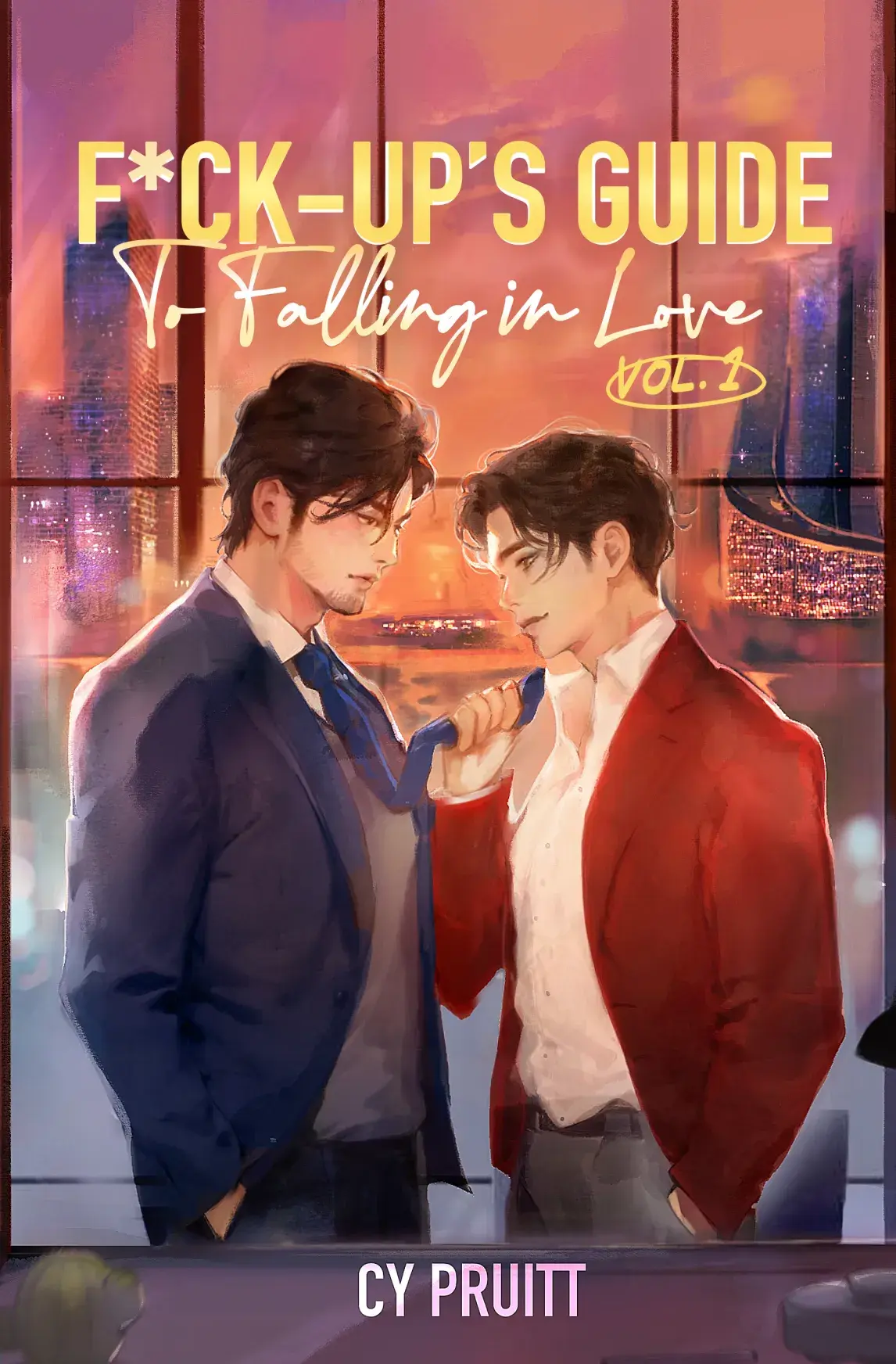
An Interview with Cy Pruitt

How did the concept for F*ck-Up’s Guide to Falling in Love come to fruition?

Writing started as reading—I was reading a lot of novels I loved, but I couldn’t find myself in. In particular, I was looking for works where the first love wasn’t the last, and that didn’t make the last any less beautiful. I looked for so long that it ended up appearing in my mind instead, so I wrote it out and discovered a dedicated group of readers who had the same desire.

The cast of F*ck-Up’s Guide to Falling in Love goes through major transformations throughout the course of the story. Was there a favorite relationship and character you found yourself unexpectedly invested in?

Wei Qiwan was unquestionably my dark horse. Originally, his whole story was just about Wei Qing, but as he grew, his emotional life did too. Although he certainly has his flaws, I think seeing him become happy through this second chance was almost as important as Wei Qing’s transformation. His romance with Long Shouning is unquestionably my favorite unplanned addition.

Within your author notes, you highlighted how some aspects of the plot were different from how you envisioned it originally. Did these changes occur during the planning stage or while writing the draft? How do you adapt to these changes in your plotline?

Most plot changes occurred during the draft, while some occurred based on reader feedback while posting. One of the benefits (and dangers) of serialization is that you get feedback as you post, and I was lucky I had some excellent readers to guide me with their comments and help me embrace the idea of characters as living, changing individuals.

Your fresh writing style brings out the characters and story in such a heartfelt and immersive manner. How did your present style emerge? Are there other styles you wish to experiment with?

For me, the inner world is the true story, and the outer world is just what propels it forward. (I think I have to blame Dante for that.) When reading, I gravitate towards indulgent, elaborate descriptions, and in writing, I have the same compulsion—I want my readers to be able to melt into not just the scene, but the hearts of the characters inside it. I doubt I will ever escape this style, but for the sake of word counts, I would like to learn how to say less with more and leave it to the reader’s imagination. 

F*ck-Up’s Guide to Falling in Love shines light on the importance of belonging, family, and authenticity. With your dad being a huge supporter of your writing career, were there moments in the story inspired by your experiences with him? Were there any moments dedicated to him?

Growing up, I had the habit of deleting all my works as derivative, and it was only my dad and piles of Joseph Campbell books that stopped that. My pen name is a riff on his last name because I really wouldn’t be a writer without him, but his influence is more subtle when it comes to actual story beats. I will say that Lord Twelve, who enables the story but is mostly off-screen, has a lot in common with my dad. When I picture him exasperated with these silly humans but still conveniently arranging their happiness, I think of my dad. 

As with Wei Qing’s and Yue Fei’s story, writing realistic romances and characters with happy endings is the cornerstone of your work. Why is this important to you?

The world is a hard place to live in, and perfection is impossible to attain. We all make mistakes, and we all face injustices out of our control. I want stories where we see familiar characters making familiar mistakes but give them the power and luck to fight back. Fairy tales tell children dragons can be killed; I hope my romances show readers love can be found, and you don’t have to be perfect to deserve it. You just have to be a little brave and treat those struggles as your prologue, not your end.

As an author with a day job, what advice would you give to writers trying to balance those two roles while thriving in both careers?

Find a good boss? (Mine actually bought Guide to Falling and would read it at work, which was hilarious and embarrassing given the content). But on a more serious note, you have to love your characters and consider yourself a writer. Even if it’s just a few words a day, think of your story as a pet you love and want to see grow. Even after a long day at work, you have to feed your cat and play with it a little, right? It’s non-negotiable. Your story is the same. Feed your story. Pet your story. Treat it as self-care and be proud of what progress you make.

How and where can we support you? Is there anything readers can look forward to in the upcoming year?

All my links are available on my modest little author’s site, cypruitt.com. If you’re local to New Orleans or just stopping by, I’m in Blue Cypress Books and also sell via Amazon and my site. This year, I’m hoping to finish a third book with a supernatural edge but a familiar brand of romance!

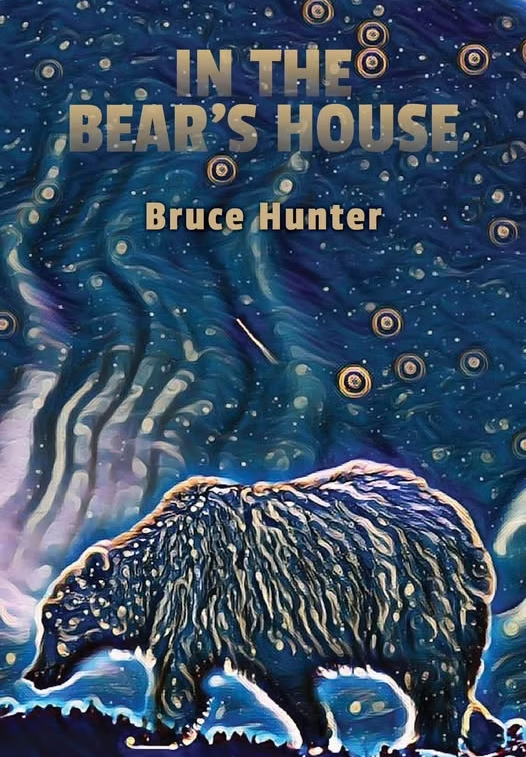
A Review of In the Bear’s House

This title was re-issued in May 2025 by Frontenac House.

My discovery of In the Bear’s House came at an eerily apt time. I started reading it on a plane to Glasgow, flying out of Calgary, Alberta. As I read deeper and flew further and further from my hometown, I realized I was traveling the reverse of the characters in the book: out of Glasgow, into Calgary. As I traversed the highlands on various motorcoaches and taxis these characters wandered the prairies and mountains of Western Alberta, down streets and train lines I walked myself; it was the perfect antidote to any possible homesickness that could have afflicted me.

In The Bear’s House is a semi-autobiographical bildungsroman by Albertan author Bruce Hunter. It follows two narrators, Clare Dunlop and her partially deaf son, William “Trout” Dunlop, as she attempts to raise Trout as a teen mother, and he tries to make sense of a world not particularly interested in making sense of him. Clare grows into herself as not just a parent of four, but a woman—finding work, getting an education, discovering her voice. As Trout gets older, he retreats, both figuratively and literally; he goes to stay with his Aunt Shelagh and park ranger Uncle Jack, who’s also partially deaf. On their homestead in northwestern Alberta, he truly meets the land, and its people, for the first time. Hunter explores growing up in a land and country still growing up itself, finding place, finding home, and finding self. 

Though originally published in 2009, Frontenac House reissued In The Bear’s House in May 2025, and I can’t think of a better time to do so. Calgary is changing, again. From “Feel the Energy” to “The Blue Sky City,” we as Albertans, as Calgarians, are trying to decide who we are going to be in a rapidly changing world. Albertan writer, academic, and someone I have been lucky enough to learn from, Dr. Aritha Van Herk, posits that Calgary, and Alberta, are places that don’t yet know themselves, and may never know themselves. We have no clear and recognizable identity, at least not yet. This state is one Hunter captures exceptionally well, particularly through his two narrators. Trout is a boy born in the city, but is drawn to the traditional, rural ways of the land. He finds solace chopping logs, maintaining access trails, snowshoeing with Jack, and tending the garden with Shelagh. In the wilderness his hearing aids are not overloaded; he finds a sense of independence and peace he was never afforded in the city. This representation of disability is a wonderful breath of fresh air. Hunter, who is deaf himself, recognizes Trout’s partial deafness as a fundamental part of who he is, but allows Trout to find competences, ways of knowing, and an identity beyond that. Meanwhile, Clare is initially set up as a traditional stay-at-home wife and mother but slowly sheds that role and becomes increasingly cosmopolitan and outgoing. She emerges from her shell attending night classes, befriending local Greek immigrants and a queer couple, even re-involving herself in the local literary scene after her own poetic inclinations were sidetracked by the birth of Trout and his three sisters. Her journey was its own coming-of-age story, and so often mothers in fiction, and reality, are not afforded that degree of agency. Clare is a loving and supportive mother, but is also a voracious reader of poetry, an adventurous chef and foodie, and a committed peripatetic. 

Hunter also captures the variety of this city, and this province extremely well—every one of these characters, I have met before. With Alberta, Calgary in particular, stories can become all cowboys, teepees, and oil men quickly, and Hunter appreciated those elements are only one part of the story. He highlights everything from Trout and Jack’s deafness to local Indigenous groups, to its thriving Chinese community, and even the diversity of the land. Again, Hunter hones in on the idea that the Albertan identity is patchwork but also recognizes there is no way around it. The bell cannot be unrung, so it is up to us to sort it out.

One facet I do have questions about from In The Bear’s House is how Hunter explores Alberta’s local indigenous population: the Kainai, Siksika, Piikani, Tsuu T’ina, and Stoney Nakoda, consisting of the Chiniki, Goodstoney and Bearspaw. He consulted with local elders and clearly did his research, which I commend, but I wonder about the storytelling choices made. As Trout spends time with Uncle Jack and Aunt Shelagh, he meets Carrie Moses and her grandfather Silas, based on real Goodstoney leader Silas Abraham. They invite him into their tribal traditions—the Sun Dance, the Ghost Dance, and their burying grounds. As Trout becomes familiar with their ways of living, the construction of what is implied to be the Bighorn Dam threatens their land—particularly their burial grounds—which will flood upon construction. This point never achieves resolution in the novel. From both my own research and living in Alberta my whole life, the Bighorn Dam was indeed completed, resulting in the creation of the Abraham Reservoir; horribly enough, named after Silas Abraham, who opposed its creation his entire life. I wish the Stoney were afforded some degree of closure narratively—it doesn’t have to be revisionism, but about three-quarters through the novel that arc was dropped, and I found it jarring. Interpreted good faith, it felt like the story moved on from them; in bad faith, it felt like it forgot about them.

The title of this novel is pulled from a quote from Hunter’s Great Uncle John Elliot, who served as the inspiration for Uncle Jack: “We are in the bear’s house now. Mind your manners.” To fully grasp this story, one must approach this novel in the same way. It is firmly rooted in our land, our people, and our literary tradition—some learning may be required (I recommend Robert Kroetsch, Aritha Van Herk, and Joshua Whitehead), background viewing even more required; ideally out of a car window, at the Three Sisters Peaks, or perhaps the prairie on the way to Drumheller. As I said, this re-issue couldn’t have come at a better time; as we re-appraise what to do with our land and how the people on it can live, fully and with respect, In The Bear’s House is an important reminder that we are not just the oil country, the Blue Sky City, or the home of the Stampede, but we are, first, in the bear’s house.

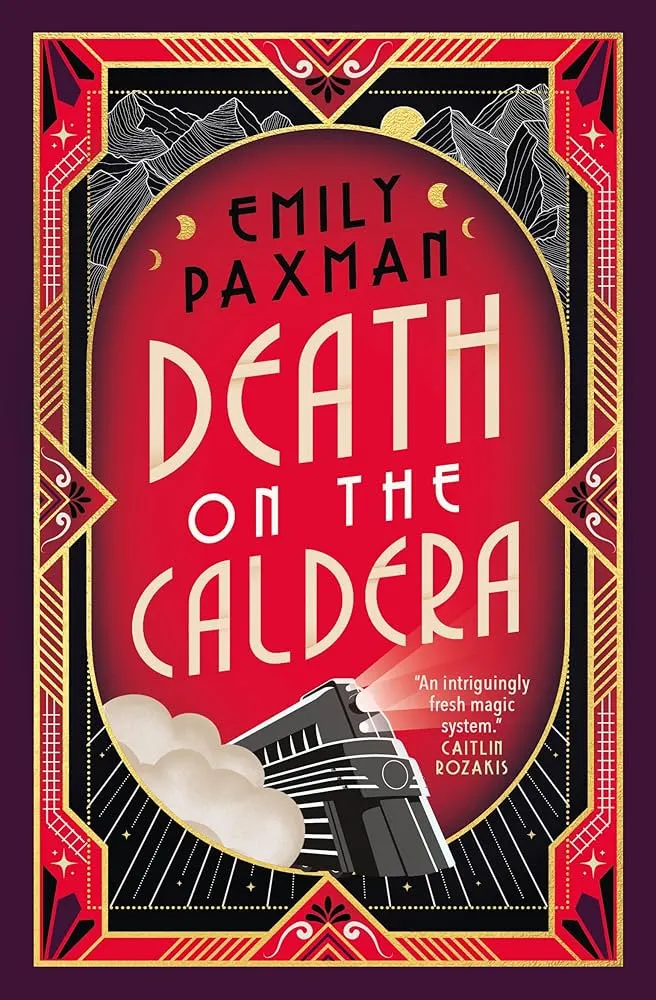
A Review of Death on the Caldera

Published on June 17, 2025 by Titan Books.

*SPOILER ALERT* This review contains plot details of Death on the Caldera.

“Never trust the moon. Who can trust a woman with two faces?”

It’s Orient Express meets fantasy, writes publisher Titan Books in their blurb for Death on the Caldera. This premise alone was enough to spark my interest in Emily Paxman’s explosive debut novel. Set in the sprawling Balterian Empire, an ensemble cast hurtles through the titular caldera on a luxury express train. With each passenger comes hopes, dreams, and interpersonal affairs; and as night falls, things are astir with intrigue. But their rollicking adventure soon comes to a halt when an explosion in the night veers them off the tracks.

The survivors quickly discover the engine hasn’t just been sabotaged—it’s been somehow turned to stone. Suspicions simmer as fingers are pointed and names are blamed. What brings things to a raging boil, however, is the discovery of the conductor’s body. A cut-throat, unceremonious murder scene. To the survivors, the conclusion seems straightforward: there’s a witch hidden among them. Wild, wily women with two faces, long thought to be banished from society. It’s a mystery far too mystical for a mundane murder. Her wicked magic destroyed the train, stranding them in her territory . . . and now she’s coming for them all. It’s all up to the Linde siblings—Davina, Kellen, and Morel—to find her before she claims her next victim.

Yet in true Poirot fashion, ce n’est pas si simple. Especially not for Davina, who quickly discovers there’s more than meets the eye—not just to this case, but her own identity.

I’ll be the first to admit I’m picky with fantasy. To me, each series is a commitment: an entirely new world map, magic system, and lore to memorize. But there’s only so much medieval fiction I can read before stories blend. So, when I pick up a fantasy novel, I ask a few preliminary questions: what makes this world unique? Why should I invest my time in this story, these characters? What makes the magic worthwhile? While Caldera’s blurb drew me in, I admittedly still had reservations—but never have I been so delighted to be proven wrong.

Caldera’s greatest strength is its worldbuilding. An eclectic blend of steampunk and wild magic sets the perfect scene for this Golden Age crime-fic tribute. Entwined in these mysterious affairs are two established magic systems: volchemistry and witchcraft. The depth with which Paxman integrates these systems into her universe was a pleasant surprise. The former, combining alchemy and geology, is universally learnable; no innate talent is needed. This also means, however, that volchemical education is deeply embedded in socio-political hierarchy. Only the rich or educated have access, and even still, barriers remain for women—undoubtedly connected to a nationwide contempt for two-faced witches. To some they fascinate, while to many they possess dangerous, potent, anomalous power. Both create complications when fingers are inevitably pointed to women, as well as Renchans, their historical allies. But this barely scratches the surface of Paxman’s multivalent new world. I was impressed by her thoughtful interweaving of lore and story. There were no jarring expository paragraphs, nor did the mystery feel disconnected to its setting. It’s rare for a debut to have such established ideas, and I left Caldera eager to explore more.

A menagerie of passengers provide various perspectives on Caldera’s world. The Linde siblings, secretly Halgyrian royals, masquerade as civilians as they journey home to their dying father; mother-daughter duo Genna and Rae search for greener, less complicated pastures; Ambrose Carey and his confidant Emeth travel in alliance with the Balterian Lords’ Council; and Renchan stowaways Dalton and Merri want nothing but warmth, shelter, and a chance at life. Each situation hammers home that it’s not just the caldera that’s dangerous—it’s the continent itself. Davina’s identity conundrum, for example, ripples throughout Caldera as a consequence of inequality. Not only must she navigate this murder-mystery, but also the mystery of her newly discovered witch-self. Her narration reflects her desperation to survive, as this revelation doesn’t just make her a suspect; it puts her at risk of death or imprisonment for merely existing. Words are not minced when emphasizing how unfair this world is, and each P.O.V. provides a unique insight. No perspective felt out of place.

Through these P.O.V.s, Paxman creates a solid throughline for Caldera’s core mystery. I firmly believe any good whodunnit shouldn’t hinge on a twist ending; instead, it should rely on a build-up of clues that reader and detective alike piece together. Agatha Christie mastered this, and Paxman follows suit in this formidable homage. I found myself flitting between suspects as I often do reading Poirot. Diving into the villain’s mind felt so delightfully sinister; though it’s emphasized, too, that their actions were simply a consequence of their harsh world. I won’t say much else for fear of spoiling—but Paxman’s fresh, fantastical spin on Christie’s formula is itself a reason to read this novel.

“Think, girl. Who did you see washing their hands of the crime?”

With such a sprawling cast, however, I thought certain characters weren’t given their due attention. Some deserved more development beyond their relationships; Morel often felt overshadowed by his siblings, and Genna less individually fleshed out than her daughter or ex-lover. Others were rushed past; Davina and Ambrose’s whirlwind romance moved a touch too quick for me, and I wished Dalton, who spends most of the novel imprisoned, had more narrative presence. In saying this, I acknowledge what a feat it is for a debut to feature such a complex ensemble. Integrating these vignettes into Caldera’s mystery and worldbuilding is no small task! And when written well—I refer mainly to the Halgyrian trio here—these characters truly shine. For later chapters in Caldera’s world, I believe striking a balance between character and plot will be key.

Death on the Caldera paints a magnificent picture of smoke, sulphur, and secrets, in which everyone is interconnected. Steampunk and witchcraft intersect to create a striking volcanic backdrop. But beyond the caldera exists a world in which only the privileged are safe from prejudice, and its repercussions reflect on each character’s potential motive. Twists and turns dot throughout the tale, while never losing sight of its core mystery; it really hits that sweet spot between lore-heavy and story-driven. Suffice it to say, I was spellbound by Paxman’s promising debut. It’s ambitious, dark, and strives to set itself apart. I’m excited to see what comes next.

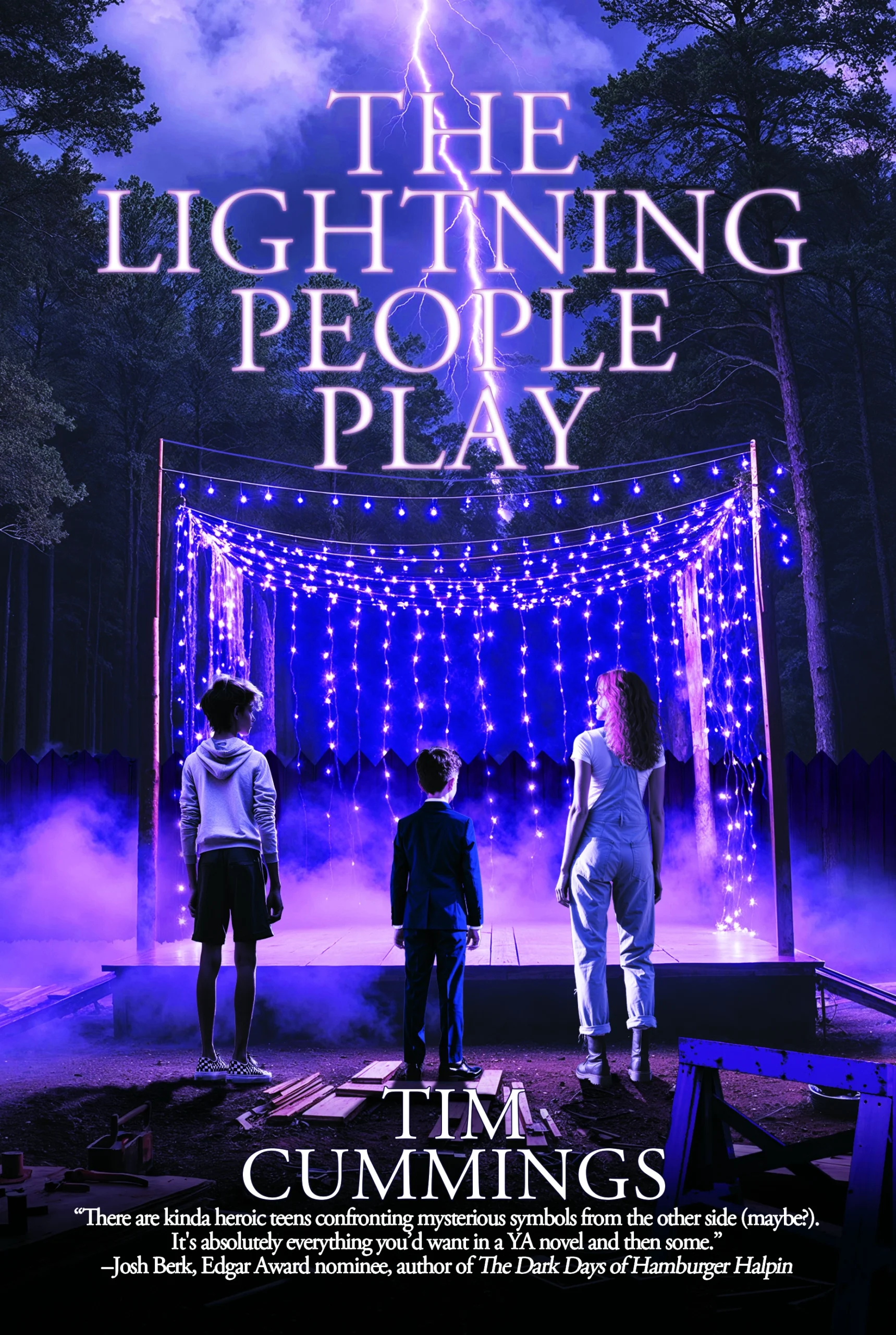
An Interview with Tim Cummings

Both of your novels feature specific communities that often carry a bad rap. What draws you to explore misunderstood people like the Goths and theater kids?

I am both of those. I have been since adolescence. So, they’re worth exploring and spending time with because I can bring truth and clarity to goths and theatre kids. How awesome.

In addition to exploring the world of theater kids, The Lightning People Play features a character who has epilepsy. Why this diagnosis for Baxter? How did you ensure you were representing the realities of this illness accurately?

Well, I lived it. My brother Matthew had grand mal seizures his entire life. Sadly, we lost him in the summer of 1997 when he was twenty-six due to complications from a grand mal seizure.

We shared a room when I was a kid, and he used to have tremendous seizures in the middle of the night. I always felt there was some hidden magic happening in that room, a door to another world, whether that was some kind of preventative trauma response, or my subconscious at play, or something else.

Ancient Greeks believed epilepsy was a “sacred disease,” and correlated it with the divine. Some Meso-American cultures believe epilepsy comes from a struggle with the afflicted person’s animal soul following a battle between the naguales or spirits who serve the forces of Good and Evil. So, there is a lot of magical thinking around it, and as witness to it for so many years, I understand that and I have felt that.

This book allowed me to transpose those memories into something mystical and beautiful by utilizing my involvement in theatre for over forty years as a framework to tell a story about the two young brothers, Kirby and Baxter; about creative collaboration among friends; and an important story about a struggling family that figures out how to deal with the affliction. 

There are many ways a person can be afflicted with, and manage, epilepsy. This book explores ways that fit this particular family at this particular time in this particular set of circumstances. But it’s going to be different for everyone. The seizure scenes in this book, though drawn from real life, are also not going to look like other epileptics’ seizures. And they’re on a journey to figure it out, with mistakes made along the way, which is how it really was for my family, and is for this one.

Baxter’s older brother, Kirby, is determined to raise money so they can get Baxter a seizure-alert service dog and decides to put together a play with his closest friends. You have an extensive theater background. How did that influence the way you approached writing the theater-related elements of the novel?

Theatre means a lot to me. I’ve been doing it since I was eleven years old. It helped me. I was a bullied kid, assaulted and harassed for being gay. Well, I mean, back then I was not “out,” obviously, because I was a child and didn’t even know what that meant yet, or what was even going on inside me. But I was, for the people around me, “weird” and “effeminate” and “sensitive,” so they tortured me. We’re seeing the same thing happen now with trans kids.

Theatre empowered me. There was a teacher who intuited I had talent. I had no idea I did. Once I discovered it, that I had it in droves, I was off on my journey. The most satisfying thing about it back then was that it was a very rebellious act. It felt kind of punk rock, in hindsight. It angered and frustrated, annoyed and infuriated all the kids around me who had been bullying me and making my life really difficult. To see me on stage steeped in this power, this creativity and sense of play, really angered them. That made me feel so good. Theatre was a kind of f**ck you to the bullies. I loved so much that they hated it. (It changes later in life, of course. Once you enter the professional realm, it feels like a popularity contest.)

In the book, the kids have a theatre mentor named Thaddeus Krasinski. He runs the junior high and high school theater programs. He is a professional working actor and director. He sets the protagonist off on his journey. He’s a loving, supportive, idiosyncratic character and is a conglomerate of so many integral theatre teachers and mentors I encountered along the way. He also has an interesting theory about theatre and being an artist in society. That character in particular was a useful, layered, beautiful vessel for approaching the theatre-related elements of the novel.

At its core, the novel is a love letter to explore and celebrate creativity, neurodivergence, friendship, and family. Why were those elements so important for you to highlight in the novel?

I’ve always been creative, wildly and unpredictably so. And so have the bulk of the people around me in my life. It is a driving force, and as such, a great narrative partner. I wanted to explore it through the eyes of teenagers who are doing it for a specific reason: to help someone.

Neurodivergence and neurodiversity need more representation and exploration. Kirby manages a mild case of OCD (though he is not diagnosed) and the events of the book aid him in managing it better; Mara Gecco utilizes her own unique way of speaking and communicating; Bax, of course, is navigating his epilepsy. I experienced a lot of neurodivergence growing up, not only because of my brother but from being around so many artistic, talented, and creative people.

Friendship, yes. I’ve had the same two best friends since I was thirteen years old. And all through my life, as an actor and a writer, I’ve built community and found family through the closeness that results from doing plays, and from writing. Friendship is a huge part of Alice the Cat as well.

The family story in this book is one of acceptance. Not everything works out the way you want it to when it comes to parents and siblings. But you don’t have to lose the love.  

Were there any novels, movies, or plays that influenced or inspired you while writing The Lighting People Play?

Energetically, probably Something Wicked This Way Comes by Ray Bradbury, A Wrinkle in Time by Madeleine L’Engle, and The First Rule of Punk by Celia C. Pérez. I don’t know of other stories that explore these themes specifically utilizing epilepsy and theatre as their framework.

I am a voracious reader and am always being inspired by books, but I’m also content with this one not having any obvious comps. Not everything needs to be exactly like everything else. Gasp. Oh my God, how controversial. But, I mean, I think it’s refreshing. Let it be new.

How did writing this novel compare to writing your (award-winning!) debut novel, Alice the Cat? Were there any lessons you learned?

Alice was a good book to cut my teeth on. I had a great time with it, though I never expected it to be published. I wrote it in grad school and it felt fecund and unhinged, fun and funny, and loud and weird. As much as I wanted to try to adhere to the industry’s dictates of kid lit (and boy are they stringent), I also didn’t want to adhere to any dictates at all. And I think the book reflects that in its subversive playfulness. Is it a perfect book? Nope. That is what I love about it. It left me so much room to grow. If books were perfect, would we need to release about several thousand of them a day? I try to stay focused on process. Process is better. Process is where you get to be the artist.

We’re lucky to have published your short story, I Am a Person, in our Resurrection issue! Has your writing and editing approach changed since then? If so, how?

Still so proud of that, thank you F(r)iction! I loved inhabiting her voice. The first whispers of that story first came to me back in 2003 when we went to war. Again. War is such a constant. We know its voice so well. It’s magnified and voluble. With I Am a Person, I wanted to amplify and explore a different voice, that of a woman whose husband was fighting during WWII and who seems to have disappeared. I wanted to draw attention to a different kind of violence, the quiet kind that comes from dealing with war back home, in the kitchen, as a single mother. A contrast to the brut, in-your-face male violence we see intensified on the battlefields via the media.  

The experience working with F(r)iction on that story was wonderful, and palpable, because it was obvious to me that the team loved the story and wanted it to be amazing. So, editing it felt like a collaboration.

What advice would you give to aspiring writers looking to get into the publishing industry?

Publishing is bananas. Start small. You don’t need a deal with the Big 5. Let that come later. There are so many small indie traditional publishers out there who want to support writers. You don’t need an agent to get a deal from one of them (though it helps because an agent can handle the contract and ensure the writer is being protected; publishing contracts are bananas as well).

Focus on writing the best book you can—that is what you have control over. Write with people. Join writing groups. Take writing workshops. I run several private workshops a year and I love doing it. I also teach for UCLA’s Writers’ Program and I love that too. It builds community. You have good, smart, kind but discerning eyes on your work, and that’s important.

Know that you dare to make a difference when you put anything out into the world as an artist. Accept that you, and what you write, is not for everyone. Put it out there, and keep going. Become a conscientious literary citizen. Your voice is important, your story is important.

How can we find and support you? What’s next on the horizon for you?

Best way to support a writer is to read their stuff. If you love it, amplify it. Review it. Reach out to the author. Even if you don’t love it, chances are you know someone who might. So, tell them about it. Give a book a fighting chance.

I am on Instagram and I have a website. I do a lot of events, and appearances.

Next up is something way more seditious. A work of adult literary fiction about some very abnormal stuff that happened in New York City after I graduated from NYU. I found myself lost in the darkly glistering underworld of the NYC club scene that was immensely popular at the time, (mid 90s), the Club Kids, designer drugs, outrageous fashion, alternative identities and wonky monikers. All of it pre-internet (how WILD to think about that), all of it so uninhibited and unpredictable—and often nefarious—all of it forever lost to the history of a city that can never go back to that time. It’s an unexpected love story, really, but a cautionary tale about how artists can sometimes delve too deeply into their work and not find their way back out again. It explores the the cost of losing your soul to your art, and points toward ways to get it back.

Five Dystopian YA Books to Empower You in Times of Political Uncertainty

Five Dystopian YA books to remind you that even in the darkest days, hope prevails. We’re stronger together.

Political uncertainty is an inevitable part of life. We all experience a wide array of emotions, formulate different opinions about what’s right, and carry traumas from past hurts that shape us. But through the power of storytelling, we’re able to share our experiences, find commonalities, and speak out against injustices to create a brighter future. While these five dystopian young adult (YA) novels feature heavy themes, they teach readers the value in thinking critically about social issues, cultivating empathy for others, and the resilience of the human spirit. 

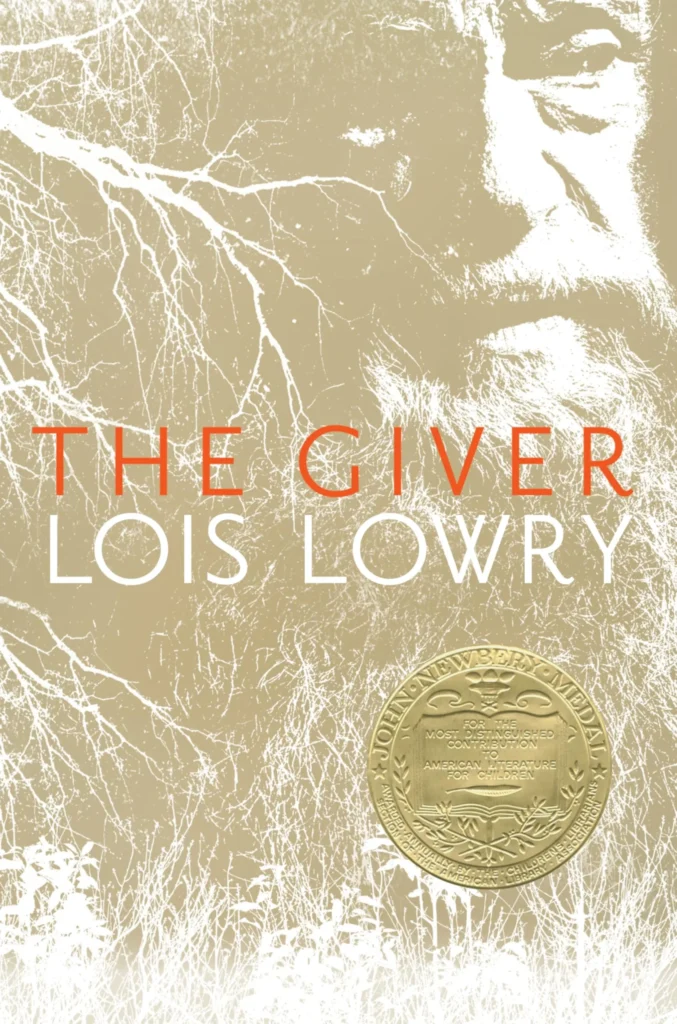
The Giver by Lois Lowry

“Of course they needed to care. It was the meaning of everything.”

Long before the release of Pixar’s Inside Out taught us the importance of feeling our emotions, there was Lois Lowry’s The Giver. Often introduced to middle school students experiencing the rapid changes induced by puberty, The Giver teaches kids and adults alike how to celebrate their individuality and treasure their memories, including the painful ones. 

The story follows Jonas, a twelve-year-old boy with BIG feelings, who’s part of an idyllic society called “The Community.” Everything is precisely orchestrated in The Community so there are no arguments, fear, or inequality, but at the steep cost of free will and memory. During the Ceremony of Twelve, Jonas is selected for a special assignment as the “Receiver of Memory” and becomes the apprentice of the peculiar old man known as “The Giver.” Throughout his journey with The Giver, Jonas soon discovers the importance of choice and the power of memories The Community had forsaken.

One of the lessons The Giver teaches Jonas is the need for human connection. The Giver says, “The worst part of holding the memories is not the pain. It’s the loneliness of it. Memories need to be shared.” By sharing our lived experiences—the joy, the sorrow, the frustration, all of it—we assign meaning to the world around us. Ultimately, The Giver emphasizes the beauty in having the choice to experience the fullness of human emotion and using our empathy to stand up for others against injustice. 

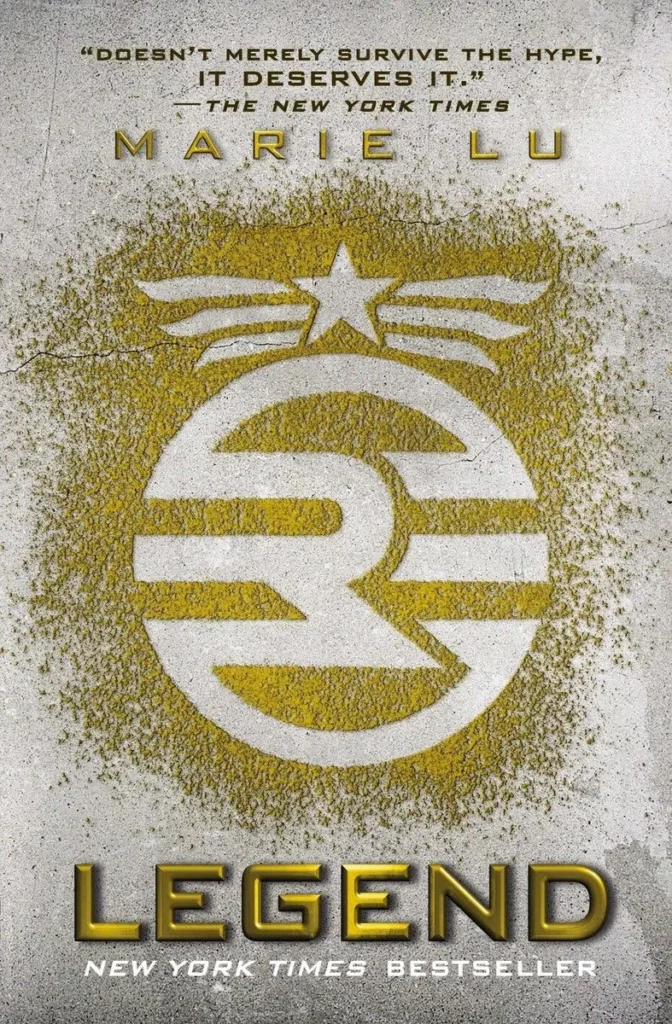
Legend by Marie Lue

“Each day means a new twenty-four hours. Each day means everything is possible again.”

Although set in a post-apocalyptic United States, Legend depicts a reality not so different from our own. Revolving around the consequences of blind obedience and socio-economic inequality, Legend highlights the danger of a nation concentrating its power in the hands of the wealthy.  

June Ipiris, born into an elite Republic family, is a patriotic and passionate military prodigy committed to defending her country at all costs. Daniel “Day” Altan Wing, born to a poor family in the Republic’s slums, is intelligent and loyal, risking his life to protect and provide for his family; he’s also the nation’s most wanted criminal. When Day and June’s paths cross over the murder of June’s brother, the two clash in a high-stakes game of cat and mouse that exposes more than they bargained for, including how far the Republic will go to guard its secrets.

A book about socioeconomic disparities may not seem “empowering,” but the characters’ mature reactions to tragedy make Legend a must read. Although June is filled with grief and rage, and Day is framed for murder, both protagonists eventually choose hope over revenge. Day says, “You live in the moment, you die in the moment, you take it all one day at a time. You try to walk in the light,” meaning that we must decide to “walk in the light” of love and hope daily for a more equitable future instead of being consumed by anger and darkness over the past. 

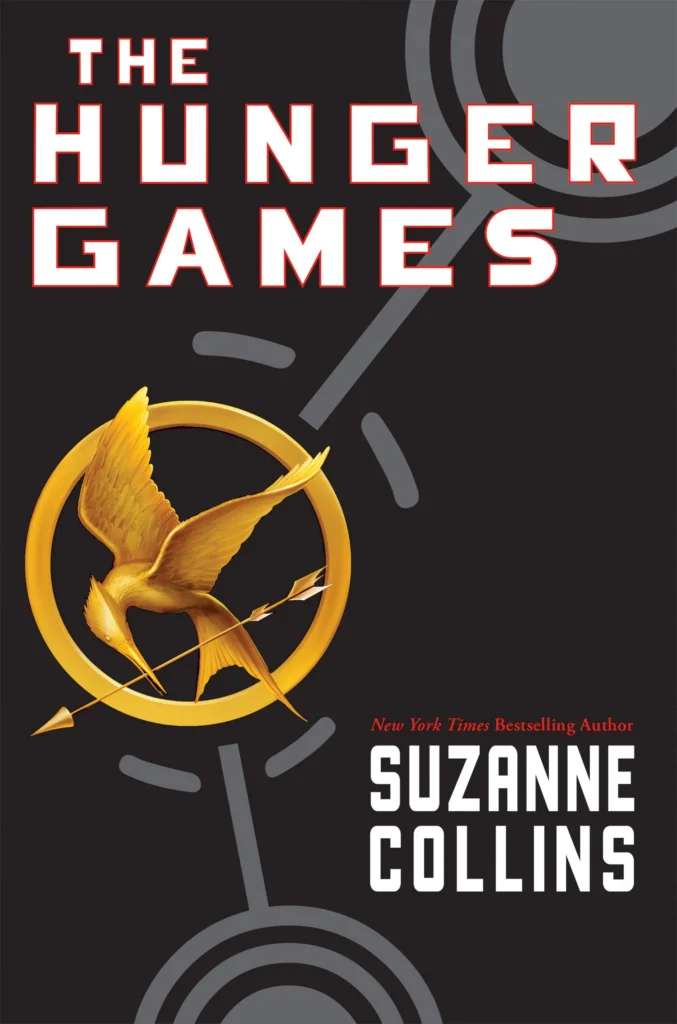
The Hunger Games by Suzanne Collins

“Kind people have a way of working their way inside me and rooting there.”

The Hunger Games is often challenged due to its gruesome violence against children and young adults. However, if the brutal games themselves were all the book was about, then it wouldn’t be the global phenomenon the series is today. Instead, the Hunger Games uses violence to critique our obsession with media and our complicity in allowing authority to go unchecked. The novel forces us to grapple with the difficult question of how far we’re willing to exploit others as a source for entertainment and allow our fear to prevent us from speaking out against the mistreatment of others. 

Panem, formerly the United States of America, is controlled by the elitist Capitol. To punish the surrounding twelve districts for their past rebellion, the Capitol demands two tributes—one boy and one girl—to fight to the death in the annual Hunger Games until only one tribute remains. When sixteen-year-old Katniss Everdeen volunteers in place of her sister, she relies on her sharp survival instincts to unwittingly become a contender and fans the flames of rebellion smoldering in the districts. 

Beneath the barbarity of The Hunger Games are sparks of human kindness found even in the most inhumane situations. While aboard the train to the Capitol with her fellow tribute, Peeta, Katniss reflects on his undeserved kindness toward her in both the past and present, as she states, “Kind people have a way of working their way inside me and rooting there.” In the moment, she fears Peeta’s kindness as a form of manipulation, but throughout the book and trilogy, it’s the moments where human goodness shines in the face of intense hardship that keep her alive. The Hunger Games reminds readers we’re at our strongest together and collective action is the greatest remedy for counteracting abusive political regimes.

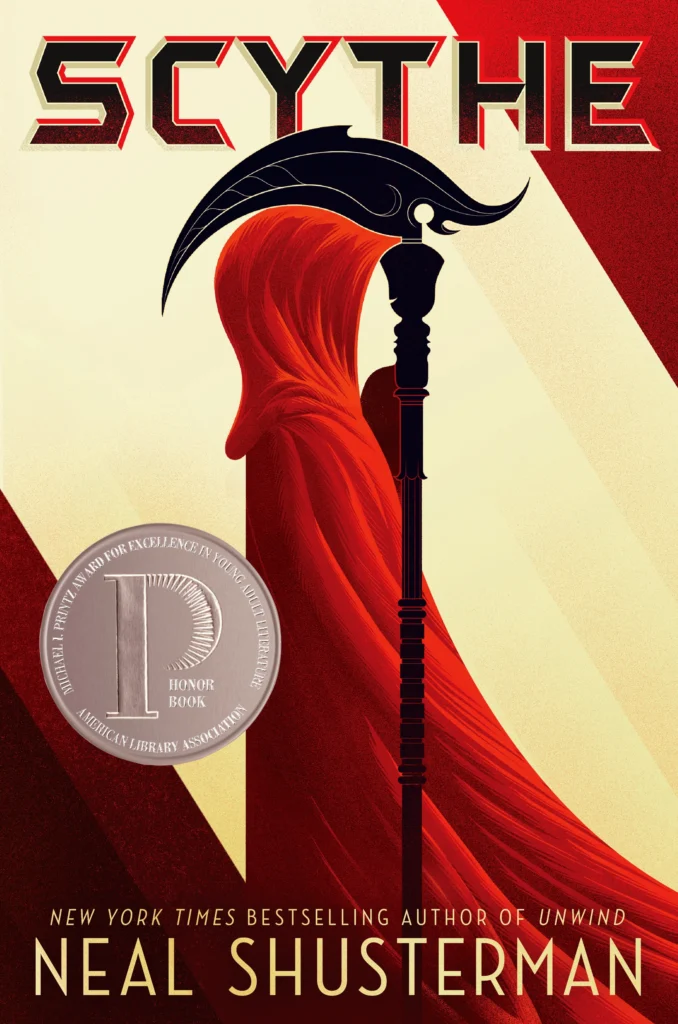
Scythe by Neal Shusterman

“My greatest wish for humanity is not for peace or comfort or joy. It is that we all still die a little inside every time we witness the death of another. For only the pain of empathy will keep us human.”

What would it take to create a perfect world without death, disease, and war? Neal Shusterman ponders the question in Scythe through the creation of MidMerica, a futuristic utopian society with a wicked underbelly governed by an AI overlord. The epistolary and philosophical novel explores themes like compassion, the meaning of death, and the ethical implications of technology. Through these themes, Shusterman urges readers to reflect on how they assign value to a life and why. 

Scythe tells the story of two reluctant teen apprentices, Citra Terranova and Rowan Damisch, who must master the “art” of gleaning lives as Scythes to keep the population in check. However, while training under the Scythedom, Citra and Rowan quickly learn that living in a perfect world comes at a hefty price.

At the heart of Scythe is the lesson to embrace the complexity of the human spirit. Rowan reflects, “Death makes the whole world kin,” demonstrating how it’s not our appearances, power, or wealth that make our lives valuable but our mortality. Scythe encourages us to accept the darker sides of humanity while understanding we’re also capable of great acts of creativity, love, and perseverance. We must decide which side we focus on. Only by clinging to our “pain of empathy” to “keep us human” can we fight off the darkness in the world rather than letting it destroy us. 

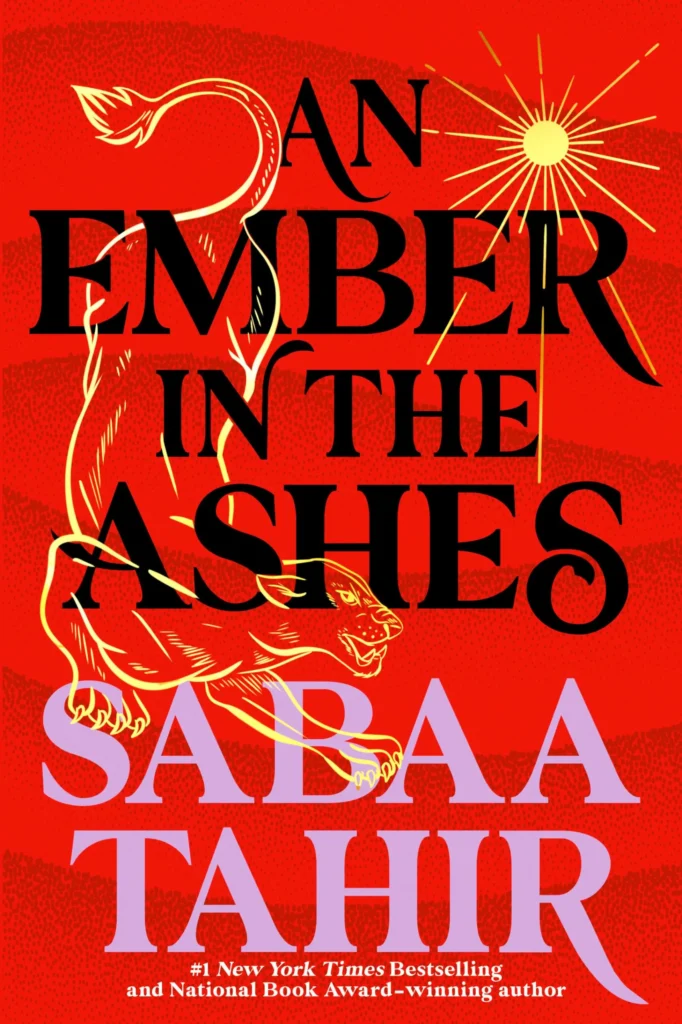
An Ember In the Ashes by Sabaa Tahir

“When the fear takes over, use the only thing more powerful, more indestructible, to fight it: your spirit. Your heart.”

An Ember in the Ashes is a slept-on series that deserves as much hype as YA dystopian giants like The Hunger Games, Divergent, and The Maze Runner. Bursting with vivid world-building, a diverse cast of characters, and heart-pounding stakes influenced by global events, An Ember in the Ashes asks the question of “Why do we justify treating each other so cruelly?” The novel focuses on the harsh daily realities of oppressed people depicted through the Martial Empire’s militaristic reign over the Scholar class. 

Laia is a Scholar in the Empire. She keeps her head down and does as she’s told, knowing defiance means death. But when her brother is arrested for treason, she joins a group of rebels to rescue him. Her mission? Spy on Blackcliff, the Martial Empire’s greatest military academy. There, she meets Elias, the school’s strongest soldier. When their paths intersect, they find that their decision to help each other will change the Empire forever.

Sabaa Tahir often jokes about drinking her readers’ tears because she’s constantly putting her characters through hell and back to demonstrate humanity’s resilience. In An Ember in the Ashes, Laia is advised that “When the fear takes over, use the only thing more powerful, more indestructible, to fight it: your spirit. Your heart,” representing how fear is strong, but the tenacity of the human spirit is even stronger, especially when we’re fighting for something we love. The most inspiring aspect of the bookis how the journey of Laia and Elias depicts empathy as a strength, not a weakness, in a cutthroat world constantly trying to strip it away from them.

* * *

Through five powerful and timeless stories, these authors share three key methods for preventing political corruption and injustice from taking root in our society.

First, we need to collectively keep those in power accountable for their actions, just as Katniss rallied the rebels against President Snow in The Hunger Games trilogy, and Day and June took a stand against the Republic in Legend

Second, we should remember we have more in common with each other than differences and to treat every life with respect, as we learn from the Scythedom in Scythe and Laia and Elias’s relationship in An Ember in the Ashes

Third, we’re born with powerful emotions that are a gift, not a curse. Our innate sense of empathy will guide us to a more equitable world, like how Jonas learned to harness his empathy to drive change in The Giver

Each of these novels provides a dire warning to pay attention to the darker sides of humanity while also reminding us to cultivate hope through compassion, empathy, and love for one another. When we remember our shared humanity, we’ll be capable of creating a true utopia in our world instead of a dystopia. 

Discover your next great read and spark your imagination by exploring more free creative work on the F(r)iction Log!

Delineation

I press tape along the molding. Moonlit Beach goes down

this new border. Just a whisper

of chartreuse on the baseboards. When I’m done,

there will be no memory of wood paneling. Still the walls

throw their shadows through the paint.

A child’s head, once emptied of its skull, folds like clay

on the floor of a blackened hospital. Another keeps his skull

but not his scalp.

The great Gaza sky settles

into homework toy car rack

of wedding veils. Legs torn off at thigh and knee

and hip—

stop—

globs of paint I wipe with thumb attached to hand,

my arm, my torso, stop—look, there’s morning

sun in here, a gold lamp; the internet will cooperate

when I make it. When I get done drawing this margin.

My crisp line. My clean rollers. Bristles left on the wall—

nice morning

but for those, and for

the mother,

crawling into a hospital bed with her dead son, yellow and purple

with bruising—stop—I will pretend

not to notice the flies or the way

the boy’s sister howls

his name to the wind—

Conversion

I moved south for college and began working part time at a nonprofit dedicated to forest preservation. My department was responsible for converting the field reports into numerical data. Aisha was one of the field workers. Her reports were thorough and well written, often containing poignant notes about the forest creatures. I was always sad to distill her narratives. She’d write: On four separate occasions, the camera observed a gnome hand-feeding acorns to a family of squirrels. The mother squirrel filled her cheeks with the nuts and brought them back to a hole in her tree. Two shining pairs of eyes peered out to watch her ascent and descent.

I’d write: Daily sightings: One gnome; three squirrels.

When I invited Aisha over for dinner one Friday night, I was surprised when she accepted. I made us spanakopita with parsley I’d grown in my flower boxes. She returned home with enough leftovers for lunch the following day. We began having dinner every week, sometimes twice a week.

One Saturday, Aisha texted asking to have dinner. When I picked her up (she didn’t have a car), I noticed she was vibrating in the seat next to me. Her thin frame blurred at the edges.

“Aisha,” I said.

“No, no, I’m fine,” she said quickly. “It’s silly, really. Just a man. A guy.”

I kept my face forward. Aisha seemed too, well, young to be seeing anyone. “From work? How long’s it been going on?”

“A month.” She scratched the back of her right hand over and over with her thumb. “He’s not from work.”

I said nothing; I’ve always had the ability to call forth weighty silences. Once, arguing with a lover, she asked me how I kept my quietude so well hidden yet readily available, like a tightly folded blanket.

“I don’t like to tell people things until they’re serious,” she said. She was looking out the window, still scratching.

“Ok, well, where’d you meet?”

She hesitated. “In the woods.”

The tires thu-thunked over a crater in the asphalt. I asked, “How?”

Aisha proceeded to tell me she’d been in the woods last month to quantify an as-yet unidentified dropping, when she heard a sound like a woodpecker. But the pitch was too tinny, isolated. She followed the sound and found a naked man, standing in a hole in the ground. Rather than run away or call for help (as I surely would have), she asked what he was doing.

“I’m trying this out,” he answered. He had brown skin and black eyes with hardly any sclera exposed.

“Trying what out?” She asked, but he didn’t answer. He continued to stand upright in the hole, holding his back impossibly straight. He made no move to leave or say anything more.

Aisha left the woods and consulted her notes. A centuries-old live oak tree supposedly lived in the hole the man stood in. She’d heard legend of this on internet forums. Trees turning into people for a brief period.

Like Rumspringa for the Amish, treefreak444 had said.

The man was still there the next day. “Come on,” she said. “Don’t waste this opportunity.”

The man hesitated and then stepped out of the hole. The spines of dead leaves snapped under his feet. Aisha told him to follow, and he did.

She took him, first, to an ice cream parlor, where they shared a chocolate sundae with vanilla ice cream and two cherries. She shyly showed him how she could tie a cherry stem in a knot with her tongue. Then they electric scootered to a soft-drink museum, where they tasted different syrup samples and watched metal machines crush cans into perfect, gleaming cylinders. Last she took him to a reimagined rendition of Waiting for Godot, where, in the end, Godot arrives. The reviews were mixed.

At the end of the day, she did not take him back to the forest. She took him to her apartment. She did not say explicitly, but I believe they were intimate.

He lived with her for a month, rarely saying a word, before informing her he’d be leaving for the woods that night.

“Just like that?” she’d asked, shocked.

“Yes,” he said.

She drove him back to the woods and followed him to his hole. He told her to turn around and she did. She heard that tinny, non-resonant sound again and when she turned back, a live oak tree stood, strong and dusty, in his place.

We sat at my kitchen counter. Aisha had stopped shaking. In fact, a thin sheen of calm had descended upon her.

“He told me,” she stopped to swallow, “that I could join him, if I wanted to.”

“Join him?” My face felt separate from the rest of me. “What does that mean?”

“I’m not sure,” she paused. We both knew what she would say next. “But I think I want to.”

I said nothing to deter her. I stirred the milk, parmesan, and garlic until it frothed into alfredo sauce. We ate our pasta from wide white bowls, traded the cheese grater back and forth. At the end of our meal, I rested the tips of my fingers on Aisha’s knee.

“If you don’t go,” I said, keeping my gaze above her hairline. “You’re an idiot.”

That night, when I dropped her off, she came around to the driver’s side and hugged me. I knew I would not see her again, nor would I read another of her lively reports.

But I was wrong. Four days after our final dinner, I received a report she’d written. It was dated a few weeks back, after the tree man would’ve been living with her for several days. Her words were confused, nearly unreadable. I will always remember how that report ended: the world’s wooden forever believes in our salvation. I copied this sentence down on a paper napkin leftover from my lunch (I’d eaten dry salad and hadn’t made a mess) and threw away the report. There’d been nothing easily convertible to numbers.