Editor’s Note
Dear lovely reader,
Wearing a sparkly unicorn T-shirt and a smile half the size of her face, my niece bursts into the bathroom, completely oblivious to the purpose of doors. I’m curling my hair, but she cares not for the danger of the 300-degree curling iron, crawling up onto the sink so quickly I can barely shield her bare skin from it.
“What did you wanna be when you grow up?” Lily asks.
“I’m all grown up.”
“I know, but like, when you were young?”
Because who doesn’t enjoy an eleven-year-old reiterating that you’re no longer young? But she’s so damn cute, it’s impossible to give her grief about it. “I guess… I wanted to be Secretary of Education.”
She wrinkles her little nose at me. “Like, working for the President?”
I shrug, always a little taken aback by how smart she is. I know we all think the kiddos in our life are smarter and wittier and prettier than all other kids, but Lily knows more about that world than many adults I know. She’s raised by a hella-successful leader of an 80-million-a-year government agency and a whip-smart engineering teacher, an only child already grown into a precocious little adult.
“I guess that’s cool,” she goes on, but I can tell she thinks it’s anything but.
“And what about you, Lily? Do you still wanna be a real estate mogul?” This was the job description of the Christmas before.
She shakes her head. “Nah. I have it all figured out.”
“Great. Lay it on me, small fry.” I turn, ready for her usual Lily strategic mind. Law school. Prosecutor’s office. Local politics. Or maybe marine biologist, Teach for America, then start up her own hatchery.
“I’m gonna be a YouTube star.”
I’m so surprised I almost burn myself. It’s all I can do to keep the disgust from my voice.
“What? Why?”
“What do you mean? It would be the coolest.”
“But…” But what do you tell a kid? But you’re so smart? But you have so much promise? But what about your big fucking brain?
“I just need my… angle. I’ve been studying my favorite channels. Looking for gaps.”
“Okay…”
“You help people get famous. I thought you could, like, help?”
Arguments form on my tongue, but there are so many things to say that it’s breaking my ability to say words. Instead, I just lean against the wall, looking at my bright, perfect, straight-A niece, and ask: “But Lil… what’s the point? Like… why would you want that?”
She looks truly baffled. “Aunt Dani, I’d be famous. And when you’re famous, you can do anything.”
This conversation happened two years ago, and I think about it often. I’m troubled by all of it—her certainty, my initial (and lasting) feeling of disgust. And she’s right. It’s not like I don’t work in this field. We work with the most famous living creatives, we help launch new talent, I have more agents and publicists in my phone than friends.
But I felt, somehow, that I firmly had the moral high ground, because I believed these creatives (and myself) weren’t hunting fame… it was just a byproduct of writing something that others loved. Isn’t the whole point of creating something meaningful to get it into as many hands as possible? If you needed to be famous to do that, so be it. But it’s not the goal, right?
So, I started asking everyone and their grandmothers what they thought about fame—friends, authors, random people sitting next to me on planes.
I sat in Toronto and listened to Margaret Atwood tell me over lunch that her shoes are now on display at Toronto’s Bata Shoe Museum in the Shining Stars exhibition, marking that strange cultural moment when an author could be as desirable on the red carpet as a movie star. But she also shared what it was like to be scrutinized, judged—how hard she had to fight for a seat at the table, how her beauty, in many ways, worked against her.
I talked to my justice-impacted students about how their idols growing up weren’t political leaders or even Hollywood stars, but El Chapo and Al Capone. How these students felt more celebrated the day they were released from prison than at their high school graduation, wedding, or the day their first kid was born. The only fame that mattered was street cred—proof that the world couldn’t ignore them.
I felt my heart tighten as famous fantasy writers who have yet to finish their highly-anticipated series can’t even open social media, or their emails, because of the guilt they feel about the fan outcry over how long they’ve waited for those books. For some authors, that guilt is so bad that it kills the ability to work on the project—this fear that the fans have already waited a decade, so how could any book possibly be good enough to win forgiveness? Or, in one case, the fans’ clamor created rage in the author, and a pledge to never give them that last book. Fuck those mean people on Twitter.
After talking to so many people, I feel solidified in the belief that fame is the poison pill. Growing even more sure of my disgust, I step into a high-school classroom full of our prized youth advisors—students who have gone through our programs and now help us co-create and facilitate. To my query, they simply laugh. Fame is a tool, they say through smiles, like it is so silly of me to even question it.
One of our student advisors has a YouTube channel where he interviews WWII vets about history, bringing these unheard stories to life for the next generation. Another is a rapper, spending the entire weekend curating the best Insta reel to show the outside what it’s like on the unseen inside. “It’s not just about the music,” he tells me. “It’s about the inspiration. I’m a leader. I’m Black. I’m thriving. And I came from nothing. If other kids can’t see me killing it, how will they know it’s possible?”
Yet another student—one whose story is featured in this issue—creates Insta posts to help queer kids confront mental health issues, helping boost their community to break down stigma and misinformation.
How the hell can you argue with that?
Are there dark sides of fame that many of our students—and my darling niece—aren’t seeing? Of course. But is there also a bright side that I was too judgmental to consider?
So off we went, in traditional F(r)iction fashion, to explore this topic from every possible angle—to cast a light on all the cracks in both arguments and try to see the real, shifting shape of things. And goodness, did our community come together to submit work that poked at angles I hadn’t even thought of. We explore the dark side of online influencers, places that become famous for all the wrong reasons, how the lust for fame can turn to obsession in the pursuit of perfection, how magical reality TV may not be all it cracks up to be…
And of course, we sought out some experts in fame, both celebrity writers and those who had fame thrust upon them in the worst way. This brings me to the opening story by Amanda Knox. For who knows more about infamy than a woman thrown into it so young, and in the worst, most terrifying way possible? Instead of directly tackling her wrongful incarceration following the murder of her roommate in Italy, she creates an incredible parable of fame and infamy by revising the story behind one of our most beloved children’s tales (that last line, dear readers—it’s gonna break your heart).
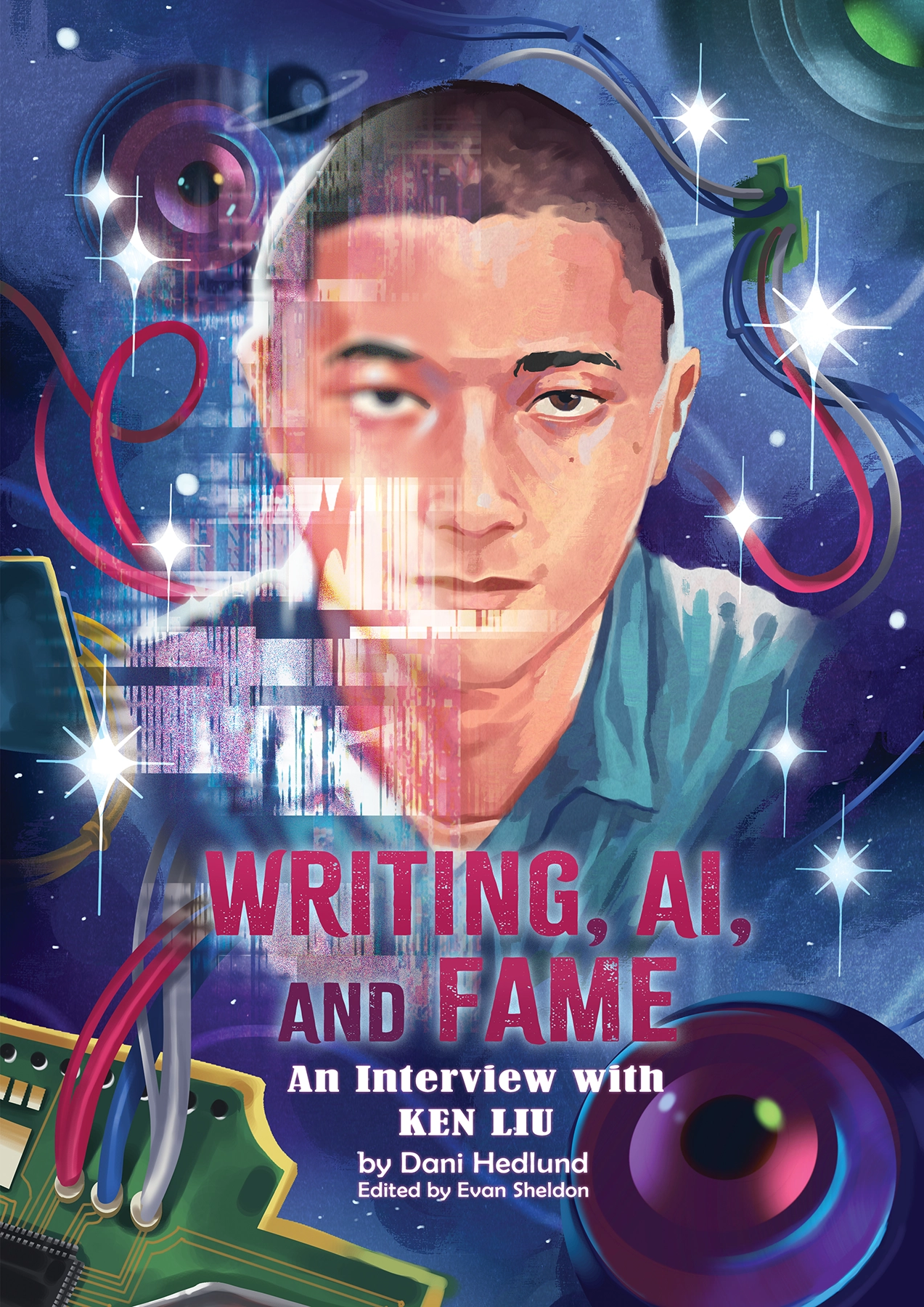
To add to the celebrity lineup, we have an interview with the amazing Ken Liu—who explores fame in fascinating ways in his new hit spec thriller—plus an essay on the Slavic vampires that birthed a cultural phenomenon by Noah Charney and Svetlana Slapšak. Then there’s our wonderful opener that frames the entire topic of fame—written by Andrea McDonnell—and explores both the common and lesser-known elements that tie some of our most famous figures together.
And lastly, remember that amazing young student I mentioned, posting about mental health? Well, through our Frames Comic Program, they overcame their own trepidation about fame to dig deep and conjure the bravery to tell the parts of their story that were the most painful, and the most vulnerable, in the hopes that it could inspire other young queer people struggling with their identity and resilience. And goodness me, readers, this sci-fi-framed memoir is gorgeous!
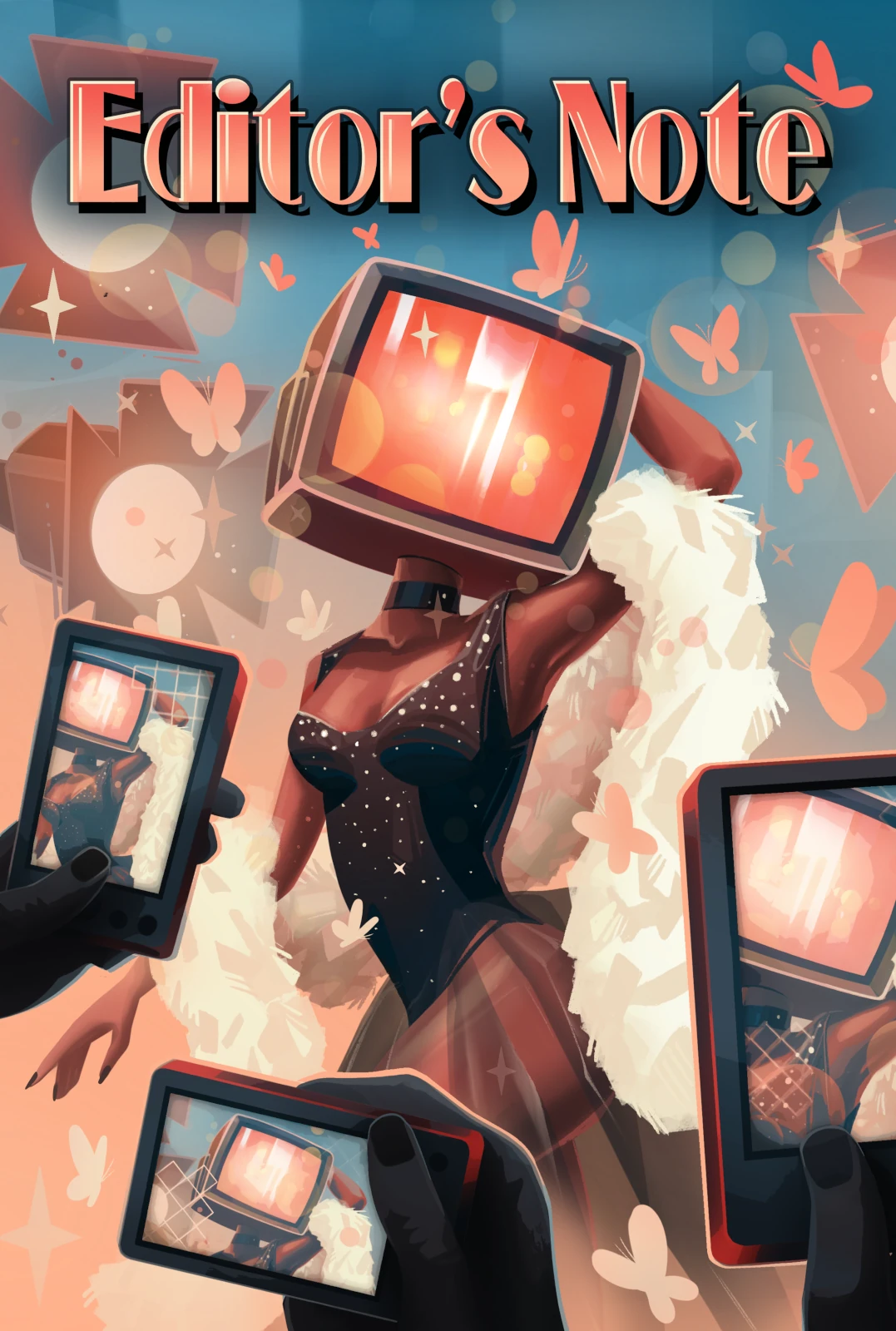
I hope that these stories, poems, comics, and essays help you think more deeply about fame. They certainly have for me. As you begin this journey, I ask that you look at the rad holographic cover of this collection. Do you see the radiant superstar, basking in the glow of their followers’ adoration… or the dark shell of a human, about to be devoured by the crowd?
Look again when you’re done reading. Has that image changed?
For me, it has.
When I look at the cover now, I think of Lily, still in that unicorn T-shirt, all brightness and certainty, her eyes reflecting a world where fame means possibility. Maybe she is right—maybe fame is a kind of light. But light can both warm and burn. Fame isn’t one thing. It’s a mirror, a spotlight, a magnifying glass, a bonfire. It reveals, distorts, and consumes. The trick—if there is one—is learning how close to stand. May these stories help you find the right distance.
Cheers,
Dani Hedlund
Editor-in-Chief