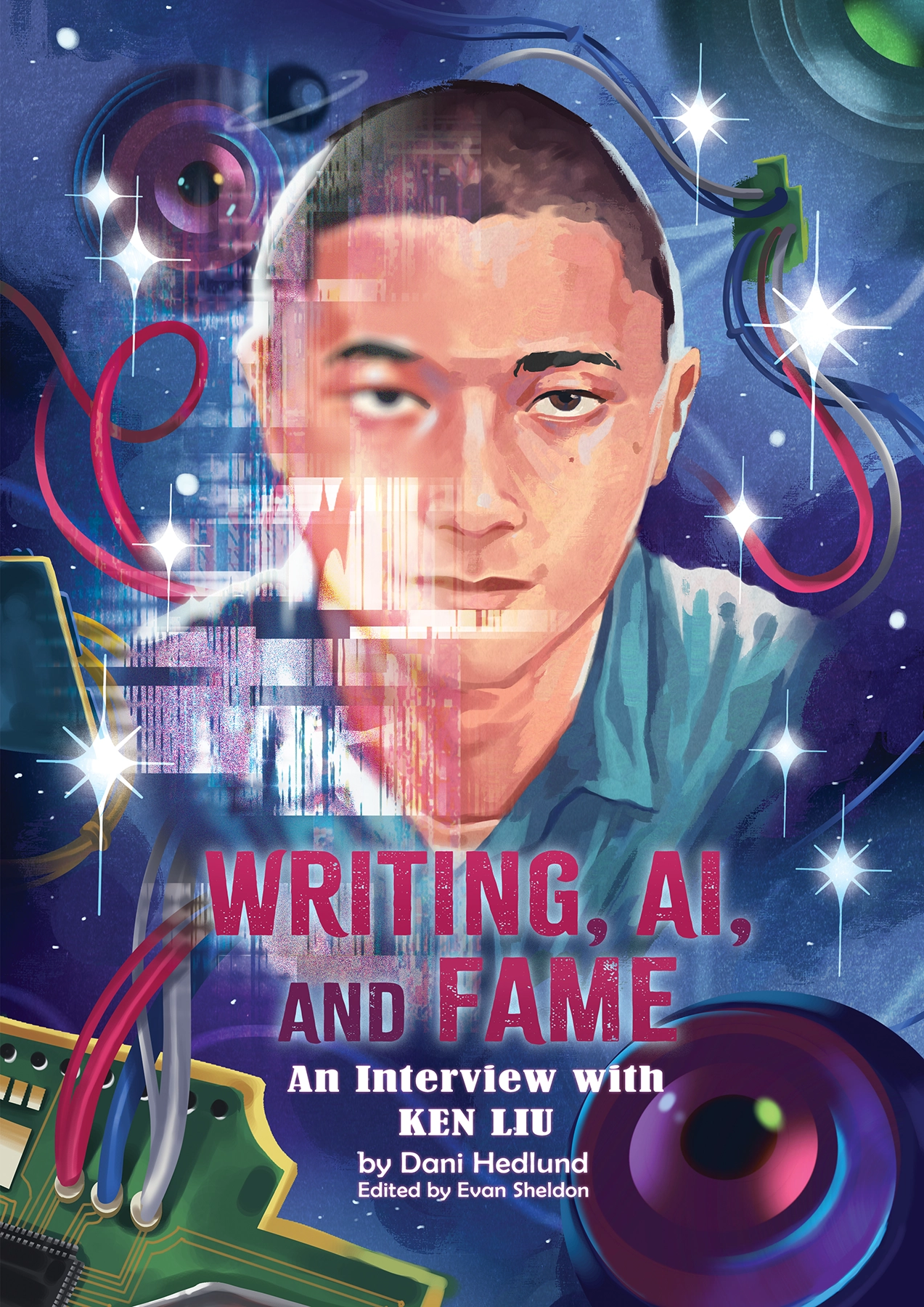
An Interview with Ken Liu In the age of digital personas and algorithmic art, few writers have captured the tension between visibility and authenticity as powerfully as Ken Liu. In this extended conversation for F(r)iction’s Fame Issue, Editor-in-Chief Dani Hedlund sits down with Liu to discuss his latest novel, All That We See or Seem, and unpack…
This post is only available to members.
An Interview with Emily Hauser
Hello Emily, thank you for joining me today to talk about your recent book, Mythica (also known as Penelope’s Bonesin the US). I’m particularly thrilled to be chatting to you because Homer’s epics have a special place in my heart—my Greek Cypriot dad told me and my sister these epics as our bedtime stories growing up. Could you start by giving us a sense of what this book is?
The first layer, the one you’ll interact most with in the book, is recovering the real women behind Homer’s myths. When we’re talking about Homer, we mean the epics of The Iliad—which tells a section of the saga of the Trojan War—and The Odyssey—which focuses on one of the war hero’s voyages home. Both of these epics are very male-centered, so the question of the book was: how can we bring the women of these stories into the foreground? Women like Penelope, the wife of Odysseus, or Helen of Troy, whose seizure from Sparta by Paris initiates the entire Trojan War. These are important women, women who are complex and can be fleshed out in interesting ways, but they are often marginalized and silenced. So the book is basically saying, instead of starting with the women in the myths—which are from a resolutely male tradition, handed down by male bards, and constructed for male audiences about male themes—what if we started with the women through history? What if we looked at real historical women from the period that fed into Homer’s vision of this long-lost age, looked at their experiences and what we are uncovering from their bones, from their DNA, from the artifacts they were engaging with? How might this then make us read Homer differently?
For me, that was kind of a revolution. I think critics or historians often start from the wrong end, with the accounts written by men within the system used to shore up messages about what it was to be a man. So instead, I put that to one side and started with the archaeology and therefore with the reality—as far as we can uncover it—of these women’s experiences. Then we can loop back around and ask, how does that change how we read the myths?
Secondly, in foregrounding the discoveries that are helping us to uncover these women, it was particularly important to recognize the women who have had a hand in this work. We’ve been talking about the silencing and the marginalization of these women of legend, but there are a lot of women scholars, excavators, archaeologists, and translators who have also been pushed to the sidelines. So, this is both a story about the past and the present.
So what was the spark that began your journey to write this book?
I have an interdisciplinary background in that I published three novels, Greek myth retellings, and I was writing those at the same time as I was doing a PhD in Classics in the US. So the spark with this book was thinking, I know I want to write something about women in Homer but instead of saying, this is an academic book or this is a public book, I could say, actually I’m bringing together critical analysis, historical understanding, archaeological reports, but also narrative storytelling. So really it was a culmination of all the different ways of thinking I’d been doing over the years.
The breadth of the book is remarkable—there’s archaeology, anthropology, DNA analysis, literature, mythology. You move through nine women from The Iliad, seven from The Odyssey. What was the research process like? And how did it go from being all these disparate pieces into something coherent?
For me, it was not about including these women in my book because they’re in Homer, but instead because they each have something to tell us about the experience of being a woman.
I really wanted the historical experiences of women to be my starting point. So my first port of call was to comb through all the archaeological reports I could find across the Late Bronze Age—the period that I decided to focus on, roughly 13th to 12th century BCE. I wanted to delve into different experiences from different kinds of women—so we’re not looking entirely at elite women, but we’re also looking at non-elites—and I was also really interested in showcasing a variety of technologies, approaches, and disciplines.
Then I looked at my list of Homer’s women. How can I start to weave these together? I felt almost like the Muses were watching over me, because there were all these correspondences that I could never have planned. The one that really stuck out was the Uluburun Shipwreck. I’d known for ages that I wanted to write about it not only because it’s an amazing underwater excavation but also because it foregrounds the techniques that incredible marine archaeologists use. As a Late Bronze Age shipwreck, I knew it would enable me to speak to issues of trade, and that then made me think about xenia—”guest friendship”—in The Odyssey. This brought Arete to mind, queen of the mythical Phaenicians and a key demonstrator of xenia. Then I was looking through what was discovered on the ship, and I couldn’t believe it: one of the most valuable objects was a single gold chalice, precisely the object that is given to Odysseus by Arete’s husband, the king. I just could not have planned that, the confluences were extraordinary.
How did you come up with the order? Did you grapple with it at all?
The idea was that the ordering of the women would create another subliminal layer. Though I start each chapter with the archaeology and historical context, I then move to the Homeric narrative and give a summary of where we’re at in the epic so as a reader you are essentially getting a summary of The Iliad and The Odyssey narrated through the women. So though people might not notice, the women are now our introduction to the epics.
I’d be absolutely fascinated to see if someone who, never having read Homer, read your book first and then went to Homer, and how that might change the entire framing. Is there a particular woman who was your favorite to write?
Well, it is difficult to pick, but I think the one that stood out for me the most was Thetis, the mother. I had recently become a mother myself, and so I was re-reading The Iliad with a completely different eye than before. In her chapter, I write about the part in The Iliad where Thetis talks about her motherhood, where she comes up with this word which we call, in Classics, a hapax legomenon, which means a “once said.” She makes up this word, and no one ever uses it again in any text, so it’s her word. The word is dusaristotokeia, which means “the worst-best-female-birther.” To unpack that, it conveys how it feels as a woman to go through an experience that can sometimes, for some women, be the worst of their life. In Thetis’s case, it’s certainly the worst of her life because as an immortal mother giving birth to a mortal child, Achilles, she knows she’s going to lose her child, which is the worst thing a mother can experience. But the birth is simultaneously the best thing, because it has brought into the world the thing that is the most precious to her.
So, this led me to think, how can we re-evaluate ancient burials and attitudes to infant deaths? In the past, male-authored, archaeological scholarship took an impassive approach to it: there were so many infant burials that the assumption is people were just used to it. But when instead you read with an attitude of empathy, you wonder, can we read this differently? We notice that, for instance, some of the infants are buried under the floor of a house, or they’re buried with specifically made objects, like a sippy cup that a family of potters made in Late Bronze Age Mycenae. So if we read with that empathy, I think it makes us see the care with which these lost children were being treated. Weaving that together was a pretty cathartic experience for me.
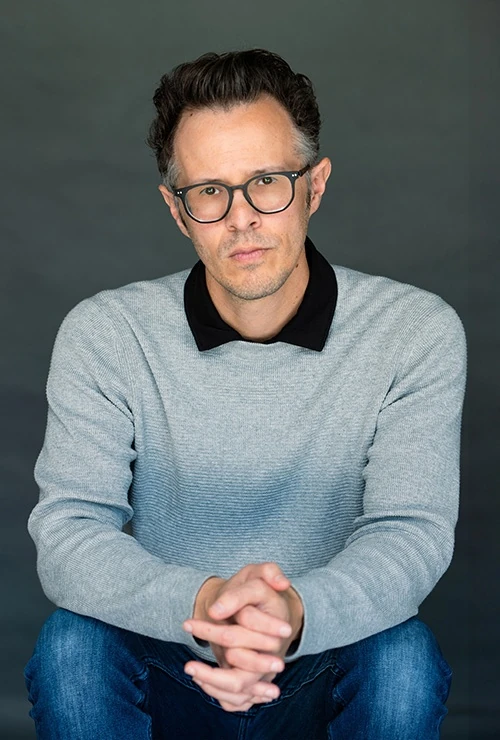
Headshot by Faye Thomas Photography
This leads me to wonder if there was any one woman who you found particularly surprising or unexpected?
The surprising one would have to be Calypso. I knew that Calypso had always posed a problem for me. The way she is talked about in The Odyssey and in criticism is always as a blocker of Odysseus. That had always really bugged me. But I couldn’t think of a response, because the narrative is that she gets in the way of Odysseus getting home as he’s kept captive on her island for seven years. There’s a really interesting moment where the poet of The Odyssey and Odysseus himself echo each other by using the same vocabulary, with the poet saying “Odysseus had been kept captive by Calypso,” and then later Odysseus says, “Calypso kept me captive,” using the same words. So, there’s a sort of double blaming of Calypso. It’s something that scholars tend to repeat and I couldn’t put my finger on how I could create a rebuttal.
The answer came, again, by starting with the history. As I was doing research into ancient weaving, I realized that one of the most exciting things being done now is experimental archaeology: where scholars basically recreate the tools that were used by ancient women weavers and then do the weaving itself. And what that does for us is gives us a sense of time. The technology of weaving has always been emphasized, but time wasn’t really something that was talked about. But the average estimate, based on the latest findings, is that women spent about ten hours a day spinning and weaving. And then I came across a statistic that it would have taken one woman roughly four years to make just one sail. Suddenly I realized, this is the rebuttal: considering Calypso through the work she was doing. She’s not just a temptress luring Odysseus with sex. That’s what the poem is telling us, that’s what the man is telling us, but it’s not what she’s doing. What she’s doing for most of the day every day is spinning and weaving a sail.
I love that. In that same chapter, you draw the concept together with our consumption of fast fashion nowadays, and how one in six people alive are involved in that industry in some form and most of them are women.
Exactly. Eighty per cent of the global textile labor is female. I really wanted to get across that this isn’t just an ancient story. You see patterns repeating. This means that we can argue that this is not just a poem about the past, we can also refract it into modern concerns.
I was really struck by the breadth of locations too. Your book is a wondrous tangle of different cultures. I wondered if your perceptions of place might have changed by looking through the lens of the women?
One of the most interesting things for me was to think about women’s experiences beyond Greece. This wasn’t something that I had any expertise in before. I knew about as much as we can know about Mycenaean women, but to start discovering women from, for example, the Hittite Empire in Anatolia and what they were doing, to start reading their texts, that was not only really exciting but also it challenged me to consider the boundaries that we put on history. There’s a quote from Raymond Westbrook—he says something akin to “the ancient legal tradition of Mesopotamia did not stop dead at the shores of the Aegean.” It’s such a testament to the way that later thinkers and historians have put time periods and cultures and civilizations into very neat countries and conglomerations. If you think about Greece in this period, they’re not even calling themselves Greece. There is probably, potentially, a sense of a united identity—though even that’s contested—but what we’re seeing, particularly in the archaeology, is individuated city states that have trade connections with other cultures. So when we are talking about women, we are not talking about isolated Greek women, we’re talking about a map of women across different cultures, many of which treated women in different ways. There were some cultures in which women could become incredibly important, like the Hittite Empire, where their names were handed down to posterity in ways that we tend not to see in the Mycenaean Greek tradition. So that was a massive eye-opener.
And then secondly, Homer has often been venerated as a Greek-centered text. It is, of course, written in Greek. And there are a lot of scholars who would argue that there is a drive within it towards Hellenic identity. But at the same time, it’s not inconceivable that the bards who were sharing these stories before the epics were written down were circulating within a very fluid and much more global cosmopolitan tradition. And therefore, there could be threads of all kinds of different cultures, all kinds of different women’s stories woven into the epics. So we’re shaking up this idea that we are looking at a canonical male text, because now we’re looking at something that could be fluid and oral, that could have space for women from different cultures, that doesn’t just have to be Hellenocentric but can be looking across the ancient Mediterranean world writ large. For me, as a historian, that gave me so much space to play in.
If you take that concept of shaking up what it meant to be Greek, does the same process allow for a shaking up of what it meant to be a woman?
That is something I really wanted to address in the book. One of the key characterizations of woman’s place in society—to be sidelined and silenced and marginalized—is not, in fact, necessarily from Homer. I think Homer is a contributing factor, but perhaps weighing more heavily is the importance of Athens in the 5th century BCE, the so-called classical period in which it’s very likely that the Homeric poems became concretized and standardized. That same period is when women had the least amount of autonomy, where the ideal was that women weren’t meant to be seen, they were kept within the household, they should be silent, and that was the only way that they can gain any kind of approbation. I think that because of the importance of classical Greece this became such an important model, so much so that other variant models of what it might be to be a woman from other cultures across the Mediterranean—and even from within Homer where you do get a complexity of womanhood—became forgotten.
There are a couple of chapters that really stood out on that front, one exploring Athena and her gender fluidity, and then Penthesilea, who is the Amazon, the female warrior. This brings me on to a very tangly subject: how did you grapple with the fluidity of legend versus all this scientific research when creating what you call your own “counter-history”?
Legend is such a difficult one. I spend a lot of time defining it in the book, because what’s really interesting about legend is that it doesn’t exist outside of text. We only have fixed end-product versions that gesture back to earlier legends. Legend and myth, by definition, are fluid, oral, moving, unfixed, something that can be changed. That is why myth is such a powerful force, precisely because it can be changed. And that’s what’s so interesting about epic—they begin as earlier oral instantiations handed down by bards with that fluidity of legend behind them, but they have now been fixed and rooted. Because I am a scholar of archaic literature—and that’s what you’re looking at in the archaic period, this transition from oral, burgeoning myth into textual versions—you get quite used to oscillating between the two. It’s telling you something about what the text is trying to do—on the one hand, it’s gesturing towards wider meanings while on the other hand, it’s also closing them down and saying, this is my version.
Absolutely, and that gives you much more gray space in which to play. So what do you see as your role within that?
My role is to open people up to an understanding of how these ideas came about while at the same time, harnessing the flexibility of myth to show that these ideas can always be changed. So we’re explaining why the canon has the force that it has, but we’re also saying myths can always be rewritten and changed, and therefore, this is where we can come in and see things from a new angle.
Digging into that a little bit more, especially as International Women’s Day is coming up, how does this distant history draw into our current times?
As we’ve mentioned, in each of the chapters I link how these experiences do speak to modern themes. I think the overarching sense of the book was that women have always been there in history. That is the bottom line. Fifty per cent of the population was living their life throughout history, and it is our job now to start to tell these stories about them. In the past, the silence of women in the record used to be taken as an excuse not to look further. What this book taught me was to see this instead as an invitation to be more inventive and more exciting methodologically, to dig deeper, to ask different questions, so that by the end you actually come out with something that, to me, is even richer and more exciting. Silence is not the stopping point, it’s the start.
An Interview With Collin Armstrong
You’ve been working in the entertainment industry for years as a writer with several major TV networks; what inspired you to write a novel?
I actually started writing the book during the early days of the COVID-19 lockdowns. I’d lost a very promising TV job and was spending my days watching my two young sons and freaking out at night that I might never go back to work. I felt like I needed a project—at first, it was just something to occupy my mind —and I happened upon all of the development notes I had on the Polybius concept; I’d tried to develop it as a film several years earlier. As I was going through everything, trying to figure out why the idea never quite clicked in that format, I started to realize that the space a novel would afford might solve some of the storytelling problems I hadn’t been able to reconcile. I’d never written a book, but I dove in and gradually found my way.
Did your writing process change while working on Polybius? If so, what were the major differences?
There’s a lot of self-discipline involved in writing, so just making myself sit and do the work was a constant. The way I approached outlining was similar as well—going sequence by sequence, identifying major turns and any details I wanted to make sure I covered. My daily goals shifted to reflect the format—I wasn’t trying for ten pages, I was trying for 2,000 words—but overall, the process was largely the same.
Urban legends and government conspiracies go hand in hand with psychological thrillers, but what inspired you to use the Polybius legend?
I first heard about the legend in the mid-2000s, and it ticked all these boxes of personal interest. I’m a gamer, and I’ve been one since the Atari days. I’ve also been fascinated by urban legends since reading Scary Stories to Tell in the Dark as a kid. And while I’m not a conspiracy theorist myself, some of them make for really interesting revisionist history.
I’d also been looking for a way into telling a coming-of-age story but as a reader/viewer/fan, I find I need some heightened aspect for me to engage with an idea.
The legend accommodated all these things—young people on the verge of big changes in their lives, thrust into the middle of solving a mystery that accelerated the loss of innocence they’re set to undergo; it created a space where I could tell this kind of story with much bigger stakes, while incorporating concepts of interest to do with technology and government skullduggery.
Polybius has been compared to The Walking Dead and Stranger Things due to its mixture of tension and dread set in the bright atmosphere of the 80s. How do you balance camp and horror so your book is fun and scary?
I felt like it was important to ground as much of the story as I could in some sort of objective reality. When I settled on the paradigm that this was going to be an origin story for the legend, I set a rule for myself that there weren’t going to be aliens or ghosts or anything else involved that would bump too hard against the real world.
That mindset extended to the characters. I wanted them—as much as possible—to feel like real people reacting to unreal things, and I think there’s humor inherent in that sort of dichotomy. I also grew up reading a lot of Stephen King, and while most of his books are exceedingly dark, they’re also infused with this sort of wryness, both in his authorial voice and in the points of view of his characters. That was something I wanted to try and capture myself.
The period setting grew out of the decision to tell an origin story—it needed to be set in the early ‘80s. I was too young to be there during the golden age of the arcade but was able to experience that culture as it started to decline in the early / mid-90s. I didn’t want to stuff the book with pop culture references, but just give enough to normalize the era for readers.
If you could adapt Polybius to film or TV would you?
I certainly wouldn’t say no to an adaptation, although it might be a challenge for me at this point because the story is sort of fixed in my mind in a certain way that doesn’t directly lend itself to the screen. So much of what happens to people after they play the game is internalized.
Setting contributes so much to the tension in Polybius, do you think it would have been as effective if it was set in a city?
I don’t think the story would’ve been as effective if it had been set in a city. Given how the game works in the story’s world, a smaller/closed environment made more sense. Even if you don’t play the game, you’re liable to encounter someone who has. Their behaviors changed as a result and it unsettles you, you become more nervous and paranoid as a result, back and forth until the town becomes a pressure cooker ready to blow. This feeling would’ve been harder to achieve in a city, where people are naturally more anonymous and less likely to feel the effects of someone else’s state of mind.
Do you have any favorite horror tropes? Least favorite? If so, what are they and why?
I love a good explainer character—the spooky old woman/man who our protagonists track down, who reveals some disturbing piece of the puzzle they’ve been trying and failing to fit together. They’re a real highwire act to write well so the art of trying to give just enough to keep your story moving and to deepen the reasons why your characters ought to be afraid represents a fun challenge. Explainers tend to be people who possess dangerous/forbidden knowledge, too, which means they’ve likely lived an interesting life.
On the flip side, figuring out how to get cell phones out of the picture is honestly very annoying. The solution here was easy, though—just set your story in the early ‘80s!
Now that you’ve got your first novel under your belt, what other kinds of worlds or genres would you like to explore?
Growing up—and even to this day—I think I read more science fiction than horror. Books and collections of short stories by authors like JG Ballard, Frank Herbert, Harlan Ellison, and Leigh Brackett are in constant rotation for me. I’d love to try my hand at science fiction.
I also have longstanding interest in politics, and I think it would be interesting to set something in that world.
What advice do you have for aspiring authors who want to get traditionally published?
It’s going to sound very clichéd, but you have to write, both to improve your craft and because you never know when you’ll meet someone who can change your fortunes. You need a sample that shows what you’re capable of and why you ought to be taken seriously, and you won’t have it if you haven’t written it. Don’t try to chase markets or trends, just find a character, idea, or world that you’re passionate about and write.
Lastly, I like to end on a fun note. What is your favorite urban legend/conspiracy theory that you may or may not believe in?
I should probably say Polybius, but I’ll go with one I used to hear about growing up—the chimera house. Every Halloween, kids in the small town where I grew up would talk about a traveling haunted house attraction that popped up someplace remote, usually in an abandoned multistory building. You’d pay a lot to get in but each floor/section of the house completed, you’d get some money back. As you progressed, the experience would grow more intense to the point the performers inside the house could actually harm you. So, by the end, you’d literally be running for your life! Every year we’d hear rumors about one, but of course we could never find it. I’m not sure I believe it, but I do believe it could make a good jumping off point for another horror story…
An Interview with Alexis Henderson
What is your writing routine like? Do you have rituals, times of day, or environments that help you write your best work?
My writing routine changes with each book. I really try to listen to what each story is asking of me, but I’ve also become better about working with my body instead of against it. There are a few constants though. I always have a cup of tea beside me when I’m working. The hours when I get my best work done tend to be between 12:00 p.m. and 4:00 p.m. I need natural light, so I’m always working near a window and when I get stuck on a sentence, or just need a bit of a brain break, I like to watch the birds fly around outside.
You mention book ideas often come to you in dreams—was this the case with The Yearof the Witching? How do you transform your dreams into fleshed-out narratives?
The Year of the Witching first came to me as a really searing daydream. I saw the image of Immanuelle with Lilith—a creature with the body of a woman and the head of a deer skull—standing in a dark forest. When I see something like that—whether in a daydream, an actual dream, or even a nightmare—I immediately begin to ask myself questions about the sort of scenario or world that would produce that kind of imagery. I paid specific attention to what Immanuelle was wearing: a simple dress that almost looked pioneer-esque. That helped me to nail down a time and place, sort of widening my perspective a bit and giving me insight into the world she might’ve come from. It’s kind of like detective work in the beginning. It feels like the story/world already exists in its entirety, and I’m trying to explore it.
What is your process for research (historical, cultural, mythological) when writing your novels, especially given the gothic and speculative elements you include?
My research process is sporadic and probably a bit disorganized. Because I write speculative fiction, and specifically a lot of second-world fantasy, I don’t necessarily prioritize historical accuracy. I tend to research the things that fascinate me most. Then, while I’m writing, I can pull from that knowledge and use it in a way that serves the story.
From The Year of the Witching to your upcoming novel, When I Was Death, how has your mindset as a writer evolved?
I think I’ve become more protective of myself. I’ve realized the joy is in the process of writing and editing. It’s an honor to be published, of course, but the real fulfillment comes from the doing of the thing, and so I must protect myself, creatively. I make sure to take time off and fill my well so that when it’s time for me to do the vital work that is telling stories, I’m not too drained to give it my all.
When I Was Death is your YA debut, what inspired you to write YA?
I’ve always wanted to write YA. I love that age category, in large part because the books I read as a teen had such a profound effect on me and my creative sensibilities. As a teen, I remember wanting to write books like the stories that had moved and changed me. So, in many ways, writing and publishing When I Was Death has felt a lot like keeping a promise to a past version of myself.
How do you feel about the role of horror and speculative fiction in exploring real-world issues, such as gender, power, trauma, or community?
Speculative fiction has a long history of speaking to real-world issues and I’m so happy modern-day writers have continued to carry that torch. Writing stories that challenge us to examine real-world issues is vital work, but—speaking only for myself here—it can also be a very heavy responsibility and one that comes with its share of pressure. Sometimes, when I’m feeling particularly pessimistic about the current state of the world, I want to escape these issues instead of feeling like I have to confront them in fiction. It’s a bit of a balancing act between my desires to confront the real world and to run away from it. But I try to remind myself books don’t have to be any one thing. I can write novels that speak to real-world issues and also offer some means of fictional escape. That’s the beauty and strength of speculative fiction.
How did living in the South shape your relationship with horror and Gothic fiction?
I grew up in Savannah, Georgia, which is a notoriously haunted city. The atmosphere there has informed so much of my writing. It’s such a beautiful place, but it also has an incredibly dark history. I think my fascination with the contrast between beauty and horror was inspired, in large part, by Savannah and the South broadly.
If you could go back and tell your “aspiring author” self one thing, what would it be?
I would tell myself to focus less on what’s happening with publishing and prioritize the freedom and joy of writing when no one else is watching or anticipating anything.
What other forms of media (music, film, art) inspire you the most?
This is such a tough question! I’m really inspired by film. Recently, I watched the movie Weapons, which was the creative equivalent of several shots of espresso. I also really love music. Florence + the Machine’s new album, Everybody Scream has been such a massive source of inspiration. My editor, Polo Orozco, put me onto the artist Rosalía recently and I really do think she’s a generational talent.
What advice would you give to aspiring authors about to start or in the midst of the publishing phase?
Write for yourself, first and foremost. I won’t warn anyone against chasing trends…but I will suggest, at the very least, you try to subvert them. Instead of writing to tropes, twist and critique them. Make them your own. It’s possible to create something that feels fresh and new while still writing to the market, if that’s what you want to do. But also, and this is probably my most important piece of advice, don’t be afraid to ignore the market entirely and write books that are specific to you and your interests.
In my writing, I find myself constantly wrestling with the concept of self-annihilation, both on an individual and global scale. I guess it’s natural that, starting from my own nucleus of personal experience with obsession, self-harm, and suicidal ideation (owing to bipolar), it’s not hard to see echoes of that on a macro level with the environment and technology. “The purpose of a thought experiment…is not to predict the future…but to describe reality, the present world.” Can you guess who said that?
Hurt to Kill highlights the link between colonialism, nature, and an assimilated identity from the perspective of the other. Was this connection something you intentionally aimed for or did it emerge organically?
I wrote HTK for the itch.io Sexy Werewolf Jam. It felt like in most werewolf stories, the werewolf was the Other (either as the lone individual or a group), so I wanted to try a story where the werewolf experience was considered the norm. I also wanted to subvert the traditional erotic werewolf tale so the human form is capable of more taboo behavior than the wolf form. The rest happened organically.
Hurt to Kill takes place on a civilized alien planet inhabited by werewolves with their own tribes, cultures, and traditions. How did you develop the vast world of Lycaon?
I’ve historically considered myself someone who can’t worldbuild well. I’m not a writer who builds up worlds in advance. I just jot down a quick outline, and everything happens improvisationally. I was guided mostly by images and sentence-level language. The phrase “the Wild Ones” and “Wild Play” preceded my understanding of what they were. I like letting characters say things and to sort out what they mean as I go.
The surreal, nonlinear feel of Hurt to Kill is expressed by the weave-ins of Inek’s field notes and Cahlil’s changing inner world. What challenges went into constructing the structure of this narrative? How did this change your understanding of the cast?
I think a hallmark style of mine is the use of short sections. Turns out, this is very conducive to multimedia, such as weaving in articles and diagrams, and making quick jumps between different points of time and POVs. I intended for Inek’s notes to both clarify and complicate Cahlil’s experience. Personally, I get bored easily, so when my own attention is sliding, I try to think of ways I can play with the presentation of the story to keep myself engaged. Inek’s role as a haunting figure was a direct result of this.
A lot of the relationships within your stories, including Hurt to Kill convey relationships to be of circumstance, dependency, and a lack of autonomy, rather than love. By subverting the boy’s love genre, what message do you hope readers take away from Hurt to Kill?
To identify something as “love,” at least for me, ends up feeling creatively limiting, because there are so many expectations of what that word means, and it often bleeds into what love “should” look like. I think I do better when I try to remove the label; it short-circuits my social programming to moralize my own work so that I can let the work speak for itself. Message? “If I could have said it non-metaphorically, I would not have written all these words.” Le Guin keeps me sane.
Over your five years of writing fiction, there’s been an evolution of style and story preferences. How would you describe the evolution of your writing style and what differentiates your current style and preferences to years back?
I think intentionality is a muscle I’ve slowly developed. I still am very improvisational, but I’m better at knowing what I want now re: including certain details, narrative decisions. My novellas and novel attempts were always informed by a theoretical framework of what makes a story (three-act structure, four-act structure, hero’s journey, etc.), but that generated a lot of bloat. Now that I’m writing short stories and novelettes, I let myself compress, such that I see the scenes before the structure, which I think helps me stay intentional.
You’ve published numerous stories that touch on taboo topics and strong themes. What advice would you give to writers wanting to tackle unconventional themes who are afraid of how their work may be received?
There’s a lot of fear out there, and in here. Fear of others’ minds, fear of our own. Are you a deviant? Am I? Reminds me of the Jungian concept of the (collective) shadow. An exercise I use dealing with OCD is to journal my worst fears, walking through them in exacting detail if they were to come true. The obsessive-compulsive seeks out reassurance from others, but that reassurance feeds the cycle. I think that cycle can apply to anyone, and it’s useful to understand. It’s no fun being afraid of your own mind. Once you trust yourself, you become less controlled by your fear of others.
How and where can we support you? Is there anything readers can look forward to in the upcoming year?
I’m disabled and am relying on the support of friends and family right now, so any amount of support, be it buying a book or two, or even just sharing my work helps a lot. But so many authors and artists are in the same boat as me. The problem is systemic. Why do we have to pay for food or housing at all? Healthcare is a human right. We don’t need to produce something to have worth. Continue having these conversations with the people around you about this kind of thing. Maybe collectively we can put an end to this capitalist nightmare.
I do have exciting news! A dark sci-fi novelette of mine has been picked up for publication. You can subscribe to my newsletter or Bluesky to stay updated.
An Interview with Tiffany Wang
Lehm is such an interesting character—he’s the leader of the rebellion while harboring dark truths. Did you take inspiration from any real historical figures? If not, where did you get inspiration for him?
Lehm evolved tremendously throughout my writing process—and while he’s not directly inspired by any real historical figures, it took quite a while to capture the essence of his character. Initially, I had wanted him to be more bumbling to reflect how all organizations—even the ones that seem airtight—can still harbor weaknesses within.
Yet the more I thought about it, the more I wanted to create a rebel leader who pushes the envelope on morality. In many ways, Lehm mirrors Teia, the main character—both are devious, driven, and hungry for power. The two of them mirrored each other as the story went on. Sometimes, it felt like I was simply along for the ride.
The main character, Teia Carthan, is inspired by Zuko (ATLA) and Kaz Brekker (Six of Crows). I wanted to create someone who has been forced to do terrible things to survive and yet is unapologetic in who she is and what she wants. I also loved Zuko’s redemption arc growing up, and you’ll see glimmers of that in how Teia changes when she eventually meets Kyra and the other rebels.
Morality, especially in times of unrest, is a driving force for the story. Was there any trepidation when you created a main character who acts more selfishly than most? How did you balance Teia’s thirst for power with her desire to better Erisia?
None. Throughout the book, Teia is faced with a crossroads: better Erisia with the rebels or seize the throne for herself. One of the most important things I wanted to highlight is the internal turmoil it takes for Teia to reach her ultimate decision. While she is selfish and ruthless at times, Teia is not morally bankrupt. You see her grapple with what she considers the “right” thing to do—and that, to me, is at the center of who she is as both a protagonist and an anti-hero.
Teia and Kyra seem to be foils of a sort—one the idealistic, golden hero, and the other the disgruntled, power-hungry hero. Did you purposefully make them two sides of a similar coin?
Yes, and I’m so happy you picked up on this! Teia and Kyra are deliberate opposites (although I’ll admit I had a much more difficult time writing Kyra, so I’m not sure what that says about me). I wanted to show them as thematically different people who somehow forge an unlikely friendship.
There appears to be a theme of duality with many of your characters. Every character has their perceived opposite, but they’re much more alike than either character believes. Was this meant to speak to the lack of nuance that comes with any revolution, or is this something that evolved on its own?
It’s something that evolved on its own. While I wanted each character to have a unique backstory, the more I wrote, the more I was able to draw connective themes between them, such as heartbreak and resilience. As the characters became closer to one another, these shared points naturally shone through.
If you had to live in one of the Five Kingdoms, which would you pick and why?
I would choose to live in Shaylan, the Kingdom of Water. Here, everyone has at least some connection to water, and I’d love to be able to manipulate the element. Plus, there’s incredible natural scenery in Shaylan, including a famed set of mountains that I’d want to see in real life. While the entirety of Inferno’s Heir is set in Erisia, Shaylan is more heavily explored within Tempest’s Queen.
Do you feel your educational background in communications and international relations had any effect on the way you approach worldbuilding, and writing in general?
While I don’t feel my majors helped as much in terms of worldbuilding, I do believe they improved my writing from a technical perspective. I used to deliberately choose classes that had final essays, rather than exams (I’d immediately start sweating whenever I had to open an exam booklet). All in all, this meant a lot of hours hunched over my laptop, tinkering with sentence structure and word choice. I’d like to think that translated to me becoming a better writer, at least in some capacity.
Are you able to give any hints about what’s next after the Inferno’s Heir series? Are you planning on staying in the fantasy genre or are you considering branching out to other genres?
I’ll be staying in the fantasy space for my next couple books! My upcoming duology is about a goddess searching for her missing sister, who is forced to team up with the last person who saw her—a mortal boy who hates all gods. It’s coming out from Harper Collins in Winter 2027.
You are among the very first authors published at a Bindery imprint. How would you describe your debut experience publishing with Bindery?
It was a great debut experience, though I’ll admit I was hesitant at first. There was an element of not knowing what to expect, especially since I debuted with Bindery’s first “class” of books. But they did an incredible job with marketing and communication, as well as incorporating my vision into the covers of both Inferno’s Heir and Tempest’s Queen (I was able to provide multiple rounds of feedback for both, which I know is a rarity in the industry).
Do you have any parting wisdom for writers wanting to break into the industry?
Always be working on something new. Seriously. This industry is notorious for being slow, and when a project is out on submission (which means it’s sent out to different editors), I used to drive myself insane refreshing my inbox, hoping for news. Now, I make my peace when a project goes out into the void. It’s no longer in my hands, and I distract myself by picking up something new right away.
An Interview with L. L. Yovoki
How did the concept of The Salvation of the Scum Prince come to fruition? Were there any specific inspirations behind its vision?
Amusingly enough, the initial inspiration for The Salvation of the Scum Prince came from an apocalyptic danmei called Global Examination. The original premise contained similar nuances and characters; however, it focused on a more action-themed plot with special abilities. It goes to show how drastically stories can evolve! Later, it transformed into a fantasy-style setting inspired by various novels I’d read during that period. I’d always been fond of Western fantasy transmigration stories, as they’d been taking the world by storm, so I wanted to try my shot at one for my online debut.
The Salvation of the Scum Prince transitionedfrom webnovel to self-published, how did the story evolve throughout its reissue process?
The Salvation of the Scum Prince has evolved exponentially, allowing more accurate representations of character, heightened plot, and the introduction of new individuals or themes that hadn’t appeared in the webnovel. I believe its portrayal of emotions and relationships evoke a more empathetic response, allowing more relatability and connection between the reader and character.
The themes of family, identity, and connection play an important role in a lot of your stories. What draws you towards these themes and what message do you hope for readers to take away from it?
One of my favorite comments my online readers left for me is how the story helped them evaluate themselves and their emotions, and served as a companion during times of need. As a reader myself, stories are an important way for me to navigate my understanding of others, our world, and life. Therefore, similar concepts translate into my writing as I hope to connect to others who may seek such themes from my work!
The transmigration and danmei genres have a rich history with queer online writing spaces. How did you approach blending the genres together while keeping the story’s concept fresh?
I’ve taken a lot of inspiration from the writing styles of my favorite danmei, which often focuses on the smaller details that weave together to form a larger picture. I wanted to focus on that subtlety of complex relationships in combination with the popular transmigration trope, while finding a way to incorporate themes of identity and family. Therefore, I combined curiosities I considered when reading such genres, such as the whereabouts of the original identity the protagonist possesses, to explore concepts I hadn’t found previously.
What inspired the dynamic between Soren and Raphael given their opposing traits and unconventional goals?
The dynamic between Soren and Raphael was developed to center around Soren’s colder personality and his growth as he came to understand the charms of life and society. Raphael, with a brighter outlook on life despite his hardships, served as a guide to help Soren navigate new emotions and understandings. I’d wanted them to complement each other while having opposing traits—traits that might not seem compatible at a glance but can later become a comfort to them both.
With book one of the Scum Prince series out in the world, what should readers look forward to in book two?
The Laments of the Lost Hero will provide a deeper insight into the brotherhood dynamics between the five princes, exploring their different perspectives and what drove their relationship to collapse as it did. Overall, readers will see a deeper interplay of relationships, the revelation of Soren’s past and his abilities, as well as exciting developments between Raphael and Soren!
After the Scum Prince series concludes, are you looking to reissue your other webnovels?
I have considered reissuing my other works, although I’d have to decide which ones are suitable for publishing. If I had the time, I would love to rework all of them! For now, I’m keen to revise another fantasy-themed story soon, while the others may be a possibility for much later
You’ve published several other webnovels before your self-publishing debut with The Salvation of the Scum Prince. What advice would you give to webnovel authors looking to break into the publishing space?
I would first and foremost suggest thorough research into the self-publishing sphere, such as the style of writing, marketing, and progress. Navigating the self-publishing realm has been an incredibly exciting experience, and I’m grateful to have been well supported; however, there are drastic differences to consider. For example, the chapter length of stories, the segregation of paragraphs, and the plot flow. Not to mention, the aspects of creating social media accounts, the different types of editing, and the formatting process. Without prior research, I find it can be overwhelming to adjust to all the little nuances; however, it’s ultimately a worthwhile experience that all authors are capable of accomplishing!
How and where can we support you?
I can be found on TikTok and Instagram under @herewritesyovoki, or on Amazon under L. L. Yovoki. I think having access to writing resources, or the ability to connect to other readers or writers, would be a great support! It can be hard to reach other individuals in the writing circle, and avenues that allow us to branch out are always incredibly helpful, whether it is through social media or other avenues.
Writing started as reading—I was reading a lot of novels I loved, but I couldn’t find myself in. In particular, I was looking for works where the first love wasn’t the last, and that didn’t make the last any less beautiful. I looked for so long that it ended up appearing in my mind instead, so I wrote it out and discovered a dedicated group of readers who had the same desire.
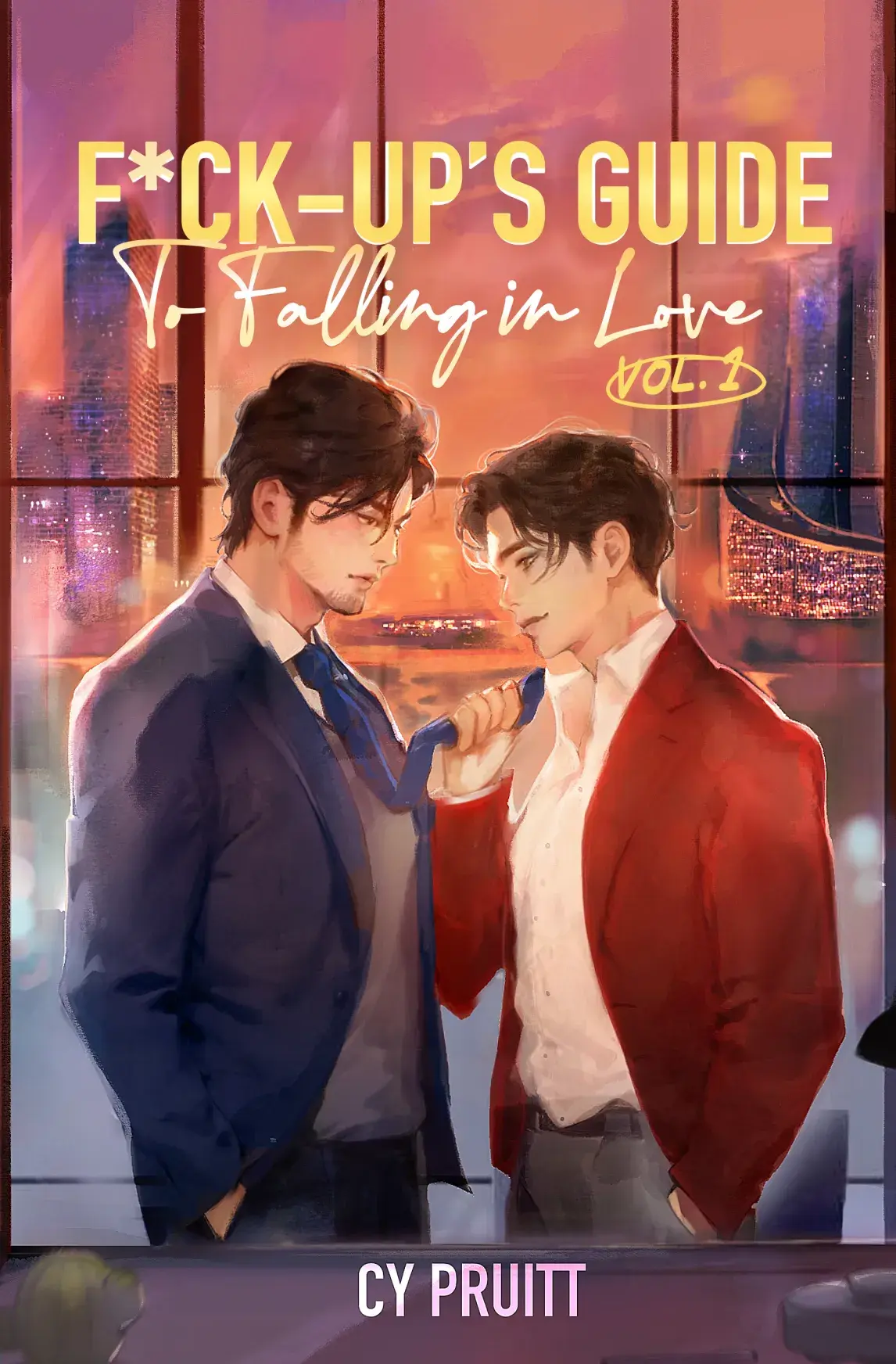
The cast of F*ck-Up’s Guide to Falling in Love goes through major transformations throughout the course of the story. Was there a favorite relationship and character you found yourself unexpectedly invested in?
Wei Qiwan was unquestionably my dark horse. Originally, his whole story was just about Wei Qing, but as he grew, his emotional life did too. Although he certainly has his flaws, I think seeing him become happy through this second chance was almost as important as Wei Qing’s transformation. His romance with Long Shouning is unquestionably my favorite unplanned addition.
Within your author notes, you highlighted how some aspects of the plot were different from how you envisioned it originally. Did these changes occur during the planning stage or while writing the draft? How do you adapt to these changes in your plotline?
Most plot changes occurred during the draft, while some occurred based on reader feedback while posting. One of the benefits (and dangers) of serialization is that you get feedback as you post, and I was lucky I had some excellent readers to guide me with their comments and help me embrace the idea of characters as living, changing individuals.
Your fresh writing style brings out the characters and story in such a heartfelt and immersive manner. How did your present style emerge? Are there other styles you wish to experiment with?
For me, the inner world is the true story, and the outer world is just what propels it forward. (I think I have to blame Dante for that.) When reading, I gravitate towards indulgent, elaborate descriptions, and in writing, I have the same compulsion—I want my readers to be able to melt into not just the scene, but the hearts of the characters inside it. I doubt I will ever escape this style, but for the sake of word counts, I would like to learn how to say less with more and leave it to the reader’s imagination.
F*ck-Up’s Guide to Falling in Love shines light on the importance of belonging, family, and authenticity. With your dad being a huge supporter of your writing career, were there moments in the story inspired by your experiences with him? Were there any moments dedicated to him?
Growing up, I had the habit of deleting all my works as derivative, and it was only my dad and piles of Joseph Campbell books that stopped that. My pen name is a riff on his last name because I really wouldn’t be a writer without him, but his influence is more subtle when it comes to actual story beats. I will say that Lord Twelve, who enables the story but is mostly off-screen, has a lot in common with my dad. When I picture him exasperated with these silly humans but still conveniently arranging their happiness, I think of my dad.
As with Wei Qing’s and Yue Fei’s story, writing realistic romances and characters with happy endings is the cornerstone of your work. Why is this important to you?
The world is a hard place to live in, and perfection is impossible to attain. We all make mistakes, and we all face injustices out of our control. I want stories where we see familiar characters making familiar mistakes but give them the power and luck to fight back. Fairy tales tell children dragons can be killed; I hope my romances show readers love can be found, and you don’t have to be perfect to deserve it. You just have to be a little brave and treat those struggles as your prologue, not your end.
As an author with a day job, what advice would you give to writers trying to balance those two roles while thriving in both careers?
Find a good boss? (Mine actually bought Guide to Falling and would read it at work, which was hilarious and embarrassing given the content). But on a more serious note, you have to love your characters and consider yourself a writer. Even if it’s just a few words a day, think of your story as a pet you love and want to see grow. Even after a long day at work, you have to feed your cat and play with it a little, right? It’s non-negotiable. Your story is the same. Feed your story. Pet your story. Treat it as self-care and be proud of what progress you make.
How and where can we support you? Is there anything readers can look forward to in the upcoming year?
All my links are available on my modest little author’s site, cypruitt.com. If you’re local to New Orleans or just stopping by, I’m in Blue Cypress Books and also sell via Amazon and my site. This year, I’m hoping to finish a third book with a supernatural edge but a familiar brand of romance!
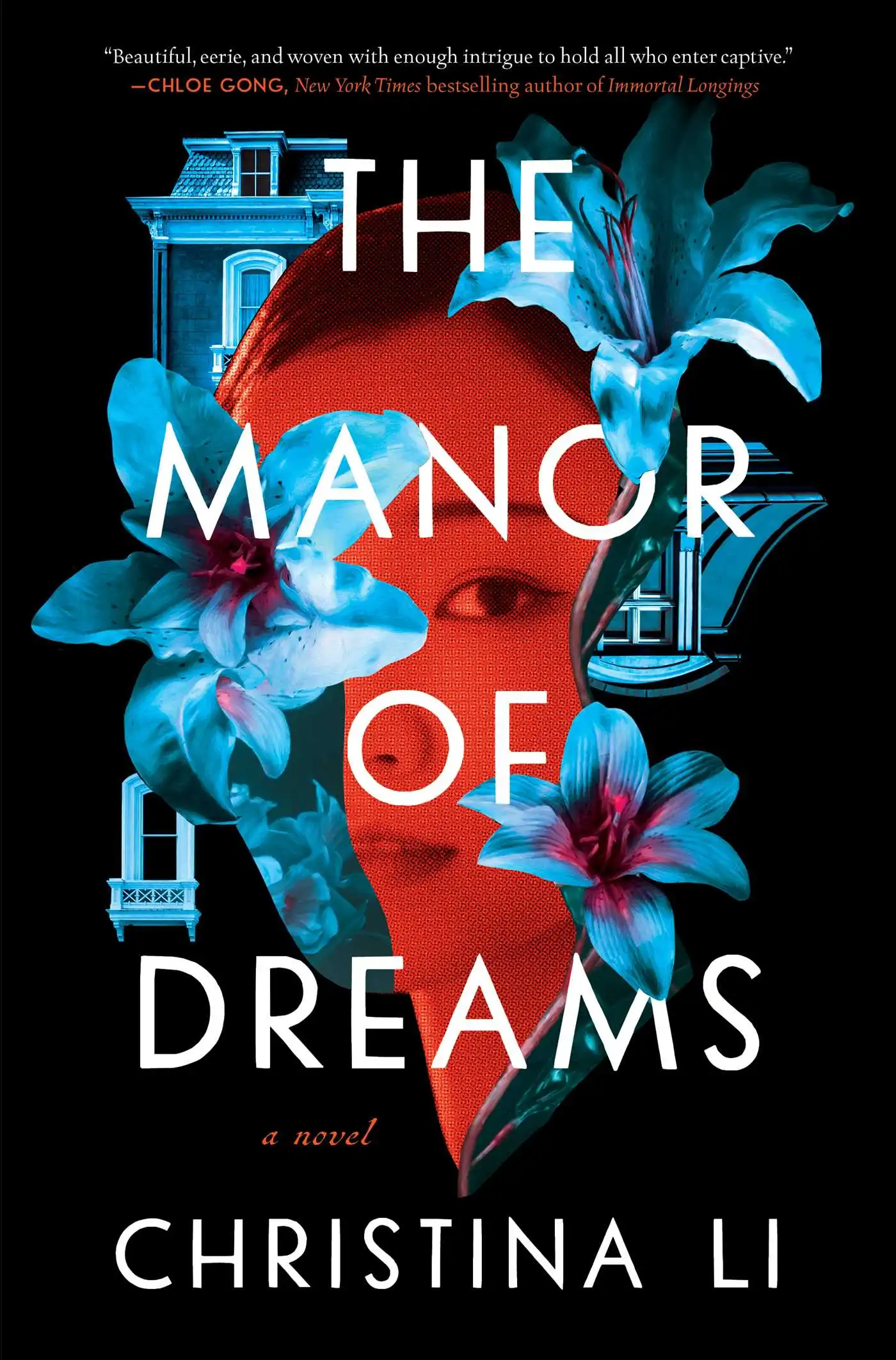
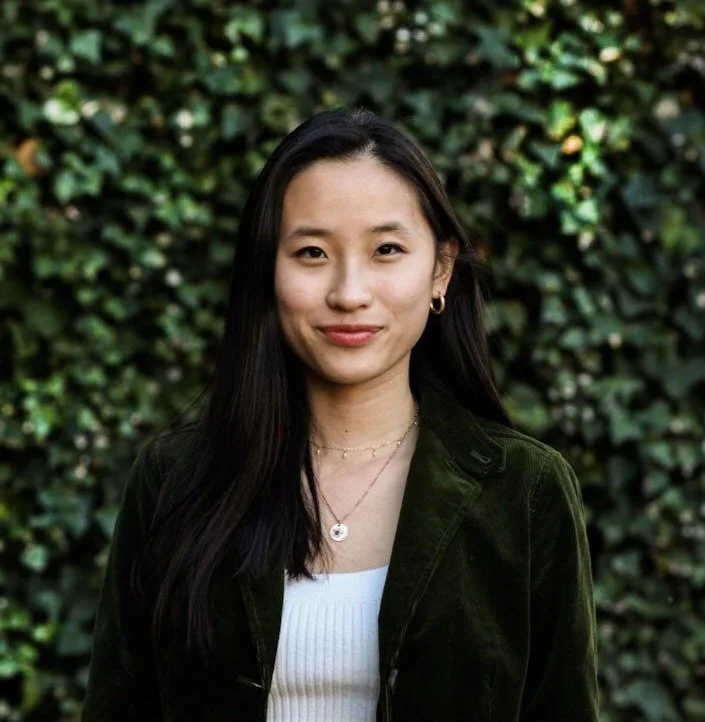
An Interview with Christina Li
I noticed you have degrees in Economics and Public Policy from Stanford. Could you share the story of how you transitioned from those fields to becoming a published author?
I didn’t transition so much as I came into college knowing I was interested in many things. I was a lifelong avid reader and writer and had cobbled together an education of sorts by attending local author events, reading fiction and craft books, and voraciously consuming any advice that anyone had to offer. At the same time, I was interested in other subject fields—namely, how economics and public policy affect our day to day lives. I wanted to construct a life in which I could meaningfully participate and contribute to the subjects that interested me.
As publishing a book takes years, sometimes things are happening concurrently, or out of order! I wrote Ruby Lost and Found in the summer of 2021 when I graduated from college. I did a one-year graduate program, in which I first drafted Manor (January 2022). I then rewrote True Love and Other Impossible Odds the summer of 2022, which I first drafted in the fall of 2020. I wrote whatever project compelled me at the moment.
What inspired your shift from children’s literature to adult fiction? How did that transition feel to you?
Again, I write about themes that interest me. I grew up loving children’s fiction, so I was interested in tackling ideas of growing pains and self-discovery. But I knew immediately the Manor was going to be an adult fiction project because it wasn’t about coming of age—it was about inheritance and consequence—which are very adult ideas.
What sparked the idea for Manor of Dreams?
I went to a university founded by a man who had amassed an incredible amount of wealth from building the Transcontinental Railroad. In its construction, thousands of Chinese immigrants were exploited for their labor, working for less pay than their white counterparts in terribly dangerous conditions. It is said the ghosts of the Chinese workers who perished in its construction are stuck in the Sierra Nevada mountains without proper burial, and their screams echo in the wind. Being Chinese-American myself, I was dealing with the cognitive dissonance of going to a beautiful institution that had such a hidden and conflicted past. This heavily inspired the core of Manor of Dreams.
Manor of Dreams has a gorgeous blend of mystery, horror, romance, and familial legacy. Were these elements part of the story from the beginning, or did they develop as you wrote?
They were all a core part of the book when I started. It was a big challenge when first drafting this book because I wanted to touch on so many themes—from the familial dynamics, to the romance, to the mystery of Vivian Yin. It was tough to maintain focus. But through edits with my brilliant editor, Margo, we were able to individually hone those elements and cohesively bring them in conversation with one another.
Your novel has been compared to Mexican Gothic and The Seven Husbands of Evenlyn Hugo. Are there any films or books that inspired the eerie atmosphere of your novel?
Imagery of rotting land, thorned roses, and crumbling foundations plays a significant role throughout this narrative. How did you approach crafting vivid, foreboding images to create intricate layers of thematic and metaphorical richness?
I wanted to create a consistent mood of dissonance to flesh out the story: the flowers in the garden are beautiful, but deadly. The house is massive and grand, but the ceilings are warped, and the interior is falling apart. I wanted these aspects of setting to all conflict with each other. There’s also something compelling about the garden metaphor along with the house—about roots and foundations and what happens when the very foundations of your family, or your dream, or your aspirations are rotten.
I was also enamored with the multi-POV that spanned across three generations of the Yin family. Can you talk about the importance of threading each of these generations of women together?
I am so sentimentally enamored with multigenerational stories. The question of what we knowingly and unknowingly inherit from our families will always be something that fascinates me. Manor is about the inheritance of a physical home but also about the inheritance of so many intangible things—ambition, expectations, traumas, secrets, love, and everything that makes up a family. I also wanted the multigenerational lens to explore the potentials of learning and growing—how one generation could fall into the same cycles of keeping secrets and burying traumas, but how the next generation could break those cycles and move forward.
The publishing process can feel more daunting than writing a book itself. What was that process like for you, especially moving between genres? What advice would you give to aspiring authors who are about to start or in the midst of the publishing phase?
I am incredibly lucky to have a literary agent (we’ve been working together for about ten years) who has eagerly championed all the works that interest me, from my children’s fiction to YA to this general adult fiction. Aside from that, it’s a matter of cultivating trust with your publishing entities. I’m also very lucky to work with brilliant editors who can intuit what I’m trying to do with a book and provide feedback on how to get there. The advice I would give now is to keep writing, and that there is no effort or words ever wasted, and that effort will all go somewhere someday.
Okay, final question! I’ve seen a few intriguing hints about a new project on your social media, and I have to ask—what’s next for you?
I’m so excited to talk more about it! For now, what I can say is that I’m currently in the middle of working on a YA thriller (I’m going back to my kidlit/YA roots!) and it’s been the most fun, mind-bendingly, twisty time of my writerly life.
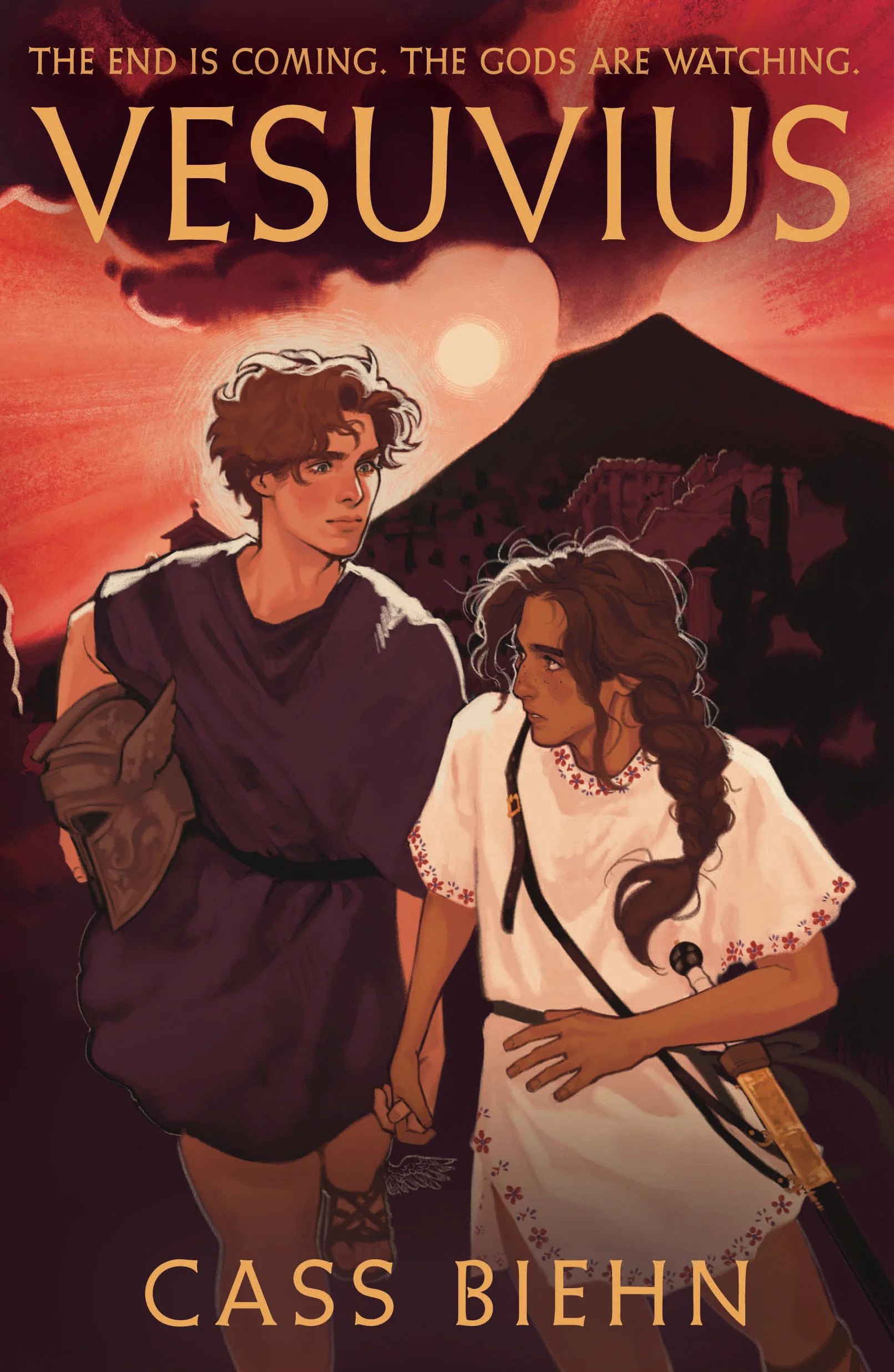
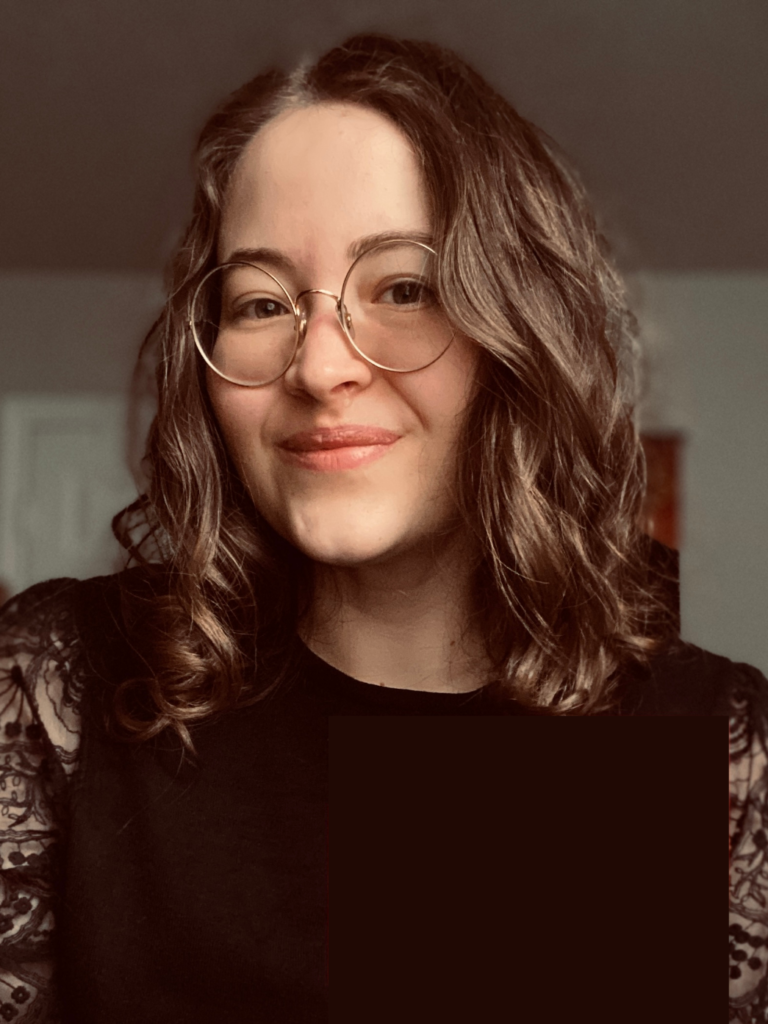
An Interview with Cass Biehn
Your debut novel Vesuviusimmerses the reader in the ancient city of Pompeii and includes several nods to Roman history. What inspired you to base your story on Pompeii and ancient Roman history?
Like many neurodivergent kids, I grew up having historical disasters as special interests—starting with the Titanic. I was fascinated not just with the disaster itself but the story that unfolded around the disaster.
Pompeii has likewise fascinated me. Before the volcano erupted, petrifying the city in ash, what dramas and romances and politics affected its people? What parallel could I draw to the traumas surrounding me in modern day? What would it be like to stare down a smothering black wave, knowing you couldn’t stop what was coming? But what would it look like to try to change fate anyway?
What was your writing process for Vesuvius, and how did you balance working on it with the other obligations in your life?
Vesuvius was written as I was wrapping up my undergrad, working full time, and preparing to move to Wales to pursue my Master’s. I let it take over in a way that probably wasn’t very healthy, but it was all I wanted to do. I came to know myself as a writer through it. I learned to set boundaries, hold myself accountable, and when to step away from the manuscript to give it breathing room.
Vesuvius boasts two complex and genuine main characters—Felix and Loren—who you’ve lovingly referred to as your “volcano boys.” How did you approach their character creation and give them each a distinct voice?
I teach a course on developing compelling characters called “Wound, Want, Need.” By understanding what the character thinks will solve their problem, what trauma or flaw holds them back, and what lesson they need to learn to fix their life and self-actualize, the characters feel more authentic. When crafting dual POV especially, every character should have their own goal, history, and arc—and a distinct voice to match. Experiment with how their individual circumstances and backgrounds might influence how they speak, act, and think.
Felix and Loren experience their fair share of romantic ups and downs. What were the most challenging and rewarding aspects of creating their love story? Further, do you have any tips for authentically incorporating romance into a plot?
I’m a romantic at heart! When writing Felix and Loren’s dynamic, my goal was always—despite their different upbringings, privileges, and disagreements—to create a romance where both boys land on equal footing. I wanted the romance to feel authentically messy, because neither boy is perfect, and each have their own hurts to reckon with. But as they learn, grow, and come to understand one another, they use their individual strengths to support each other.
The story of Vesuvius erupts with humor. What advice do you have for writers who want to incorporate more authentic humor into their work?
Surround yourself with funny people—the kind you can fully be yourself around and whose humor doesn’t punch down. Never try to force a moment to be funny; let the humor evolve naturally.
The themes of mental health, identity, and trauma play a major role in your book. Was this something you planned or did these themes develop naturally?
Oh, they came completely out of nowhere because I didn’t think I had it in me to explore my own vulnerabilities on a page. Felix leapt nearly fully formed into my mind. A snarky, irreverent thief—he sounded fun. But the more I drafted, the more I realized I hadn’t given him a why. So, I started thinking, why am I irreverent? And the solution dawned on me: Felix was shaped to explore a certain trauma I share. Once I began to work that into the narrative, permitting myself that vulnerability instead of holding it at arm’s length, he finally came alive.
You have a Master of Library Science from Aberystwyth University in Wales. Could you share more about your choice to pursue this program and how it influenced Vesuvius?
Childhood literacy has been a driving passion of mine since I was in high school. I wanted to write for teens, and I wanted a career where I could get books in the hands of those who need them most.
Aberystwyth was a very intentional choice. Not just because it has deep connections with the National Library of Wales, but because the country has fascinated me since I fell in love with Welsh Arthurian legend as a teenager—maybe the topic for a future book?
The publishing process can often feel daunting and intimidating to new writers. How did you keep your spirits high when querying Vesuvius and do you have any encouragement for writers who may be wrestling with self-doubt?
Self-doubt is the shadowy beast that haunts my footsteps, even (especially?) still. I don’t know that I’ll ever overcome it—but I’ve learned to accept that, and I’ve found tools to cope. To writers, I suggest finding a non-word related hobby (mine is sewing!), getting a great support system, and remembering your value as a person isn’t dependent on how quickly you get an agent.
Your second novel, Though This Be Madness, is slated for release in 2027. How did the overall publishing process differ between your two novels and what did you learn?
They couldn’t be more different. When I started Vesuvius, I was convinced I was a “pantser,” and only after struggling through the first draft without an outline did I realize absolutely nothing about it made sense. Since then, I’ve learned I’m definitely a “plotter.” Even though the time to finish a draft was roughly the same for both projects—about a year—I think having an outline from the beginning resulted in a much more polished first draft of Though This Be Madness.
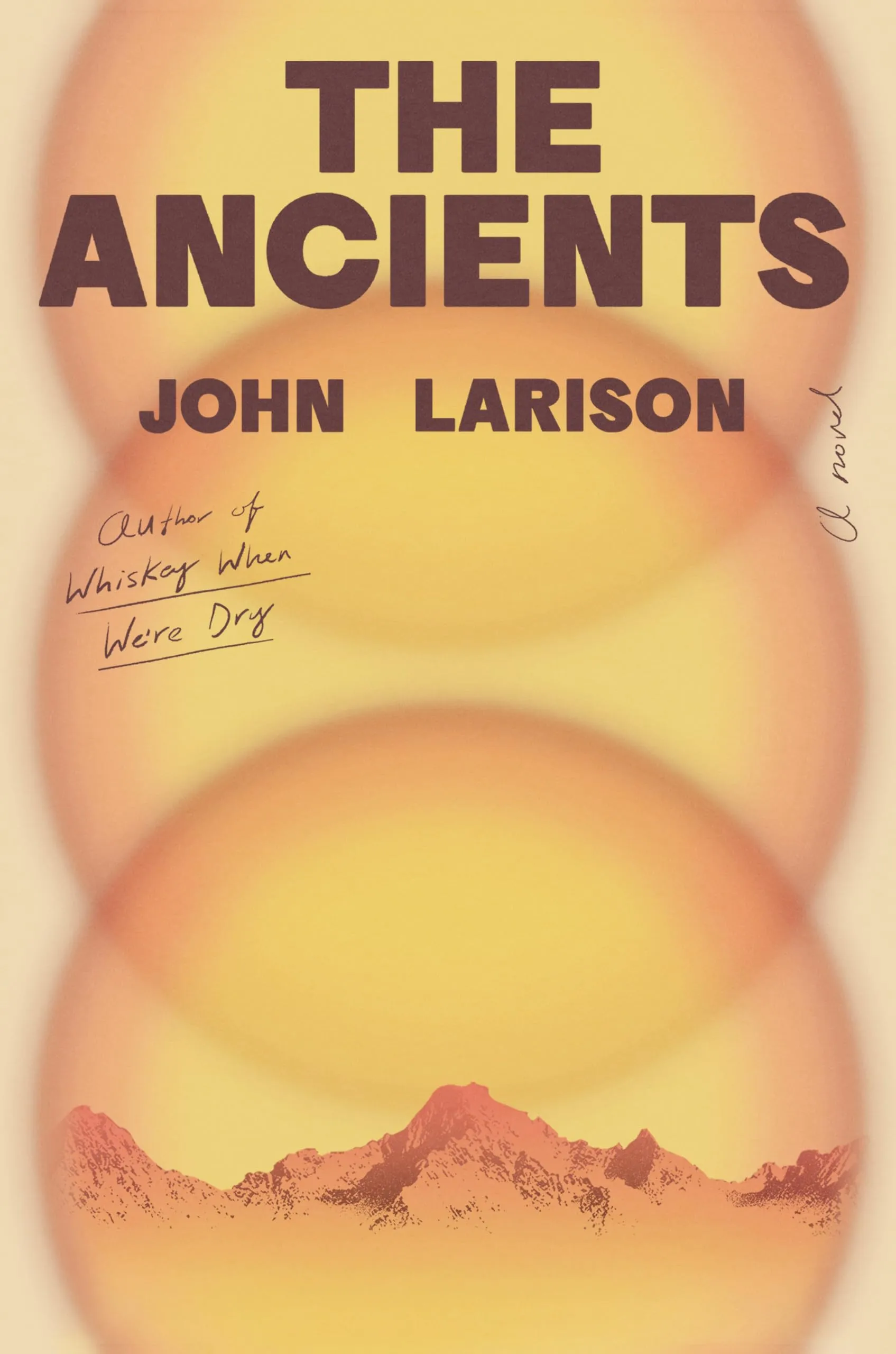
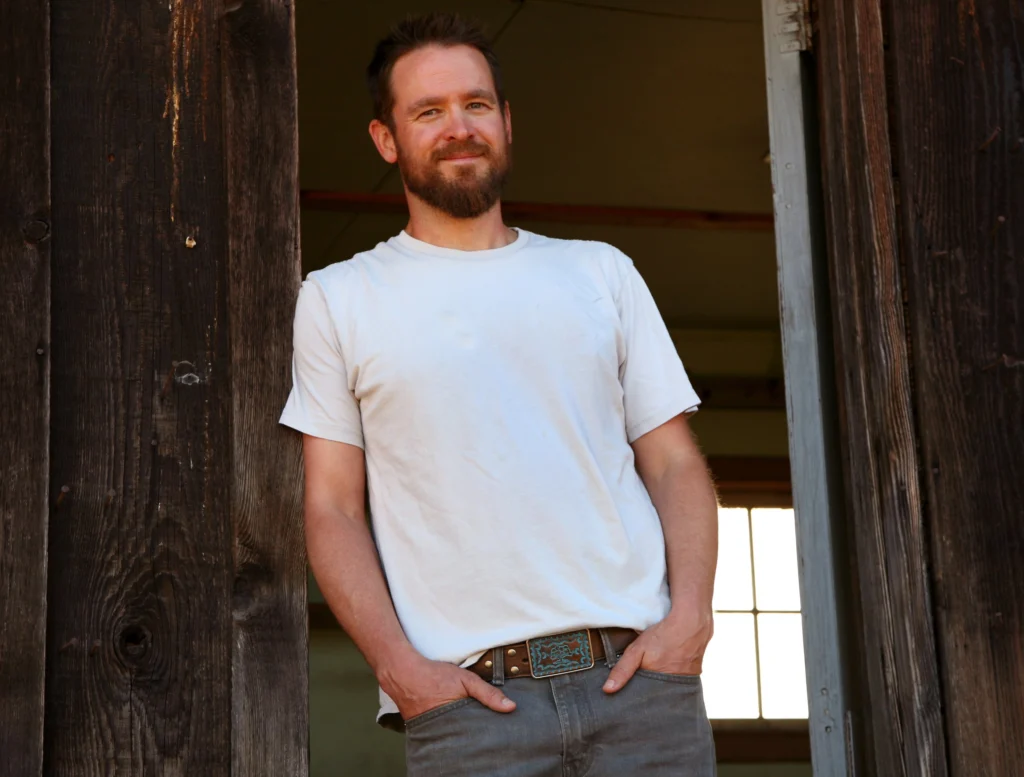
An Interview with John Larison
Your latest novel, The Ancients, takes place in a post-apocalyptic world impacted by climate change. How did this setting come to fruition and what inspired you to tell this evocative story?
The Ancients was a wild ride. I knew I wanted to write the kind of novel I wasn’t finding on bookshelves, a book capable of holding the enormity of the climate crisis in the palm of one hand. The book grew to become the medicine I needed—and I hope it hits readers in that way too.
The writing process, though, was harrowing. The first three versions were set in the deep human past. The final two were set in the deep human future. I worked on the book for seven years and completed thirty-seven drafts of the fifth version. No doubt, I grew as a writer and a person during the process, just as the characters grow on the page.
In both The Ancients and Whiskey When We’re Dry, the setting plays a prominent role in the narrative. How do you approach the complexities of worldbuilding for your novels?
My books are often born from their places. To prepare to write a place, I prefer to spend time there. I try to experience the textures, smells, and other sensory elements from my characters’ vantage point. What will they be noticing about this landscape? How would they describe what they’re seeing to themselves? Once I feel grounded in the physicality of the setting, I’m ready to create the histories and cultural realities of that world.
The Ancients features three distinct sets of characters and Whiskey When We’re Dry includes a diverse cast of supporting characters. What do you like to focus on when creating your characters?
I don’t let myself think of them as characters. They are people, and as people they are torn and conflicted. They want two mutual, exclusive outcomes, and that tension comes through in their voice and their actions. They make mistakes. They regret their mistakes, even as they repeat them. Most importantly, my people are mysteries to themselves. We would never reduce a friend to the sum of their identity, and so we should never reduce the people on our pages to the sum of theirs. The best “characters” always defy classification.
One of the aspects that drew me into The Ancients and Whiskey When We’re Dry was your vivid and lyrical writing style. Who are some of your biggest writing influences?
Such a long list! When I was finding my footing as a novelist, I was drawn to Michael Ondaatje, Toni Morrison, and Normal Maclean. I found these writers’ prose to be precise and rich with resonances that felt ineffable. Each time I reread one of their works, I saw the book and myself differently.
Your books incorporate several diverse themes. The Ancients focuses on hope, resilience, and stewardship whereas Whiskey When We’re Dry explores family, identity, and survival. How do you approach blending all these ideas into your narrative without letting them interfere with one another?
For me, theme arises organically or not at all. A novel’s themes are an extension of the concerns the novelist is obsessing over when they should be sleeping. Theme bubbles from the subconscious onto the page; calculation and craft would only taint this holy process.
Every writer’s journey is unique, but yours is particularly fascinating as you’ve mentioned you never set out to become a writer. What is something you’ve learned about the industry that writers should know?
Early in my writing life, I devoted a lot of time to reading interviews with agents and editors to learn to think like these literary gatekeepers. The lessons I learned helped expand my understanding of how fiction works beyond the critiques common in a classroom. But not until Whiskey When We’re Dry did I truly understand how novel writing is a team sport.
Novelists aren’t just trying to finish a long work of fiction. We’re trying to write a book that will move and inspire its readers so personally that they will call in favors and advocate for the novel in meetings and hallway conversations. A book’s team starts with the agent and editor but eventually includes booksellers, book clubs, and the most important teammates of all: everyday readers who share the novel with their friends.
Writers are often advised to read A TON to hone their craft. What book are you most looking forward to reading in 2025 and why?
I’m loving Percival Everett’s James. Dark context, bright prose. That’s a magical combination that I hope to figure out someday.
The publishing process can often feel daunting and intimidating. How did you keep your spirits high when querying your work and do you have any encouragement for writers wrestling with self-doubt?
“Success” (defined here, with hesitation, as publication) is comprised of three parts: talent, luck, and determination.
Talent barely matters, because with a wealth of determination, you can make up for a significant deficit of talent. Luck barely matters either, because luck is a function of time, and with enough determination you will still be playing when the lucky cards are finally dealt.
If writing is fun and meaningful for you—and you feel that writing improves your life—keep writing, keep striving, keep learning, and success will become inevitable.
Do you have any new projects coming out soon or in progress?
I’m finishing up my next book now, Siren Country, and I’ve started writing the next one. That book is funny; the narrator is a surf bum with a prosperous brother who needs his help. I think readers—especially these days—want a good laugh.
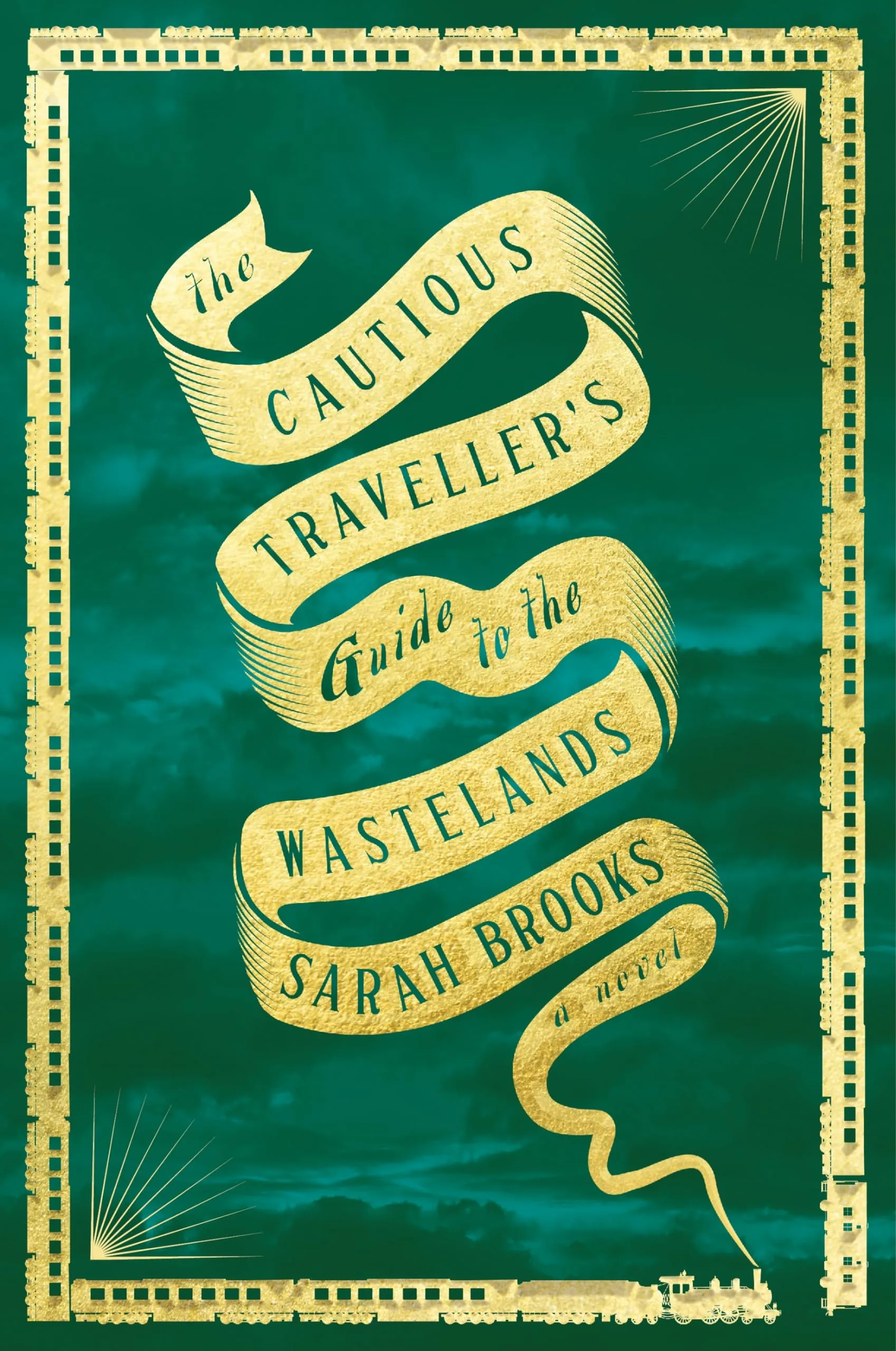
The novel was inspired by a journey on the real Trans-Siberian Express when I was a student studying Chinese in Beijing and decided to return home to the UK overland. It was an amazing experience, and the vivid memories provided the spark for the story. Although the real Trans-Siberian Express has an extraordinary history, I wanted to play with the atmosphere and strangeness of the long journey. As I wrote, I thought about the landscape rolling past the windows while on a train, and how you can catch a glimpse of something strange, but it’s gone as quickly as it appears.
Having studied Chinese and researched Pu Songling’s Strange Tales from a Chinese Studio, did any of those eerie folktales influence the mythos or atmosphere of The Cautious Traveller’s Guide to the Wastelands?
Yes, definitely! I love Pu Songling’s seventeenth-century tales of ghosts, animal spirits, and other strange phenomena. I particularly like how they play with the connections between the human and the wondrous. Many tales concern a human man and a supernatural woman—often a ghost or a fox spirit—who either helps him or needs his help. I wanted to play with this but focus on friendship instead of romance while making the non-human character more ambiguous. I was keen that she should have her own agency rather than serving the protagonist’s arc.
The novel explores themes of empire, capitalism, and environmental decay. What drew you to weave these ideas into a steampunk-inspired narrative, and what message do you hope readers take away from it?
I think it’s almost impossible to write today without feeling the weight of the ecological stakes. I didn’t want to spell out exactly what had happened to the landscape to transform it into “the Wastelands,” but the “Cautious Traveller’s Guide” points to the land being exploited and fought over. Like many people, I spend a lot of time feeling furious about the greed and arrogance of corporations and governments. One of the inspirations for the Trans-Siberia Company was organizations like the East India Company, who were hugely powerful and exploitative, of both places and people. I wanted to create divides between the people who work on the train and respect the landscape, and the people who only see profit and who don’t reflect on the damage they’re doing.
I hope readers take away the message that it’s possible to change our relationship with the natural world. I work at a university and see how engaged my students are with the climate and with other current events. They’re not willing to be quiet about their worries for the future, and I completely support that attitude, so I do feel a sense of hope, and want readers to feel that too.
Image credit: Alex Krook
What inspired Zhang Wei Wei, and what role do they play in confronting the mysteries of the Wastelands?
I wanted each main character to have a different relationship with the train and the Wastelands. Weiwei is the “child of the train”—born on the train and adopted by the crew. She’s always seen the train as her home and trusted it to protect her from the dangers outside. But as the novel begins, she starts to question her loyalties. When she encounters a strange stowaway, they become unlikely friends, and her understanding of the train and the world beyond it begins to shift.
How did you balance the many genres to create a cohesive narrative without overwhelming the reader?
While I was writing the novel I didn’t think about writing in a specific genre—I wrote the kind of story I wanted to read. Trying to balance the historical and the fantastical was tricky at times. I wanted the story to feel grounded in “real” history but also have the freedom to take it in fantastical directions. The first few drafts didn’t really have a cohesive narrative at all! It was only in the editing that a story that made sense began to form.
What strategies do you use to create stories that feel fresh and original, especially in genres that often rely on familiar tropes?
Tropes can be useful, but it’s how you deal with them that matters. This book involves a woman searching for the truth about her father, a young orphan working out her place in the world, a self-absorbed scientist, and a greedy corporation. All of these are familiar elements of many plots, but what makes them feel original is the specifics of the setting, their relationship to the train, to each other, and their personal histories and perspectives.
As a teacher of East-Asian Studies and deputy director of the Leeds Centre for New Chinese Writing, how does your academic background inform your fiction writing?
In my day job, I must carefully reference and justify everything, so being able to make things up is a joy! Writing historical fantasy lets me indulge my enjoyment of research while being able to follow my imagination. I read brilliant books about the real Trans- Siberian Express, then picked out key ideas to use. Working at a university provides all sorts of inspiration—not only through books but also the various characters you meet on a day-to-day basis. I’m lucky to have a job that involves teaching and research in addition to organizing events and meeting with writers and translators who share their ideas and processes.
How did writing communities shape your approach to storytelling and world- building?
I joined a local creative writing group after coming back to the UK for my PhD. My tutor introduced me to the Leeds Writers’ Circle, which has always been incredibly supportive. Listening to other people’s work and feedback has taught me a huge amount about writing.
In 2012, I went to the Clarion West Writers’ Workshop in Seattle, which is basically a boot camp for writing. The Cautious Traveller’s Guide to the Wastelands was born at this workshop. Having to produce a short story every week helped turn off the critical voices and get words down on the page.
Could you share how you got started as a writer, and what advice you’d offer to emerging writers?
As a book-obsessed child, I decided early on I wanted to be a writer. I spent my teenage years writing the kind of stories I loved reading—adventurous, plucky orphans, magical realms, and talking animals. After university, I spent most of my twenties teaching English as a foreign language abroad, which gave me enough real-life adventures to keep feeding the urge to explore the world in writing. I spent a long time writing for pleasure, not thinking about trying to get the novel published. I’m grateful for the time spent slowly writing and thinking about the novel, without any pressure or expectations. My biggest piece of advice would be to ignore that horrible little voice questioning whether your work is any good. So much of publishing a book is trying to focus on the writing and enjoyment of your story regardless of the noise and anxiety and other writers to compare yourself to. Finding a writing community to help you navigate this is vital—not only to help you with the writing itself, but with the ups and downs of the publishing industry.