Two Dozen Wolves

People love to pet animals, no matter how many signs we put up. Kids especially love the canids and big cats. They think they look like big pets. I always try to make it a teaching moment. “When you pet these pieces, you get oils and dirt from your skin on the piece, and that hurts them.”

“I thought the doggy was dead?”

“That’s true, but taxidermy doesn’t last forever, so we have to be careful. There aren’t any wolves left. We want these pieces to last a long time so as many people as possible can enjoy them.”


On Friday afternoon, a high school girl takes a box cutter to one of the wolves in the Grady Ellison North American Mammals exhibit, mutilating the beast in front of an elementary school tour. I hurry the crying kids out of the exhibit while the girl screams about capitalism and the Ellisons and the cities underwater: Boston, San Francisco, New York, Miami, New Orleans. She waves the box cutter in my face, and I wonder if she’ll cut me.

Eventually, the cops come to take her.

I’m taken up to see my boss’s boss, where she asks me a few questions. I worry I’m about to be fired, but she says, “Don’t worry. This wasn’t your fault. You did everything right.”


On the news, people with nice haircuts talk about the girl with the box cutter. They argue she’s bringing attention to an important issue. They argue she’s going about things all wrong and will only hurt her cause. They argue we still can’t prove global warming is manmade. They argue about how long the levees in Baltimore will hold.

A picture of me makes the news. People are calling me a hero for protecting those kids.


Next Friday, I’m the guest of honor at the unveiling of a new wolf piece. The museum even rents me a nice tux for the occasion. I get to shake hands with Jasper Ellison, Grady Ellison’s grandson, while a reporter takes our picture. “Pretty lucky you had another wolf to donate,” I say.

Jasper smiles at me like he’s about to let me in on a secret. “I got about two dozen of these things. Grandad loved animals. He was obsessed with getting all sorts of endangered species stuffed. He knew that once they were gone, these pieces would be all we’d have. They’re his legacy.”

“Two dozen?” I remember the box cutter.

“Two dozen wolves. But we’ve got about three hundred total pieces back at the ranch.”


That Saturday, I see a pair of young girls looking at the new wolf. I know from the look on their faces they’re going to touch it before they’ve reached out their hands. I won’t stop them; I won’t report the incident. There are two dozen locked away in a ranch in Texas. And I want to let them out.

February Staff Picks

Alina van den Berg

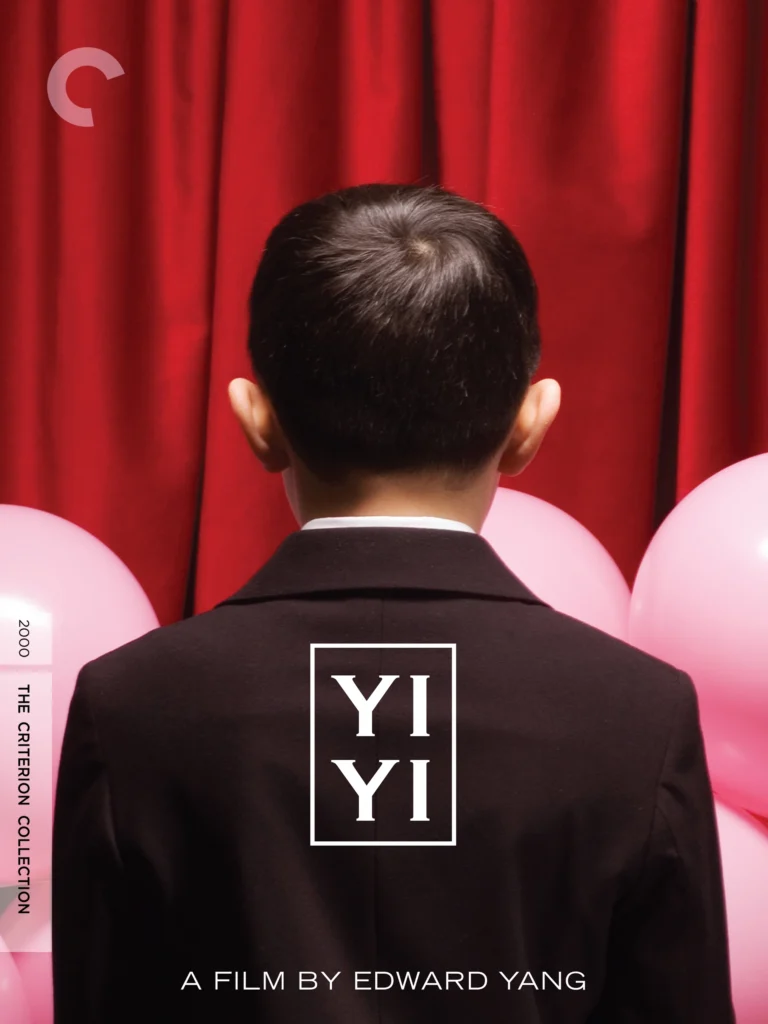
Yi Yi 

I finally got around to watching Edward Yang’s Yi Yi (2000) and now I’m kicking myself for not watching it sooner. It’s about a family in Taipei going about their lives and by the end of it you feel like you’re living life with them. 

It’s one of those observational movies that make you feel like you are overhearing a stranger’s conversation as you walk past or watching a couple fight on a balcony. At the same time, it’s homey and lived in, their apartment as familiar to me as my own grandma’s. The characters feel inherent to their setting, and they’re filmed in a way to highlight that. I really love when movies have a lot of wide shots. Better yet when the camera stays still and lingers, refusing to look away. Let me sit with these characters! Let me situate them! I want to feel this place!  

The film does this thing where sounds are constantly overlapping, not just as “background noise,” but genuine overlap. The sounds from the outside world—from their neighbors, from the street below—don’t disappear because there is an intimate conversation happening. Life around them continues, through disappointment, happiness, growing pains, love. A teenage girl has her heart broken while her father’s friends discuss financial investments in the other room.  

It’s a deeply earnest story and on top of it all, it’s beautiful to look at. I can’t stop thinking about it.

Anne Ramirez

Busy, Yet Pretty

I don’t typically spend my days listening to podcasts, as I tend to prefer music and audiobooks. However, Jadyn Hailey has captured my attention and won my heart with her optimism and motivation in her podcast, Busy, Yet Pretty. Lately, I’ve been spending my mornings and free time catching up on the episodes. 

This podcast is all about setting goals, improving personal habits, and creating a life you love to wake up to. I really appreciate her emphasis on balance and wellness rather than unreasonable productivity and “hustle culture.” The episodes are in bite-sized lengths, typically thirty minutes each, and they are filled with motivational words, tips for healthy productivity, reminders for self-love, and all kinds of other advice! Some of the episodes have truly changed my life, as they have helped me to overcome procrastination and negative self-talk, as well as realize some of my loftiest personal goals. The host is like a loving older sister who cheers for her siblings and pushes them toward success; her cheerful voice guides the listener toward positive thinking and hopeful ambition. Listening is like drinking a mental and emotional energy drink. 

If you’ve been wanting to improve your lifestyle and could use a mood booster for your morning routine or your commute, listening to Busy, Yet Pretty is a fun way to gain inspiration and create tangible, positive changes. 

Ewa Majewski 

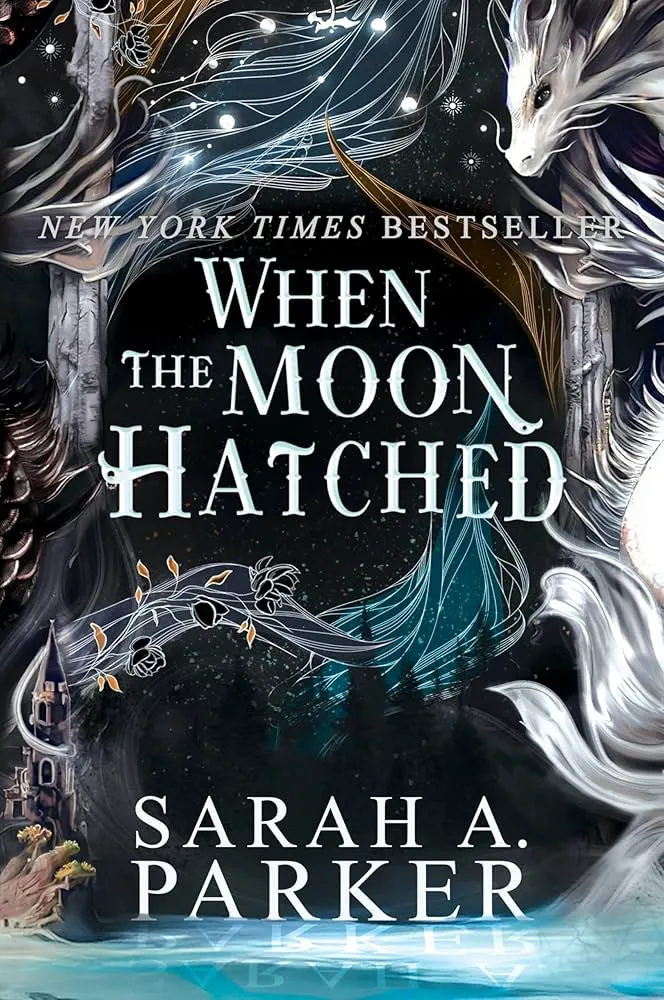
When the Moon Hatched

Trusting BookTok for a recommendation is not for the faint of heart. It’s a gamble. A leap of faith. Occasionally, a mistake. But when I saw When the Moon Hatched by Sarah A. Parker was getting the hype it deserved, I thought: FINALLY. A good one.  

When I read the book in 2023—yeah, that is a long time ago, and I am still thinking about it—I was hoping the rest of the internet would catch up because I simply needed someone to talk about that ending.  

Set in a world shaped by fallen moons and dangerous elemental magic, the story follows a fiercely guarded heroine whose buried past and hidden power begin to collide with a brewing war. What unfolds is layered, romantic, brutal, and deeply emotional. 

Also, did I mention there are dragons! 

With the sequel, The Ballad of Falling Dragons, coming out in just a few months, now is the time to dive into this world of magic, love, and adventure before the spoilers start flying.  

And if you are still not convinced, here is one of my (many) favorite quotes from the book: 

“Chase death, Moonbeam. And I pray your bloodlust brings you the same sense of peace I feel just knowing you exist.”   

Pratyusha P.

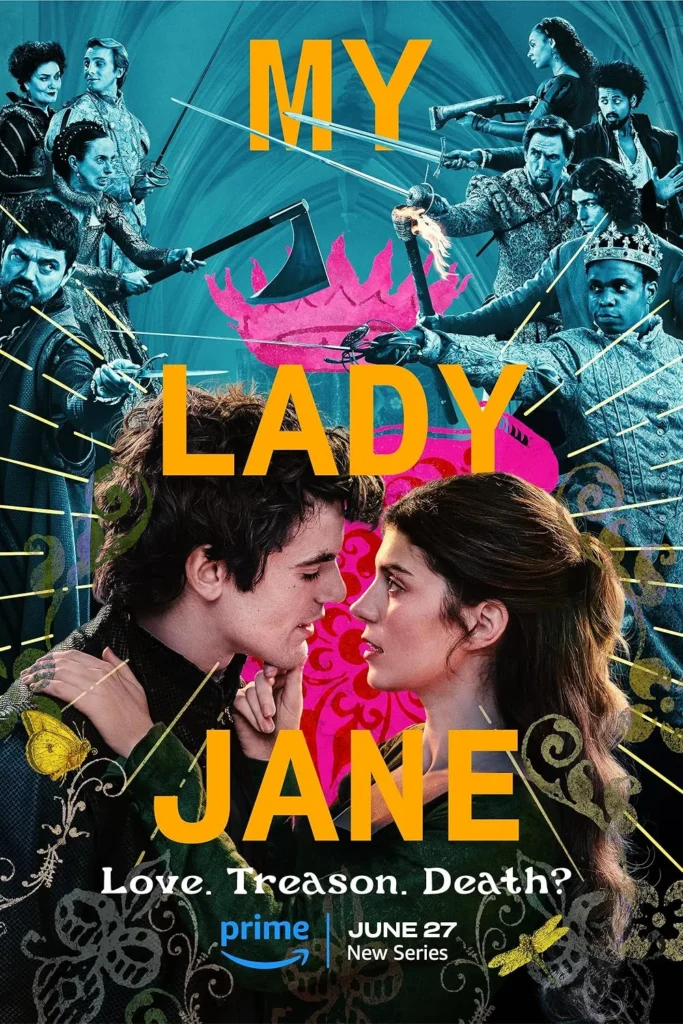
My Lady Jane

If you are, like me, spiritually attached to messy historical women and lightly unhinged court politics, please allow me to introduce you to My Lady Jane

Loosely inspired by Lady Jane Grey, the show asks: what if Tudor England were chaotic, magical, and slightly feral? What if political betrayal came with sword fights, slow-burn yearning, and a husband who occasionally turns into a horse? Yes. A horse. And trust me, it works. 

What makes My Lady Jane so electric is its audacity. It treats history less like a sacred text and more like a sandbox. The narration is cheeky, deliciously blends courtly intrigue with modern wit, and Jane herself is everything you want from a heroine—bookish, sharp-tongued, stubborn, and deeply unwilling to go quietly to the scaffold. 

It’s funny. It’s swoony. It’s camp. And beneath all the glitter and galloping chaos, there’s something earnest: a girl refusing to be a tragic footnote. 

Which makes it all the more devastating that it was cancelled after ONE season. If you haven’t watched it yet, consider this both a recommendation and a eulogy. 

Renee Sadler

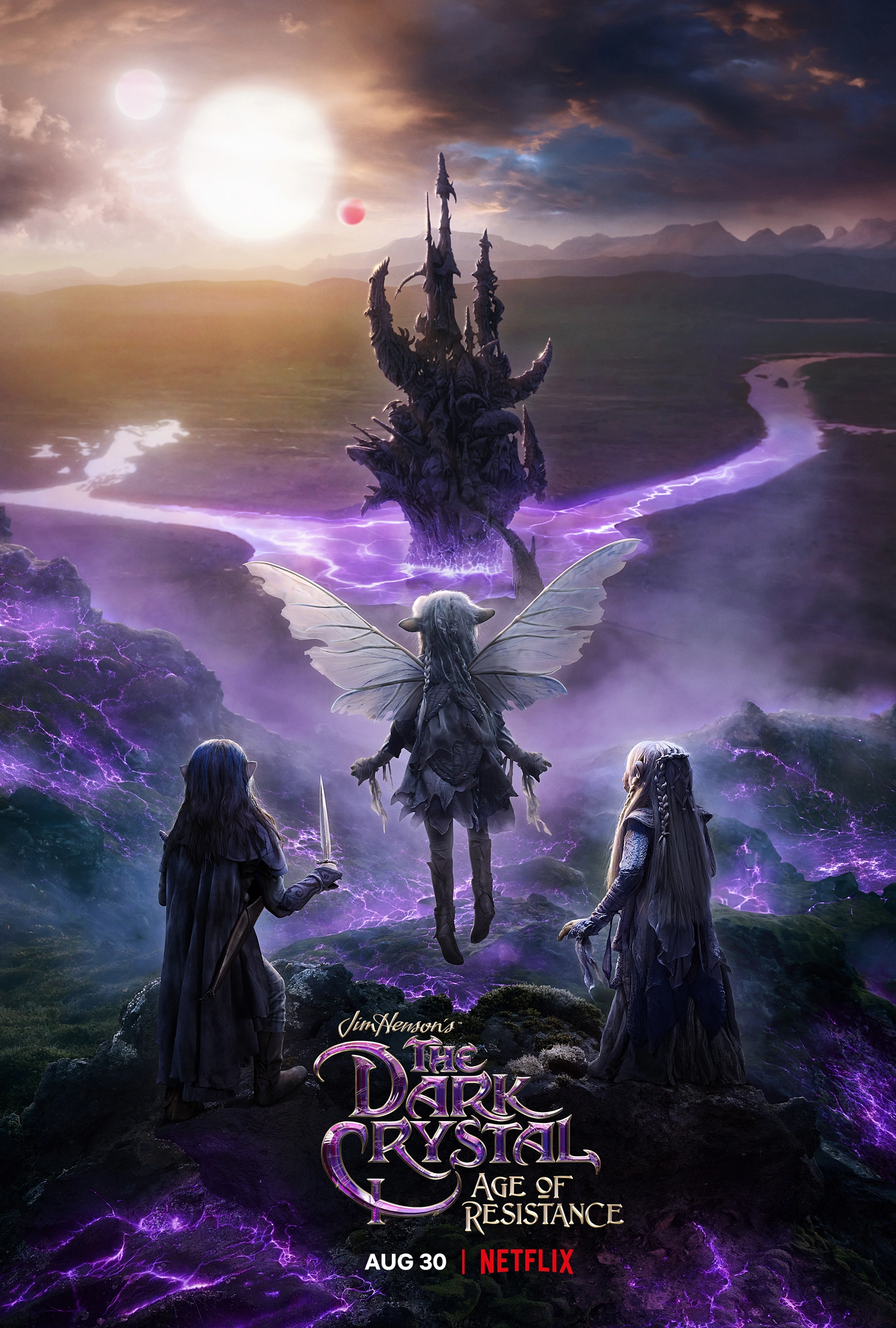
The Dark Crystal: Age of Resistance

With the Muppets getting new attention due to the Sabrina Carpenter Special, I’ve been spending a lot of time thinking about—and rewatching—my personal favorite Jim Henson project, The Dark Crystal. Specifically, The Dark Crystal: Age of Resistance

The Dark Crystal breaks the mold of Henson’s other works, it’s not bright and fluffy like Muppets and Sesame Street. In this project, Henson was exploring something darker. Something raw. The movie explores a post-genocide world with no human actors. Every character is a detailed, realistically-rendered fantasy puppet. With expert storytelling and deep emotion, Henson creates a world completely alien from our own while still reflecting our own dark qualities. 

When it comes to Netflix’s TDC: Age of Resistance, I can’t think of a single other prequel that takes the source material and builds on it in such a faithful and expansive way. The show introduces various clans, building out the mythology and various cultures of Thra. Since it is a prequel, we know all is lost, yet find ourselves hopeful for the main characters and rooting for each small victory. 

I’ll always be hurt that this story ended prematurely; the phenomenal sets and puppets left to collect dust. But I think it’s important to revisit this story even with its uncertain conclusion. This resistance of the small—of which there are many—against the powerful—of which there are few.   

Also, who doesn’t love a Fear and Loathing in Las Vegas style duo of queer-coded hermits.  

An Interview with Emily Hauser

Hello Emily, thank you for joining me today to talk about your recent book, Mythica (also known as Penelope’s Bones in the US). I’m particularly thrilled to be chatting to you because Homer’s epics have a special place in my heart—my Greek Cypriot dad told me and my sister these epics as our bedtime stories growing up. Could you start by giving us a sense of what this book is?

The first layer, the one you’ll interact most with in the book, is recovering the real women behind Homer’s myths. When we’re talking about Homer, we mean the epics of The Iliad—which tells a section of the saga of the Trojan War—and The Odyssey—which focuses on one of the war hero’s voyages home. Both of these epics are very male-centered, so the question of the book was: how can we bring the women of these stories into the foreground? Women like Penelope, the wife of Odysseus, or Helen of Troy, whose seizure from Sparta by Paris initiates the entire Trojan War. These are important women, women who are complex and can be fleshed out in interesting ways, but they are often marginalized and silenced. So the book is basically saying, instead of starting with the women in the myths—which are from a resolutely male tradition, handed down by male bards, and constructed for male audiences about male themes—what if we started with the women through history? What if we looked at real historical women from the period that fed into Homer’s vision of this long-lost age, looked at their experiences and what we are uncovering from their bones, from their DNA, from the artifacts they were engaging with? How might this then make us read Homer differently?

For me, that was kind of a revolution. I think critics or historians often start from the wrong end, with the accounts written by men within the system used to shore up messages about what it was to be a man. So instead, I put that to one side and started with the archaeology and therefore with the reality—as far as we can uncover it—of these women’s experiences. Then we can loop back around and ask, how does that change how we read the myths?

Secondly, in foregrounding the discoveries that are helping us to uncover these women, it was particularly important to recognize the women who have had a hand in this work. We’ve been talking about the silencing and the marginalization of these women of legend, but there are a lot of women scholars, excavators, archaeologists, and translators who have also been pushed to the sidelines. So, this is both a story about the past and the present.

So what was the spark that began your journey to write this book?

I have an interdisciplinary background in that I published three novels, Greek myth retellings, and I was writing those at the same time as I was doing a PhD in Classics in the US. So the spark with this book was thinking, I know I want to write something about women in Homer but instead of saying, this is an academic book or this is a public book, I could say, actually I’m bringing together critical analysis, historical understanding, archaeological reports, but also narrative storytelling. So really it was a culmination of all the different ways of thinking I’d been doing over the years.

The breadth of the book is remarkable—there’s archaeology, anthropology, DNA analysis, literature, mythology. You move through nine women from The Iliad, seven from The Odyssey. What was the research process like? And how did it go from being all these disparate pieces into something coherent?

For me, it was not about including these women in my book because they’re in Homer, but instead because they each have something to tell us about the experience of being a woman.

I really wanted the historical experiences of women to be my starting point. So my first port of call was to comb through all the archaeological reports I could find across the Late Bronze Age—the period that I decided to focus on, roughly 13th to 12th century BCE. I wanted to delve into different experiences from different kinds of women—so we’re not looking entirely at elite women, but we’re also looking at non-elites—and I was also really interested in showcasing a variety of technologies, approaches, and disciplines.

Then I looked at my list of Homer’s women. How can I start to weave these together? I felt almost like the Muses were watching over me, because there were all these correspondences that I could never have planned. The one that really stuck out was the Uluburun Shipwreck. I’d known for ages that I wanted to write about it not only because it’s an amazing underwater excavation but also because it foregrounds the techniques that incredible marine archaeologists use. As a Late Bronze Age shipwreck, I knew it would enable me to speak to issues of trade, and that then made me think about xenia—”guest friendship”—in The Odyssey. This brought Arete to mind, queen of the mythical Phaenicians and a key demonstrator of xenia. Then I was looking through what was discovered on the ship, and I couldn’t believe it: one of the most valuable objects was a single gold chalice, precisely the object that is given to Odysseus by Arete’s husband, the king. I just could not have planned that, the confluences were extraordinary.

How did you come up with the order? Did you grapple with it at all?

The idea was that the ordering of the women would create another subliminal layer. Though I start each chapter with the archaeology and historical context, I then move to the Homeric narrative and give a summary of where we’re at in the epic so as a reader you are essentially getting a summary of The Iliad and The Odyssey narrated through the women. So though people might not notice, the women are now our introduction to the epics.

I’d be absolutely fascinated to see if someone who, never having read Homer, read your book first and then went to Homer, and how that might change the entire framing. Is there a particular woman who was your favorite to write?

Well, it is difficult to pick, but I think the one that stood out for me the most was Thetis, the mother. I had recently become a mother myself, and so I was re-reading The Iliad with a completely different eye than before. In her chapter, I write about the part in The Iliad where Thetis talks about her motherhood, where she comes up with this word which we call, in Classics, a hapax legomenon, which means a “once said.” She makes up this word, and no one ever uses it again in any text, so it’s her word. The word is dusaristotokeia, which means “the worst-best-female-birther.” To unpack that, it conveys how it feels as a woman to go through an experience that can sometimes, for some women, be the worst of their life. In Thetis’s case, it’s certainly the worst of her life because as an immortal mother giving birth to a mortal child, Achilles, she knows she’s going to lose her child, which is the worst thing a mother can experience. But the birth is simultaneously the best thing, because it has brought into the world the thing that is the most precious to her.

So, this led me to think, how can we re-evaluate ancient burials and attitudes to infant deaths? In the past, male-authored, archaeological scholarship took an impassive approach to it: there were so many infant burials that the assumption is people were just used to it. But when instead you read with an attitude of empathy, you wonder, can we read this differently? We notice that, for instance, some of the infants are buried under the floor of a house, or they’re buried with specifically made objects, like a sippy cup that a family of potters made in Late Bronze Age Mycenae. So if we read with that empathy, I think it makes us see the care with which these lost children were being treated. Weaving that together was a pretty cathartic experience for me.

Headshot by Faye Thomas Photography

This leads me to wonder if there was any one woman who you found particularly surprising or unexpected?

The surprising one would have to be Calypso. I knew that Calypso had always posed a problem for me. The way she is talked about in The Odyssey and in criticism is always as a blocker of Odysseus. That had always really bugged me. But I couldn’t think of a response, because the narrative is that she gets in the way of Odysseus getting home as he’s kept captive on her island for seven years. There’s a really interesting moment where the poet of The Odyssey and Odysseus himself echo each other by using the same vocabulary, with the poet saying “Odysseus had been kept captive by Calypso,” and then later Odysseus says, “Calypso kept me captive,” using the same words. So, there’s a sort of double blaming of Calypso. It’s something that scholars tend to repeat and I couldn’t put my finger on how I could create a rebuttal.

The answer came, again, by starting with the history. As I was doing research into ancient weaving, I realized that one of the most exciting things being done now is experimental archaeology: where scholars basically recreate the tools that were used by ancient women weavers and then do the weaving itself. And what that does for us is gives us a sense of time. The technology of weaving has always been emphasized, but time wasn’t really something that was talked about. But the average estimate, based on the latest findings, is that women spent about ten hours a day spinning and weaving. And then I came across a statistic that it would have taken one woman roughly four years to make just one sail. Suddenly I realized, this is the rebuttal: considering Calypso through the work she was doing. She’s not just a temptress luring Odysseus with sex. That’s what the poem is telling us, that’s what the man is telling us, but it’s not what she’s doing. What she’s doing for most of the day every day is spinning and weaving a sail.

I love that. In that same chapter, you draw the concept together with our consumption of fast fashion nowadays, and how one in six people alive are involved in that industry in some form and most of them are women.

Exactly. Eighty per cent of the global textile labor is female. I really wanted to get across that this isn’t just an ancient story. You see patterns repeating. This means that we can argue that this is not just a poem about the past, we can also refract it into modern concerns.

I was really struck by the breadth of locations too. Your book is a wondrous tangle of different cultures. I wondered if your perceptions of place might have changed by looking through the lens of the women?

One of the most interesting things for me was to think about women’s experiences beyond Greece. This wasn’t something that I had any expertise in before. I knew about as much as we can know about Mycenaean women, but to start discovering women from, for example, the Hittite Empire in Anatolia and what they were doing, to start reading their texts, that was not only really exciting but also it challenged me to consider the boundaries that we put on history. There’s a quote from Raymond Westbrook—he says something akin to “the ancient legal tradition of Mesopotamia did not stop dead at the shores of the Aegean.” It’s such a testament to the way that later thinkers and historians have put time periods and cultures and civilizations into very neat countries and conglomerations. If you think about Greece in this period, they’re not even calling themselves Greece. There is probably, potentially, a sense of a united identity—though even that’s contested—but what we’re seeing, particularly in the archaeology, is individuated city states that have trade connections with other cultures. So when we are talking about women, we are not talking about isolated Greek women, we’re talking about a map of women across different cultures, many of which treated women in different ways. There were some cultures in which women could become incredibly important, like the Hittite Empire, where their names were handed down to posterity in ways that we tend not to see in the Mycenaean Greek tradition. So that was a massive eye-opener.

And then secondly, Homer has often been venerated as a Greek-centered text. It is, of course, written in Greek. And there are a lot of scholars who would argue that there is a drive within it towards Hellenic identity. But at the same time, it’s not inconceivable that the bards who were sharing these stories before the epics were written down were circulating within a very fluid and much more global cosmopolitan tradition. And therefore, there could be threads of all kinds of different cultures, all kinds of different women’s stories woven into the epics. So we’re shaking up this idea that we are looking at a canonical male text, because now we’re looking at something that could be fluid and oral, that could have space for women from different cultures, that doesn’t just have to be Hellenocentric but can be looking across the ancient Mediterranean world writ large. For me, as a historian, that gave me so much space to play in.

If you take that concept of shaking up what it meant to be Greek, does the same process allow for a shaking up of what it meant to be a woman?

That is something I really wanted to address in the book. One of the key characterizations of woman’s place in society—to be sidelined and silenced and marginalized—is not, in fact, necessarily from Homer. I think Homer is a contributing factor, but perhaps weighing more heavily is the importance of Athens in the 5th century BCE, the so-called classical period in which it’s very likely that the Homeric poems became concretized and standardized. That same period is when women had the least amount of autonomy, where the ideal was that women weren’t meant to be seen, they were kept within the household, they should be silent, and that was the only way that they can gain any kind of approbation. I think that because of the importance of classical Greece this became such an important model, so much so that other variant models of what it might be to be a woman from other cultures across the Mediterranean—and even from within Homer where you do get a complexity of womanhood—became forgotten.

There are a couple of chapters that really stood out on that front, one exploring Athena and her gender fluidity, and then Penthesilea, who is the Amazon, the female warrior. This brings me on to a very tangly subject: how did you grapple with the fluidity of legend versus all this scientific research when creating what you call your own “counter-history”?

Legend is such a difficult one. I spend a lot of time defining it in the book, because what’s really interesting about legend is that it doesn’t exist outside of text. We only have fixed end-product versions that gesture back to earlier legends. Legend and myth, by definition, are fluid, oral, moving, unfixed, something that can be changed. That is why myth is such a powerful force, precisely because it can be changed. And that’s what’s so interesting about epic—they begin as earlier oral instantiations handed down by bards with that fluidity of legend behind them, but they have now been fixed and rooted. Because I am a scholar of archaic literature—and that’s what you’re looking at in the archaic period, this transition from oral, burgeoning myth into textual versions—you get quite used to oscillating between the two. It’s telling you something about what the text is trying to do—on the one hand, it’s gesturing towards wider meanings while on the other hand, it’s also closing them down and saying, this is my version.

Absolutely, and that gives you much more gray space in which to play. So what do you see as your role within that?

My role is to open people up to an understanding of how these ideas came about while at the same time, harnessing the flexibility of myth to show that these ideas can always be changed. So we’re explaining why the canon has the force that it has, but we’re also saying myths can always be rewritten and changed, and therefore, this is where we can come in and see things from a new angle.

Digging into that a little bit more, especially as International Women’s Day is coming up, how does this distant history draw into our current times?

As we’ve mentioned, in each of the chapters I link how these experiences do speak to modern themes. I think the overarching sense of the book was that women have always been there in history. That is the bottom line. Fifty per cent of the population was living their life throughout history, and it is our job now to start to tell these stories about them. In the past, the silence of women in the record used to be taken as an excuse not to look further. What this book taught me was to see this instead as an invitation to be more inventive and more exciting methodologically, to dig deeper, to ask different questions, so that by the end you actually come out with something that, to me, is even richer and more exciting. Silence is not the stopping point, it’s the start.

A Review of The Red Winter by Cameron Sullivan

This title will be published on February 24, 2026 by Tor Publishing Group.

*SPOILER ALERT* This review contains plot details of The Red Winter.

Twenty years after what he thought was his final encounter with the terrible Beast of Gevaudan, the mysterious and unaging Professor Sebastian Grave is summoned back to the French countryside by an estranged lover to face the Beast—and plenty of other unfinished business—again. Readers follow Sebastian not only on his journey back to Gevaudan, but through his memories as he reflects on his history with the Beast, which began long before its gleeful rampage in Gevaudan. Accompanied by Sarmodel, the ravenou s demon co-habiting his body, Sebastian is forced to confront past failures in this bloody debut from Cameron Sullivan. Sullivan invites the audience to peek behind the curtain of one of Europe’s most mysterious werewolf stories as he blends history and fantasy in The Red Winter.

One of this novel’s greatest strengths is its entertaining use of footnotes.The Red Winter is initially framed as Sebastian’s reflection on his increasingly violent confrontations with the Beast over several centuries. The footnotes are written from Sebastian’s present-day point of view and containadditional context about the world’s magic system and the different historical/mythological figures that appear throughout the novel. Alongside occasional commentary on the story itself, these footnotes are delivered as witty asides by a much older Sebastian. Some of the novel’s most amusing moments come from present-day Sebastian congratulating his past self on a pun he is still proud of or offering his opinions on the various historical figures encountered throughout his long, strange life.Aside from the occasional levity and the helpful worldbuilding, the footnotes create an interesting duality in Sebastian’s point of view that isn’t present in many other novels; readers get to see many versions of this character, including one that has already processed the plot of the novel itself.

Sebastian’s character, in general, is another stand-out element of this novel.Due to his near immortality and inability to age, he’s forced to adapt to a constantly evolving world but is never able to truly live as part of it.He is accustomed to outliving those he comes to care about and that knowledge makes connecting with people difficult. Additionally, Sebastian must continuously feed on anima, or the essence, of other living creatures to sate Sarmodel’s endless hunger.Sarmodel is the only constant in Sebastian’s seemingly endless life, and despite his hunger and occasional moodiness, this demon possesses an incredible insight into Sebastian’s psyche, as he’s been with Sebastian every bloody step of the way. Their relationship is strange and requires delicate balance, but Sarmodel offers a truly unique foil to Sebastian’s character. For example, he often advocates impulsivity where Sebastian favors restraint. Ironic, considering it’s Sarmodel who is the ancient, unfathomably old demon—you’d expect him to have learned patience at some point! Both characters have such strong, individual personalities despite co-habiting the same body for centuries that the moments when they flip and lean into traits associated more with the other are especially impactful.

Despite the dark, inhuman existence he is forced to lead, Sebastian still manages to maintain his humanity and a genuine respect for life even in moments when it would be easier not to.One example comes when he chooses to mercy kill an ancient water nymph cursed by the Beast.While Sarmodel revels in the feast of anima her death provides, Sebastian has a very different reaction: “I covered my ears and screamed to hide Sarmodel’s triumphant howl as he claimed her essence. I could not bear it.”In addition to being a former ally, this water nymph was potentially the last of her kind; however, she had been corrupted by the Beast’s curse and sentenced to a dark, painful existence. While Sarmodel saw her largely as a meal and a way to increase his power, Sebastian’s decision to kill her was made of a desire to end her suffering.Sebastian’s ability to maintain that respect for life despite needing to feed off it is an intriguing layer to his character. It wouldn’t be as impactful without the contrast between him and Sarmodel. Despite the centuries they’ve spent co-existing in the same body, they remain very different people.

For the most part, The Red Winter succeeds in balancing its complex narrative within a complicated and multilayered story structure—with one exception.While most of the novel is told from Sebastian’s point of view, there are a few chapters from the perspective of Livia, a succubus bound to his service through a magical contract.Livia is a fun character—she’s quippy and helps introduce readers to another side of the novel’s magic system—but there are several times her point of view feels untethered from the rest of the story.Her character is not as well developed as Sebastian’s or even some of the non-POV characters and she plays such a small role within the story that suddenly being thrust into her perspective is jarring.Part of this issue comes from her motivations; while hunting the Beast evolves from an exciting challenge to a personal mission for Sebastian, Livia is only compelled to participate in the hunt because she is ordered to through their contract. That’s a fine reason, but it makes her far less impactful to the story.She doesn’t grow like Sebastian does and her chapters are so short it’s difficult to get invested in her side of the story.I would’ve liked to see her fleshed out more. Perhaps that will be a possibility in future books, as the novel’s ending is left open for a sequel.

Overall, The Red Winter is an exciting addition to the historical fantasy genre and a dynamic debut into the literary scene from Cameron Sullivan.While this novel is not a light read, Sullivan manages to inject it with enough levity to balance out its truly dark moments without undermining the spookier elements.This novel is perfect for fans of European history and stories that blur the lines between fantasy and horror.

Meet the Spring 2026 Publishing Interns

Alina van den Berg

she/her

What is your favorite place to read?   

Weirdly enough, I love reading on public transportation. I suppose it’s not the most comfortable place in the world, but there is something to be said about getting long stretches of time when you are not expected to do anything. It’s a liminal space. I have read a ridiculous number of books on my commute to and from work. 

You’re walking up the side of a mountain along a winding, wooded path. You look to your left and discover, by chance, a door in the side of the mountain. Do you open it, and if so, where does it lead?  

It opens into a dark tunnel, carved out of the mountain itself. I follow it with nothing but a flickering lighter to guide me. It slopes down, down, down until there is nowhere else to go except out the large metal door that stands at its end. I heave it open—only to find myself back outside on the wooded path. Except, instead of stumbling into sunlight and the rustling of summer canopies I left behind, I find charcoal-dark trees and a path covered in snow. 

How do you take your coffee? If you don’t drink coffee, describe your favorite beverage ritual.  

I am going through a phase where all I want to drink is water, but I used to carry around a bottle of iced barley tea. Something about its nuttiness feels calming to me. 

What is your favorite English word and why? Do you have a favorite word in another language? 

My current favorite word in English is “esophagus.” A friend pointed out it’s a word that lives in your throat, and I couldn’t stop thinking about it. To be honest, I’m fond of a lot of words in many languages, but at the moment “cafuné” comes to mind—it’s Portuguese for an affectionate head scratch you might give someone. It’s such a warm word. 

You’re on a deserted island. You have one album and one book. What are they and why?  

Book: Jane Austen’s Persuasion. Music: J.Y.N.’s Bittersweet EP

Persuasion is a comfort read for me and I think it would help me stay calm. It’s one of those books I can read multiple times without getting tired of it. J.Y.N., on the other hand, would keep me company and give me an extra boost of energy to go collect firewood. 

If you could change one thing about the literary industry, what would it be?  

Although this is not true for all corners of this industry, it can be disheartening to see how profit has become a priority over creativity or even quality. In an ideal world, new ideas and voices aren’t simply accepted but are actively searched for. As much as risk-aversion is a survival strategy in publishing, it is also one that can lead us further away from what it means to tell stories. 

Anne Ramirez

What is your favorite place to read?   

My favorite place to read is on public transportation. This isn’t always easy, as I am often distracted, but I love the combination of being transported physically, intellectually, and emotionally. One of my favorite reading experiences was on a train from Hungary to Czechia, when I spent the ride reading about the history of Prague and its landmarks. It both relieved me from the long day of travel and anchored me in my trip to Prague. 

You’re walking up the side of a mountain along a winding, wooded path. You look to your left and discover, by chance, a door in the side of the mountain. Do you open it, and if so, where does it lead?    

I will always open every door I come across. This one is wooden, round, and hobbit-like, with a dirty window that’s impossible to see through (I tried). I pull on the handle with all my strength, only to discover that it’s a push door. I push it open and there is a startled deer who is solving a crossword in front of a crackling fireplace, using his mouth to hold the pen since he only has hooves. He invites me to help him solve his crossword with him. I happily accept. 

How do you take your coffee? If you don’t drink coffee, describe your favorite beverage ritual.    

My daily morning ritual is to pour myself a chai latte: half-chai and half-milk. I try to avoid drinking coffee daily since I am sensitive to large levels of caffeine, but when I do occasionally treat myself, I choose a lavender latte. My lovely roommate has invested in an espresso machine, so I love tasting all their homemade lattes when I have the chance. 

What is your favorite English word and why? Do you have a favorite word in another language?  

My favorite word is defenestrate, which is a verb that means “to throw out a window.” I love how specific and uncommon it is, as I hadn’t heard it used in a sentence until reading about the Defenestrations of Prague, which are quite important to Czechia’s history and in understanding the 30 Years’ War. I like the word itself because it’s so lengthy and official-sounding for something so simple. 

You’re on a deserted island. You have one album and one book. What are they and why?   

I would pick a book to keep me mentally stimulated and engaged, so I think The Awakening and Other Stories by Kate Chopin would do that for me. The variety of short stories and the re-readability of them would help me stay entertained for a long time, as well as give me reasons to dissect them even further than I have. I would choose Solar Power by Lorde as my album; I think that would be a good way to make this deserted island feel like a vacation resort. 

If you could change one thing about the literary industry, what would it be? 

If I could change one thing about the literary industry, it would be increasing awareness about different options for accessibility. Countless times, I have heard people talk about how they “hate reading,” only to discover they simply struggle due to disabilities or other issues outside of their control, and have not been presented with tools to help improve their experience. I am grateful audiobooks have become more popular in the last few years, but there’s still a lack of awareness among many people I know. I would also love to bring awareness toward more uncommon genres and interesting stories to modern audiences, as some people I know have been off-put by the presumed difficulty of books. 

Ewa Majewski 

she/her

What is your favorite place to read?   

Definitely at home surrounded by my books and fairy lights, listening to the rain—a setup that is rarely hard to come by when you live in Ireland. 

You’re walking up the side of a mountain along a winding, wooded path. You look to your left and discover, by chance, a door in the side of the mountain. Do you open it, and if so, where does it lead?  

I’d absolutely open it and, unsurprisingly, it leads to a city of starlight, with bookshops tucked into every corner, soft music drifting through the streets, and art everywhere.  

How do you take your coffee? If you don’t drink coffee, describe your favorite beverage ritual.  

I take my “coffee“ as hot chocolate; preferably with enough whipped cream and marshmallows to make it a small meal and a minor life event. 

What is your favorite English word and why? Do you have a favorite word in another language? 

I adore the word epiphany—partly because it feels like that tiny lightning strike of understanding, and partly because it reminds me of the soft melancholy of folklore by Taylor Swift. In another language, I love the German word Marmeladenglasmoment, which roughly translates to “jam jar moment“—a little, precious moment in life so sweet you wish you could jar it up and keep it forever. 

You’re on a deserted island. You have one album and one book. What are they and why?   

My album would have to be The Tortured Poets Department: The Anthology by Taylor Swift—because it’s cathartic, and if I’m stuck on a deserted island, I need music that understands my mood swings and can keep me company for hours. And for a book, Kingdom of Ash by Sarah J. Maas—the ultimate finale to read, and the perfect excuse to ugly cry in private without anyone judging me. 

If you could change one thing about the literary industry, what would it be?  

I wish the literary world were a little less judgmental, not just about what we read, but also about how much we read. Whether someone devours fifty or five books a year, rereads the same one for comfort over and over again, or secretly loves guilty-pleasure fanfiction, none of it should come with a side-eye from anyone. 

Pratyusha P.

she/her

What is your favorite place to read?   

As boring as it sounds, it’s my couch—but in a very specific corner, with a very specific twist of limbs. It’s a natural occurrence of perfect balance between peak comfort and mild bodily torture, and somehow that’s when I read best. 

You’re walking up the side of a mountain along a winding, wooded path. You look to your left and discover, by chance, a door in the side of the mountain. Do you open it, and if so, where does it lead?  

No. Absolutely not. I have consumed a completely rational amount of crime television (Criminal MindsC.I.D.Savdhaan India, BonesCrime PatrolThe MentalistCastle), and every single one of them has personally warned me about this exact scenario. A forest THAT I KNOW IS FOGGY. A mountain. A door that is simply there. That door does not lead to Narnia; it leads to a forty-seven minute episode titled “She Shouldn’t Have Opened It.” I back away slowly, narrate my own escape like I’m in a documentary, and live to say the great words “No way, Jose.”  

How do you take your coffee? If you don’t drink coffee, describe your favorite beverage ritual.  

Coffee, for me, is less a beverage and more an act of love. It’s my friends being sweet, or my grandmother fussing over whether I’ve eaten enough. That said, I’ll always choose good old ചായ (Malayalam for tea). I love the first wave of aroma, the foamy first sip, the way the plain version holds its own just as proudly as any masala variation. It’s served in a heated steel glass that practically demands you pull away, but you don’t, because the tea is simply too good. My grandfather made the best tea, and every cup since feels like it’s trying (and failing) to live up to that standard. 

What is your favorite English word and why? Do you have a favorite word in another language? 

I hate the word “vulnerable.” It’s a phonetic nightmare for someone who learned English as a second language. But the linguistic miracle that is “giving”? The efficiency. The drama. The range. 

Being desi meant being raised between languages. In Malayalam, I adore നുണക്കുഴി (nunakkuzhi), which means dimples but directly translates to “lie holes.” Tell me that’s not poetry. वातावरण (vatavaran) means atmosphere in Hindi, but I use it to describe vibes. Orange in Arabic, for reasons I can’t logically explain, I love the sound of. برتقالي (burthakal)—it just feels satisfying to say. 

But Tamil has a particularly sweet one: “saptiya?” (“Have you eaten?”) In so many desi households, food is love, and asking if you’ve eaten is the softest way to ask, “Are you okay?” 

I’m still deciding on a Korean word — but I’m open to being convinced! 

You’re on a deserted island. You have one album and one book. What are they and why?   

Album: Future Nostalgia by Dua Lipa

Because if I’m stranded on a deserted island, I refuse to spiral. I will be dancing, staging dramatic music videos with absolutely no audience, and gaslighting myself into thinking this is a wellness retreat. It’s upbeat, it’s dance-y, it’s serotonin in audio form. I am easy like that. 

Book: Percy Jackson and the Olympians by Rick Riordan (either the first or the last one) 

It was my first step into fandom and my first experience of desperately wanting to live inside a fictional universe. I didn’t even crush on Percy because (1) Percabeth supremacy, and (2) I wanted to be him. Hydrokinesis? Elite. The extremely questionable theoretical potential to blood-bend? Even more elite. Twelve-year-old me was ready to pack a bag and head to Camp Half-Blood immediately. 

If you could change one thing about the literary industry, what would it be?  

If I could change one thing about the literary industry, it would be how risk-averse it can be. So many brilliant, strange, genre-bending stories don’t get the backing they deserve because they don’t neatly fit into a marketing category or promise an easy comp title. 

I’d love to see more room for experimentation. I WANT more debuts that are messy and ambitious, more stories from voices that aren’t already proven profitable, more books that trust readers to handle complexity. Literature has always been at its best when it’s a little disruptive. LET BOOKS BE WEIRD AGAIN. 

Renee Sadler

What is your favorite place to read?   

On a boat, because everything is better on a boat. Unfortunately, this is a rare luxury for me, so if I can’t slowly rock on the waves, my favorite place to read is on my cozy second-hand couch. I like to sink right into the cushions, cover myself in a thick blanket, and read by colorful lamp light. I typically have CatTV on at the same time since it’s the only way to keep my cats from headbutting my book or sitting directly on the pages.  

You’re walking up the side of a mountain along a winding, wooded path. You look to your left and discover, by chance, a door in the side of the mountain. Do you open it, and if so, where does it lead?  

 I’ve never been the most observant person when it comes to my surroundings so noticing the door would be a miracle in itself. I’m also not known for thinking too long before I leap, assuming the stars aligned and I found my way to this door, I would immediately barrel in. Following the sound of acoustic guitars and toy drums, I’d stumble upon a beautiful cave of fantastic multicolored creatures. That’s right, I’m in Fraggle Rock! The harmony, joy, and sense of community that can be found at The Rock is very appealing to me, especially now. Of course, this fantasy also includes me transforming into a puppet version of myself with great hair and a cute little vest.  

How do you take your coffee? If you don’t drink coffee, describe your favorite beverage ritual.  

I’ve never understood the love of coffee. However, I’m an avid tea drinker and try to make a cup at the start of each day. I’m partial to black or herbal teas, but I’m open to trying anything, and often grab a bag out of my tea drawer without looking. Right now, my go-to is a rose black tea from my local farmer’s market. No sugar. No milk. Over steeped just a smidge. I want it bitter. 

What is your favorite English word and why? Do you have a favorite word in another language? 

I’m not sure I’ve ever had a favorite word. I like words. I wouldn’t be a writer if I didn’t, but I never would have considered having a favorite word if it wasn’t a question I’ve been asked to answer. For now, I’ll say the French loan word “crochet.” I think it sounds nice, fancy, and homey at the same time, and it reminds me of my favorite way to climb up silks, which is a “crochet climb.” This is also a fun way for me to sneak in that I’m an aerialist.  

The only other word that stands out to me is “ragnar,” which isn’t so much a word as a 9th-century Viking whose name my family turned into a verb. It wasn’t until high school that I learned “ragnaring” was not a word other people used. For those interested, it means doing something aggressively and, for some reason, with your teeth. If you are tearing open an envelope with your chompers instead of looking for a pair of scissors, you are “ragnaring” it. I’m not sure why or how this turn of phrase came to be, but I blame my grandpa. It was probably him.   

You’re on a deserted island. You have one album and one book. What are they and why?   

Sometimes the first answer you think of is the right one. For me, the first book that came to mind is The Left Hand of Darkness by Ursula K. Le Guin. After some reflection, and trying to justify other books, I think there are a lot of good reasons to be stuck with this book and only this book. For one, a central theme in the novel is adapting alongside nature. While the icy wastes of Winter couldn’t be more different than the beautiful tropical beaches I assume I’m stranded on, the ideas of working in tandem with your environment and letting nothing go to waste would be important to remember and embody. I’ll likely get sick of the sand and want to escape to the snow anyways, so the setting is actually perfect. Similarly, the book spends a chunk of its time building up the religion of Handdara which is based on Taoism. The interaction between light and dark and unity between opposites are core concepts in both Handdara and the story itself. Being alone, some philosophy would be a great way to center myself. However, I refuse to only bring a philosophy book because that sounds boring. I also need Sci-Fi political drama and cool genderfluid aliens.    

As much as I would LOVE to say Hunky Dory by David Bowie is the album I would bring, it’s simply not true. Sorry Bowie, but that album is only forty-ish minutes long and I would get sick of it so quickly, even though it is my favorite. I think a movie soundtrack is the only music that wouldn’t drive me up the wall after years of being stranded. If I really had to choose, I’d say the Lord of The Rings soundtrack (yes, all three movies. I’m cheating). It’s insanely long with both adventure beats and quiet moments so I can always match my mood. If I’m really starving for vocals, it’s got Enya. Anything else I can just scream-sing from memory. My rendition of “Oh! You Pretty Things” would make me famous amongst the lizards and birds.   

If you could change one thing about the literary industry, what would it be?  

I would change the mindset of the industry to take comics more seriously. While we’ve gotten to a point where books like Persepolis and The Complete Maus are seen as valuable contributions to the literary world, it is still an uphill battle for most comic artists/writers to be taken seriously, especially when their work indulges in the bombastic action-packed flair that is a staple of the genre. Comic books, even in their simplest and silliest forms, encourage deep engagement between the reader and the page. Gutters between panels force readers to imagine the possibilities between each scene and draw conclusions. Design elements, such as writing the character’s internal monologue in cursive, influence readers to make their own assumptions about the character’s disposition and background. Media literacy is born from stories that show instead of over explaining and nowhere is that balance more important than in the creation of an issue-by-issue comic where you are constrained to thirty-two pages and could be cancelled at any moment. The ones that do it well deserve recognition. The more I teach literacy workshops utilizing comics, the more passionate I become that comics deserve literary recognition. Not only are they complex forms of writing, but they also encourage literacy development and accessibility. As literacy rates decline, seeing comics not only as a way to convince kids to read but as an accessible way to share stories with the public would make a huge difference, not only to the literary industry, but to society as a whole.  

January Staff Picks

Mika Ellison

The Dispossessed

It’s been a while since I’ve read Ursual K. Le Guin, so picking up The Dispossessed was a pleasant surprise, since I’d forgotten just how utterly masterful Le Guin is at what she does.

Like many of her novels, The Dispossessed, written in 1974 (I know, I’m late, whatever) is pretty obviously a thought experiment, or rather a series of thought experiments, mostly about what kinds of society are possible for humanity to sustain. Le Guin was inspired by the writing of famous anarchists to create a speculative anarchist society on the moon, one that had split off over a hundred years ago from their capitalist planet. And then she spins out exactly what that might look like, from the perspective of a physicist from the moon who visits the capitalist planet on a research trip/mission. 

But the magic of Le Guin, and what makes her an absolute titan of the genre, is all of this complicated political machinery is reduced to what it actually is: people making decisions, many of them flawed, but just as many attempting to do right by their community and their loved ones. Le Guin’s respect for human compassion, and the ability for people to grow and change, is all the more incredible because of how clearly she sees human nature itself. When she suggests a new vision of humanity, and when she imagines a better, different world, you listen. Because in her hands, anything seems possible. 
The Dispossessed functions brilliantly as both an allegory for the world we live in and as a story that envelops you with its exacting detail and riveting plot. Par for the course for Le Guin, but a revelation for me.

Ari Iscariot

Iron Lung

The end of the world. A convict sentenced to scour an alien planet covered in an ocean of blood. A sea floor littered with clues regarding the disappearance of humanity. Haunted by the ghosts, mistakes, and betrayals of his past, this convict fights to survive in the isolation of a welded shut, rusted submarine and to withstand the influence of horrors so Eldritch and incomprehensible he can barely hold onto his sanity.

This is the premise of Mark Fischbach’s indie horror movie, Iron Lung, adapted from a video game of the same name. Self-financed, cowritten, directed, distributed, and starred in by Mark, this film wasn’t expected to show in more than 50 to 200 theaters. But after insistent requests to theaters, made by fans of Markiplier (Mark Fischbach’s widely successful Youtube channel) and of the game, Iron Lung has shown in more than 4,000 theaters and debuted to the tune of $21.7 million, after reportedly costing $3 million to make. So what’s the secret to the film’s success? 

Firstly, adulation must be given to the technical aspects. With such a small set (a painted wooden box pumped full of 80,000 gallons of blood) the film could have easily become visually boring, trapped in the same space for most of the story. But brilliant camera work elevates the visuals past the usual indie benchmark. The film makes clever use of reflections (a glass port window, a computer screen, even the convict’s eyes) and capitalizes on intense close-ups and dramatic lighting to reveal information in carefully measured punches. Exploration and discovery ensure the space doesn’t feel static, secrets are continually discovered: written messages, concealed panels, and pitch-black crawlspaces. Mark’s acting, after a slow, building start, further guarantees the audience stays invested. His big personality and dramatics are streamlined into a galvanic, desperate, heart-wrenching performance. The eerie sound design, cataclysmic soundtrack, and ever ratcheting tension leaves you raw, gasping, and abs sore from flinching. The emotional aspect of the terror weighs heavy, as the claustrophobic space allows you no visual distraction or escape.

The second secret to the film’s success is the expansion of the convict’s backstory and the game’s lore. Without getting too spoilery, I believe fans of the game will be pleased with how the original story was preserved, while also providing the convict with more depth and agency. In the film, the convict is given the opportunity to decide his fate, and by extension, the fate of humanity. “This is bigger than any of us,” is the film’s repeated tagline, and while it’s unfair not all of humanity will survive, our characters believe sacrifice is a worthy price to pay to leave the world a better place. This allows the film an ending that, while not joyous, still has a breath of hope in it, and is deeply satisfying.

I find this theme strangely fitting for Mark’s first directorial debut. He has expressed many times his own desire to leave the world a better place for future generations. With this film, Mark is trailblazing and inspiring and doing good—creating a blood drive alongside the premiere of the movie, paying bonuses to all his staff after the movie’s success, netting a win for filmmakers by showing independent passion projects can survive and thrive without the support (and censure) of a massive Hollywood studio. I don’t think it’s an exaggeration to say the success of this movie is a win for everyone, the people who made it, the fans who supported it, and the future movie-makers it will inspire to break beyond the constraints of the industry. Most of all, it’s a win for audiences that desire daring art created with imagination and spite and love.

Taylor Pittman

Heated Rivalry

Heated Rivalry is a Crave original that HBO picked up at the end of 2025. When I tell you, I’ve been obsessed with this show since its release. Based on the Game Changers series by Rachel Reid, Heated Rivalry follows Shane and Ilya, two rival hockey players, who end up falling in love with each other. For romance lovers, it has everything: the chemistry, the tension, and a bit of spice. 

However, it is incredibly emotional at times as it explores the struggles professional athletes face regarding their sexuality and the homophobia they may encounter. In fact, since its release, several hockey players have come out themselves, and there is more support and representation in the sport than ever before. It’s already been confirmed for season two, and I can’t wait to see Shane and Ilya’s story continue.

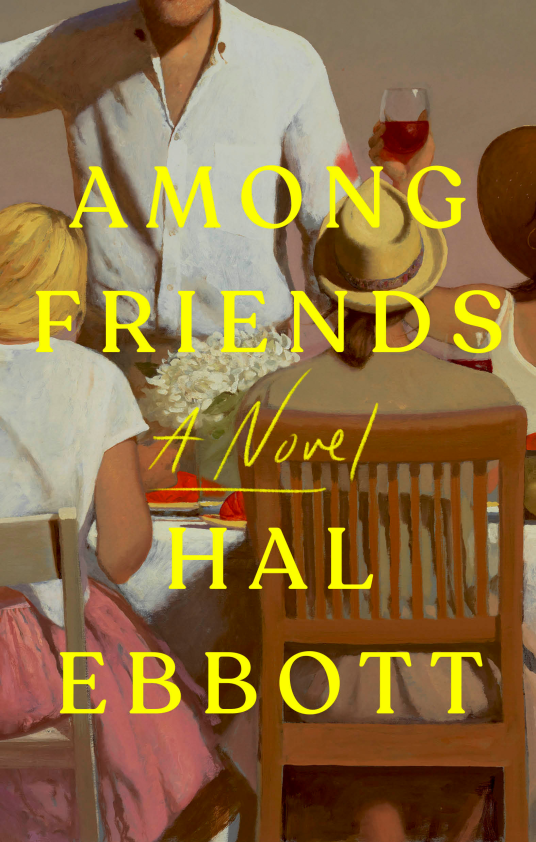
A Review of Among Friends by Hal Ebbott

This title was published on June 24, 2025 by Riverhead Books.

*SPOILER ALERT* This review contains plot details of Among Friends.

I love a dysfunctional family saga. Whether in a novel, a movie, or a TV show, I thrive off familial dynamics. So, when I read the synopsis for Hal Ebbott’s debut novel, Among Friends, I knew it was going to the top of my to-be-read list The story follows two lifelong friends, Amos and Emerson, who reunite for an intimate, affluent birthday celebration at Emerson’s country home. What begins as a quiet weekend among friends slowly fractures, revealing how privilege can bury the truth.

From the beginning, everything feels unsettled. The characters perform under a façade—off-key, out of tune. Tensions simmer beneath surface-level smiles. Conversations are awkward. Old grudges linger. Wives smile through tight jaws. Among Friends features all the tropes complete with a large manor house and a group of wealthy friends. So, I settled in for what I thought would be a good ol’ domestic drama.

At first, I wondered when we’d get to the action, specifically the “shocking betrayal” the blurb teased. The slow burn was off-putting at first, and I was getting impatient. But in hindsight, it was a good thing Ebbott didn’t drop us directly into the action: it allowed time to explore his characters and understand their motivations, what makes them tick, and where their loyalties lie.

Emerson is the most complex character and perhaps the most well-written—a Jekyll and Hyde figure who can instantly flip from charm to unbridled cruelty. Ebbott describes him as having “lethal intelligence like what exists in a wolf.” His inner rage and entitlement, bolstered by years of unchecked self-importance, are chilling. And yet, his thoughts sometimes feel disturbingly universal, that feeling when teasing goes too far, when resentment crawls closer between two friends. Ebbott asks, what happens when you can’t take it anymore?

Truth be told, I was expecting something completely different from Among Friends. I tried searching for clues of an affair, a scandal, something more conventional. So, when Emerson sexually assaults his Amos’s daughter, Anna, during the party, it’s a brutal shock. On the one hand, Ebbott gives no clear warning this is imminent. But on the other, it had been part of Emerson’s nature all along. The uneasy silences, the flashes of rage.

Every time we’re immersed into Emerson’s headspace, it gave me chills. There’s a sense of entitlement at claiming Anna’s body and a pride of sorts, fortified by his social status. There’s a poignant line that encapsulates the predatory nature of men like him, “He inhabited the world as though it were a restaurant: a place to order, eat, and then leave.” He sees the assault as an “adventure,” knowing he can get away with it—a fuzzy memory that brings him a wolfish “thrill.” It’s uncomfortable to read, but I enjoyed how Ebbott forced us to sit with the knowledge, knowing this behavior often goes unchecked.

The second half of the novel is a testament to Ebbott’s writing. When the truth of Emerson’s assault comes out, the characters spiral. They aren’t strangers; they’re lifelong friends enmeshed by privilege. Reactions range from denial and quiet rage to deflection, with Anna’s own mother resolute in her conviction that “kids—girls especially” lie. Amos, on the other hand, immediately moves to comfort his daughter when she confides in him, angry with himself for not knowing. But with Emerson, the consequences are nonexistent, and he simply feels “there was nothing to do but move on” and thinks “of it far less than he would’ve guessed.” This casual detachment was done masterfully by Ebbott. It wasn’t over-dramatized but scarily mundane. There is no remorse, just a shrug and indifference.

Of all the characters, Amos is the most frustrating. As someone who’s risen through the social hierarchy, he wavers between action and complacency unsure where he stands when it comes to Emerson, the man who helped mold his path to riches. His wife, Claire, born into privilege, acts as a mouthpiece for the wealthy. She refuses to believe her daughter, and her dismissive line, “Wasn’t there a glory in wounds?” echoes the disbelief often thrown at survivors. She’s dangerously comfortable in complicity, favoring denial over discomfort.

Retsy, Emerson’s wife, is perhaps the most mysterious figure in Among Friends. We only get glimpses into her mind, yet she sees through him more clearly than anyone else. She understands him from the smallest gestures, how “his withholding of laughter, for instance, or the way, by merely touching his chin, he could make clear how unwanted you were.” She believes the accusations, “he’d done it—she knew that he had,” but her decision to stay with him feels tragically understandable. To leave would mean uprooting her entire life. And the wealthy cannot fathom such a loss.

It seems like justice might prevail—the scales finally shifting, a peripeteia of sorts. However, as someone whose favorite novel is Atonement, I should’ve recognized the warning signs—the too-neat ending Ebbott wrapped up with a little bow. This catharsis is simply an illusion, and Ebbott pulls the rug out right at the last second. I understand some readers will feel cheated by the ending, and to an extent, I agree. At first, it felt like a cop-out, the equivalent of the “and it was all a dream” ending. However, after sitting with the book for a while, it felt painfully realistic, as men like Emerson walk away unscathed every day, their reputations intact. Justice would never be served.

 “Why pick fights when it cost so little to just get along.” Among Friends isn’t just about rich people behaving badly. It’s about complicity and how people would rather maintain the status quo than confront the darkness that keeps them comfortable. And Ebbott did that devastatingly.

And for a debut? I see good things for Ebbott.

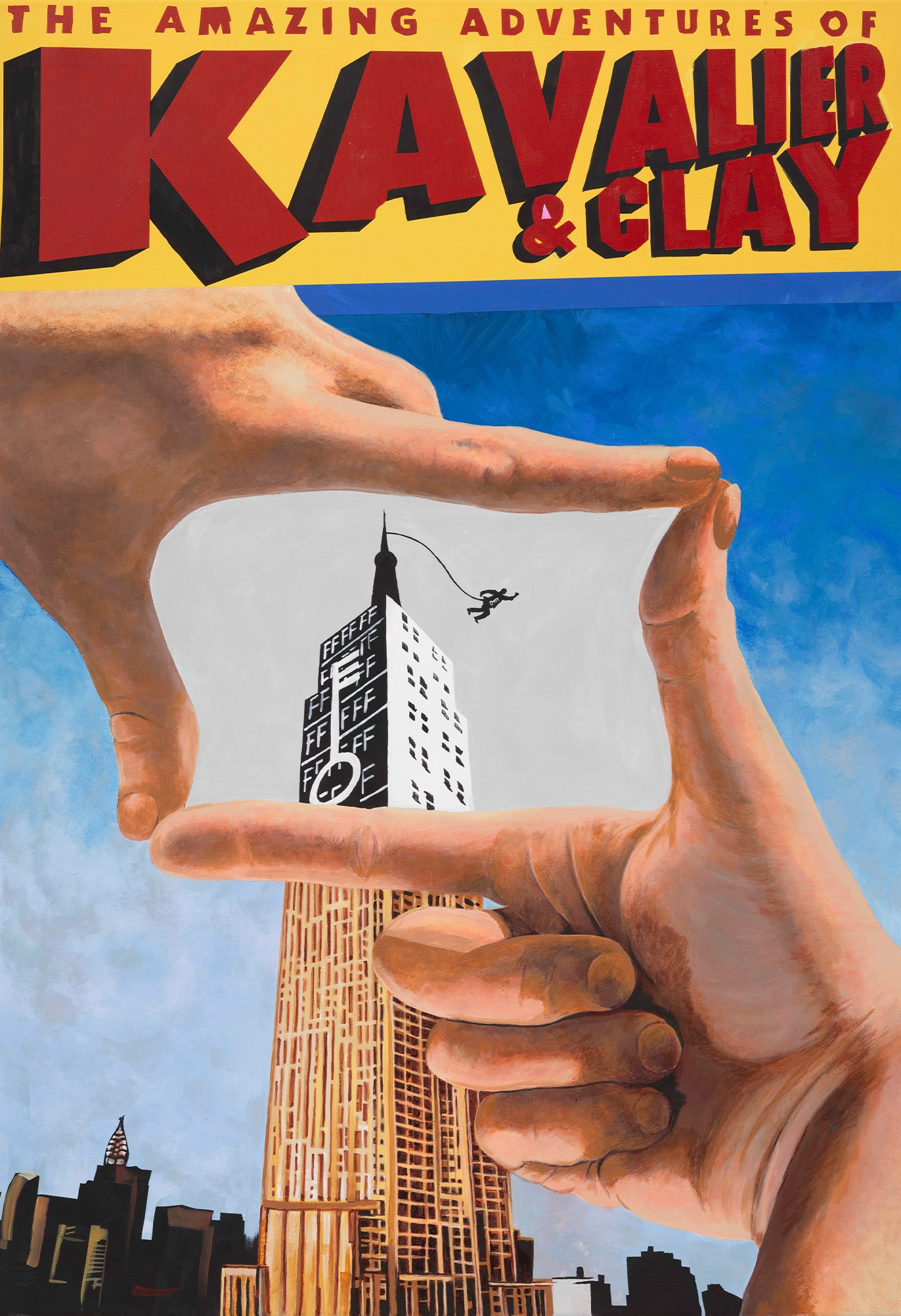
A Review of The Amazing Adventures of Kavalier and Clay

Mason Bates – Gene Scheer – Metropolitan Opera New York

The amazing—and slightly bonkers—adventure of composer Mason Bates and librettist Gene Scheer, condensing Michael Chabon’s 2001 Pulitzer prizewinning 700-page doorstopper of an extravaganza novel, The Amazing Adventures of Kavalier and Clay, has delivered a compelling new drama for the opera stage.

No less a stage than New York’s Metropolitan Opera, where the 2025/2026 season kicked off to yet another Peter Gelb controversial opener. The Met Director knows how to raise the blood pressure of the Met’s trad subscribers.

Kav and Clay (forgive the abbreviation) is similarly laden with topical tropes—antisemitism, immigration, sexual intolerance, the struggle with Jewish identity, disregard for the rule of law. Challenging enough in the late 1930s. Still testing us today.

On with the show. Kav and Clay is set in three worlds. The production came courtesy of Bartlett Sher, a gifted director who spans Broadway and opera stage alike.

He shaped three very distinct environments. A dark and sinister Prague, an upbeat and pulsing late1930s New York, and the colorful comic book world in which the opera’s fictional hero, The Escapist, biffs Herr Hitler and assorted goons. Then, comic book heroes were a reading rage. Now, they get elected.

The set lighting and design, crucial elements of this production, were provided by 59 Studio, New York and London. Their illuminated white-line drawings of trains and a transport ship, The Ark of Miriam, filling the stage like flowing water were wonderfully evocative. As was the sinister set of the Prague station with huddled prisoners awaiting their train to God knows where. Kav and Clay served up a visual feast.

Set movements were slick as we moved from world to world, sometimes merging. At first grounded in conventional fixed scenes in Act II, we moved into surreal surroundings. But for that to have meaning, the story must be told.


Act I

It’s the early days of World War II. Before Pearl Harbor and America’s entry into the conflict. Dark threatening Prague. Bullied by the Schutzstaffel, Joe Kavalier escapes, leaving behind his parents and teenage sister, Sarah.

He arrives in Brooklyn to live with cousin Sam and Aunt Esther. He plans to make enough money to bring his family to the United States, to escape German occupation.

Joe is a gifted artist, amateur magician and escape artist. Sam works in a toy and novelty company. He’s a wisecracking writer. They team up to create a comic-book superhero to rival Superman, The Escapist. I didn’t rate the large, illuminated gold key on his chest. Not quite the discrete Superman “S” costume!

Joe and Sam created their superhero with a super-purpose—to urge Americans to join Europe’s fight against the Nazis. Sam’s boss, Mr. Anapol, takes a chance on them and backs the venture. 

The Escapist becomes a hit, spawning a radio show. Today, it would be a podcast. Attending a broadcast, Joe and Sam encounter their separate fates.

Sam meets Tracy Bacon, the actor who plays The Escapist, to whom he is sexually attracted. Joe meets Rosa, a talented artist who works for the Jewish Children’s Fund, which ferries refugee children from Europe to the U.S. on its own ship, The Ark of Miriam.

There follows a hilarious scene, when Joe and Rosa attend a gallery show, a fundraiser for the Jewish Children’s Fund, where Salvador Dalí makes a guest appearance, entertaining the crowd in a surreal diving suit and helmet. After nearly suffocating, the mustachioed artist is rescued by Joe to acclaim from the gallery crowd.  

Joe and Rosa, thrown together by the Dali incident, discuss arranging for his sister, Sarah to escape Prague on The Ark of Miriam. They fall in love.

Back in Prague, Joe’s mother is captured by the Germans and sent to a camp. Joe’s father is taken in a raid led by Gestapo Commander Gerhard. Sarah narrowly escapes.

Joe and Rosa’s relationship blossoms, and Rosa confirms Sarah’s passage on The Ark of Miriam. Meanwhile, Sam and Tracy have fallen for each other. They share a Shabbat dinner with Sam’s mother, toasting the imminent arrival of Sarah’s ship in New York.

They spend a romantic night atop the Empire State Building—shades of King Kong. Their plan is to train west to Hollywood to capitalize on The Escapist brand.

The idyll is ruined when they discover a newspaper headline reporting The Ark of Miriam has been sunk by German torpedoes. No survivors. Sarah is lost. They race to tell Joe, who is performing his magic act at a benefit for the Jewish Children’s Fund. Rosa tells him the news. Before a room filled with dinner guests, he has a breakdown.

Act II

Joe loses the plot. He hides out in a warehouse and imagines a surreal confrontation with nemesis, Gerhard. Rosa, distraught, hasn’t heard anything from Joe for weeks and can’t find him anywhere.

Acting on a clue, she visits the warehouse and finds a makeshift studio Joe set up but trashed, plus evidence he enlisted and shipped out.

Sam, meanwhile, is attending a going-away party for Tracy, who joined the military. The party turns out to be an exclusively gay affair, and when raided by the FBI, Sam hides while the others are arrested.

A lingering FBI agent discovers Sam and sexually assaults him. His silence is the price of liberty. Rosa finds a broken Sam, who can only say he is finished: He’s convinced he will be alone for the rest of his life.

Rosa is suffering her own crisis. Not only has Joe disappeared without a farewell, but she’s pregnant. Sam offers to marry her and raise the child as his own. Rosa agrees, and they begin a new life together, based on the compromises forced on them by circumstance. A read across to the devastating choices forced on their persecuted European confrères.

Rosa fills in for Joe, drawing The Escapist—and adds a character of her own. Luna Moth, inspired by a story Joe made up for Rosa, reinforces the success of the comic strip.

Joe turns up on a European battlefield, where he finds Tracy. Tracy shows Joe a letter from Sam telling Tracy to stop writing to him. His new circumstances with Rosa forbid it.

Tracy learns Joe has never opened any of the hundreds of letters Rosa has sent him and doesn’t know he and Rosa have a child.

Tracy is killed, and Joe is devastated by yet another loss. He starts opening and reading Rosa’s letters. One letter contains Rosa’s drawing of Luna Moth. And at this point we know we are really in a world of symbolism.

Luna Moth appears to Joe—a shimmering suspended dancer—then guides him out of the battlefield. Miraculously she leads him to the house on Long Island where Rosa and Sam now live. Outside the door, sister Sarah’s ghost appears and gives Joe the final push. Get on with it. Re-enter your life!

She leads Joe to meet his young daughter, also named Sarah, and to reunite with Rosa and Sam.

Once Joe and Rosa are reunited, Sam, in an act of complete selflessness, boards a train headed for California to begin writing The Amazing Adventures of Kavalier & Clay.


Onto the music. Bate’s score was filmic, accompanying the action rather than driving it, as would a more conventional operatic score. Apart from some stand-out dramatic moments.

One was a soulful rendering of Ani Ma’amin, a song of hope created by a box-car prisoner en route to Auschwitz and sung by the doomed as they filed out to their inevitable deaths.

Bates and Scheer went to great lengths to explain their project to the American Jewish community, as this discussion with Congregation Beit Simchat Torah bears witness. They knew they had to tread sensitively.

But with so many moments of tension and high drama in the action, I was left with a feeling the score was simply not up to the challenge.

In a debut performance, Andrzej Filońcyzyk, a Polish baritone, sang Joe and was pushed to the limits of his vocal register. Rosa, Sun-Ly Pierce, an American-Chinese mezzo soprano was my stand-out. Her clarity of delivery, on stage empathy, and determination “to keep buggering on,” as Churchill would have advised, grabbed my attention.

Also excellent was Myles Mykkanen who sang Sam. The Finnish-American tenor had the power to capture the real tragedy of his character. I was left thinking it was a pity he didn’t have a wider musical palette to display his talent.  

A full list of the excellent cast can be found here. Maestro Yannick Nézet-Séguin graced the pit.

Kav and Clay received mixed reviews, none more negative than in The New York Times. Joshua Barone, the paper’s critic du jour, started off with a weird assertion, “Opera benefits from simplicity” and went on to pan the production on the grounds that the book is complex and the precis of Scheer’s libretto cannot do it justice.

Now, I assume Mr. Barone goes to the opera quite often, but what “simple” plots is he seeing? To grab a handful from the bran tub, Mozart’s The Marriage of Figaro is fiendishly complex, with subterfuge, mistaken identity, and the wrong person jumping out of a window being only the most obvious twists and turns.

Contemporary works like Grounded may be light on Da Ponte comic farce, but they weave subtle moral webs of conflicting loyalty—in love and war—and demand close attention. Then, Mr. Barone considers Wagner’s Ring Cycle a tale to be told in minutes. I seem to remember it taking seventeen hours spread over four days!

I felt the moral arc of each of the characters, which define the morality tale of Kav and Clay, were deftly delivered in Scheer’s taut libretto. Give me three hours of watching the opera instead of four days reading the book anytime.

On the Saturday before the Sunday opening I was enjoying what I thought was a discreet lunch at Toscana, East 49th Street. Vocally unaware in the quiet restaurant, gabbing about Kav and Clay, I caused a lady with bat-like hearing at an adjacent table to approach brandishing a book. Fearing assault, I was relieved to discover it was an original, well thumbed, Chabon edition from 2000.

“I heard it’s now an opera, for heaven’s sake. Should I go? I just love the book. It must be very long.”

“The good news is it’s shorter. I wouldn’t miss it,” I opined.  

Clearly, news had hit the streets and potential opera audiences were flocking. At least to Midtown Italian restaurants. When I reached Lincoln Plaza next evening, for the first time in recent memory I was greeted by folk sporting pleas for spare tickets on cardboard signs. Inside I found a full house.

Amazing! Almost as amazing as The Adventures of Kavalier and Clay. This year’s Met season is off to a flying start.

Five Southern Horror Books to Haunt You

There’s a breeze in the air, the leaves are transforming into rich auburns and deep mahoganies, and pumpkin spice greets you at every corner. It’s officially fall, and spooky season is upon us, which means it’s time to grab your favorite blanket and settle in to relax with a good horror book. Whether you like slashers, monster fics, or ghost stories, Southern horror hits differently.

Southern horror is a genre of horror set in the Southern United States, with themes centered on culture, trauma, folklore, and history. But what really makes them so creepy, and fascinating, are the small towns and wide-open spaces. So, if you’re looking for some spooky chills to go with the brisk weather, read on for a list of five Southern horror novels that showcase the variety and range within the genre.

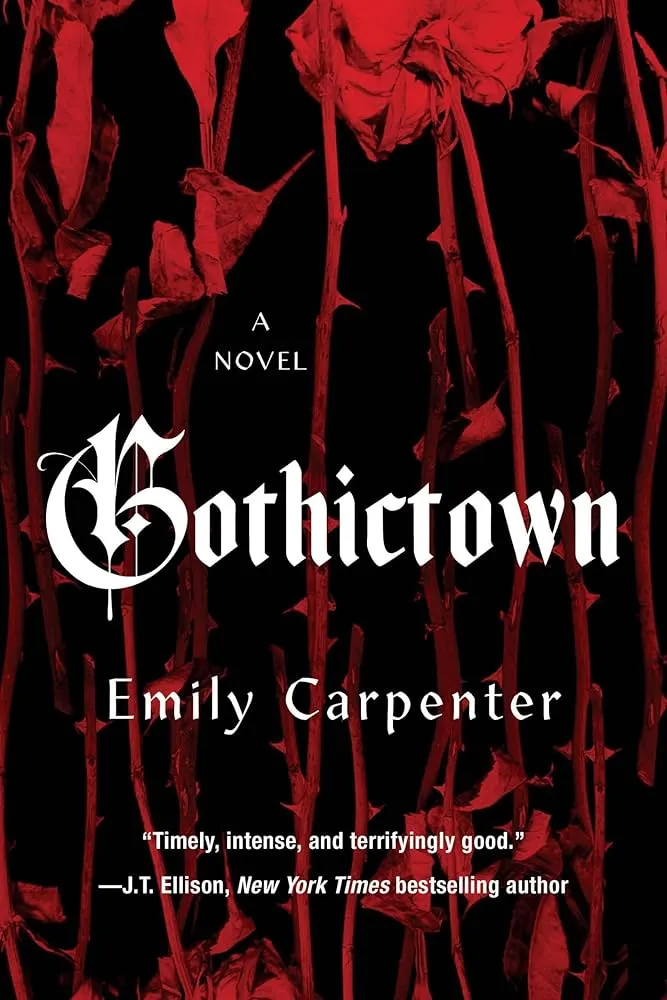
Gothictown by Emily Carpenter

We hear all about the scary parts of living in a big city, but small towns aren’t as innocent as they may seem. Gothictown by Emily Carpenter is a perfect example of that. Billie Hope, a restaurateur in New York, is given the opportunity of a lifetime when she gets an offer to purchase a Victorian home in Juliana, Georgia.

Billie jumps at the chance to move herself, her husband, and her daughter away from the struggle of the New York hustle. At first, it seems like your typical southern town, full of “bless your hearts” and southern hospitality. However, as things usually go in horror stories, it ends up being too good to be true when she discovers the town’s sinister secrets.

Stuck in a town run by an increasingly authoritarian group of town elders who descended from the founders of Juliana, Billie and her husband fight while nightmares plague her. As the story progresses, Billie is forced to face the reality that she may have doomed her family and trapped them in the not-so idyllic town even as her grip on reality falters. Gothictown is full of plot twists and family secrets that will leave you in shock days after.

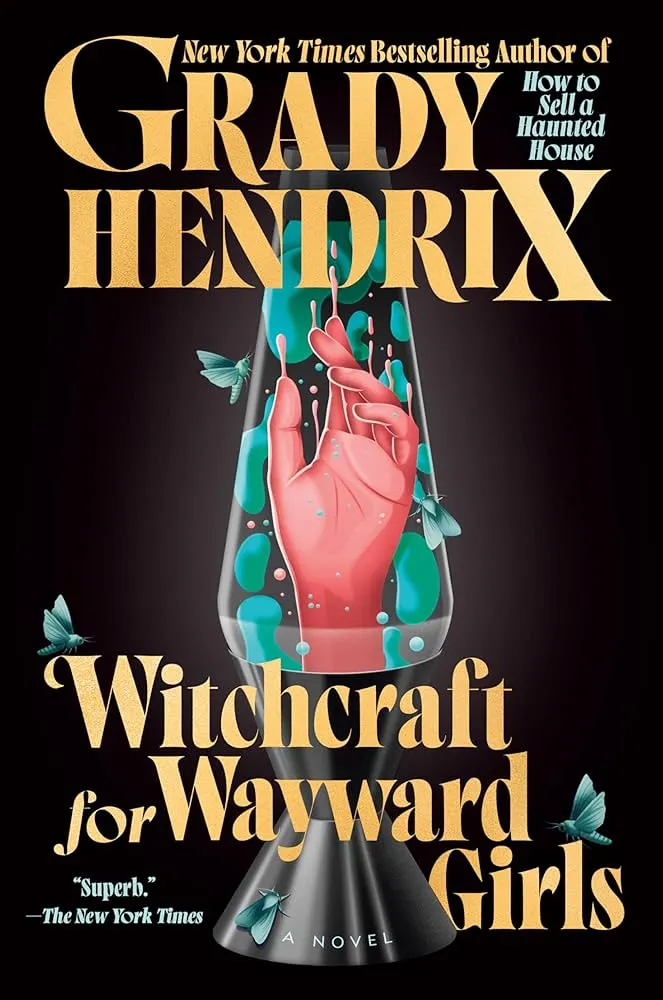
Witchcraft for Wayward Girls by Grady Hendrix

Witchcraft for Wayward Girls by Grady Hendrix combines teen angst with the occult as it follows Fern, one of twelve girls sent to Wellwood House in Florida, during the 70s.

Wellwood House is a maternity commune where pregnant teenage daughters are sent and held against their will until they give birth. They’re stripped of any independence by the adults of the commune, but things take an interesting turn when Fern is given a book about witchcraft.

Witchcraft for Wayward Girls tugs on the heartstrings as the girls struggle with teen pregnancy, abandonment, trauma, but we’re able to see them become stronger through each other and, well, witchcraft. The girls learn with power comes a price, and dealing with dark magic always has conditions. Hendrix portrays the struggles and joys of girlhood as we get to know the complex characters and adds a dash of supernatural themes to keep you on the edge of your seat.

Red Rabbit Ghost by Jen Julian

Red Rabbit Ghost is a LGBTQ+ horror-mystery debut by Jen Julian. Jesse Calloway is determined to leave his hometown in North Carolina far behind, but after receiving a mysterious message about his mom’s unexplained death eighteen years ago, he finds himself returning.

Jesse is thrown into a chaotic storm of magic, supernatural forces, secrets, betrayal, and dangerous ex-boyfriends as he goes back to uncover the truth, ready to be free of the obsession his mother’s death has become. At the center of this mystery is Alice, who seems to think Jesse holds the answers to her own family’s dark history. The pair team up, albeit begrudgingly, and soon discover Blacknot is not what it seems.

Red Rabbit Ghost is a dark fantasy Southern Gothic that captures the scars we might carry from our hometowns as we grow up and move forward. The weight of unfinished business pushes people to the brink as Jesse fights for survival and answers. If you love atmospheric horror that leaves you thinking about it months after, Red Rabbit Ghost is for you.

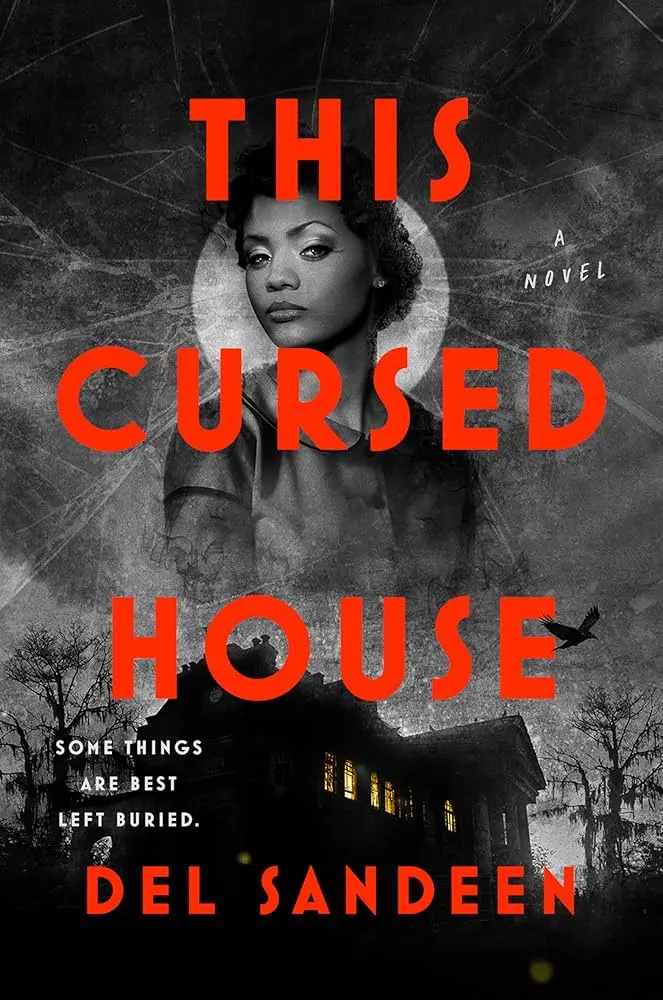
Children of Solitude by Michael G. Williams

Written by Michael G. Williams, Children of Solitude combines folklore, haunted houses, humor, cosmic horror, and grief. Another LGBTQ+ book set in North Carolina, Children of Solitude offers readers a classic ghost story with a twist.

Reginald Voth returns to his ancestral home following his mother’s death but quickly realizes something isn’t quite right, in the house or the neighborhood. Between the haunted house and obsessive neighbors, Reginald finds himself caught in the middle of something sinister. On top of all of this, he ends up in a new fling with one of his mother’s neighbors, who also happens to be his favorite *ahem* content creator.

In Children of Solitude, Reginald battles his conflicted emotions about his mom and the ghosts she left behind. Michael G. Williams masters a tense southern queer horror story that will have you laughing and crying in the same breath.

This Cursed House by Del Sandeen

This Cursed House, Del Sandeen’s debut novel, is a historical-fiction novel set in 1962 New Orleans. Gothic horror often focuses on decay, grotesque characters, and psychological terror, which readers will get plus more in The Cursed House.

Jemma, a light-skinned young Black woman from Chicago, gets a job in New Orleans working for the Duchon family. She accepts thinking it’s a positive change in her life, only to face prejudice from the Black family members due to her being “white passing.” Worse, Jemma discovers the family is cursed, and they think she is their only hope for saving them.

The horror in This Cursed House is steeped in racism and family scandal. It explores complex concepts such as generational trauma, colorism, and internalized racism in a way that breaks them down and lays them out for readers to confront. Sometimes it’s the characters’ stories themselves that haunt the narrative.

Honorable mention: The Bog Wife by Kay Chronister.

***

Southern horror is an emotionally rich genre that immerses readers in places full of culture and history. Folklore and cryptids, combative family trees, ghost stories, and magic are at the heart of Southern Horror as characters often find themselves fighting nature and the past. If you like ghostly, slow-burning horror, then dive into Southern horror this fall.

Discover more creative works to set your reading list off right on the F(r)iction Log.

A Cliff in Norway

By the edge of a cliff in Norway,

three men are sitting on a bench:

one of them hasbegun to shout

at the man in the middle, saying

that he has made a great mistake

in publishing his book in French,

as it denotes that he has no concern

for who might understand it, even

if he has titled it Quelqu’un, as surely

he must have hoped that someone

exists to show any response to it.

But in the midst of his outburst, the man

is conquered by the other’s silence,

that offers no retort to his rebukes,

to leave him with the impression that

only that which is worth saying must

be chased regardless of its utterance.

Nevertheless, his rage, proportionate

to his veiled admiration, increases,

and with a shovel lying next to him

he strikes a sudden blow

at the man’s head, who tumbles down

the bench as if he’d been dead,

before he is thrown off the cliff.

Immediately regretting it, the man

can’t peek from the cliff peak, in fear

that he might slip to follow after him,

as he now has the feeling that he had

been witnessing his fall and not the man’s.

He rushes down a path by the cliff side,

to reach the man who is now floating

with his face down upon the surface

of the bright sea, girt by the boulders

at the feet of the cliff, on top of which

the third man verges to survey the steep

with a grim laugh that echoes through the rocks.

The man approaches the still body

to see that he’s alive and yet unable

to counter with hisstirs the lulling waves;

but by his side, upon the mantle

of strewing blood enveloping the water,

seven fishes buoy the currents to remain

immobile under his attentive gaze,

all of them shining with the glinting of

a precious stone, of different colors,

together mirroring in their array

the spectrum that revives the rain

with the arched smile of a sown rainbow

In his amazement, the man knows

that these are the seven planets, turned

into the notes that in all things are tuned,

to extricate from matter the commotion

that strings the firmament with the felt joy

of any single star reflected in the dance

according distances to resonance.

The man tries to reach out to touch

the biggest of the fish, whose shimmer

of an ignited ruby shines above

the rest, while giving them their lustre,

but he can’t grab it, and as he moves,

the water breaks in wrinkles that dismiss

the fishes from his vision.

In clear discomfort, the man turns

toward the body next to him, to see

for the first time that he’s the man

that laughed from the cliff top before,

to recognize him as his father,

who at his wonder smiles and says:

“Is this not the composition of the waters?”

14.2.XX

We were together for five years. I had never loved such a woman before. She’d braided my hair. Given me my favorite flowers. Red roses. I would accept no other color.

Three weeks ago, she left me for someone else. Older. Attractive. Better. A man.

Two days from now is my procedure and I’ll be the only one left within my memories.

I’m scavenging through the lies scratched into “love” letters and burning the clothes she abandoned. All traces of her should be gone, otherwise I’ll have a hard time recuperating after the procedure. This is not the first time I’ve had memory erasure. I’ve done this five times. The first time must’ve had something to do with my parents, then it must’ve been other women. I don’t remember. I shouldn’t remember.

After three days of clearing everything, the house seems abnormal. I tell myself that’s normal, it’ll be over soon. I browse my neglected bookshelf for something to read to heal from this exhaustion. My fingers scratch against something foreign. A black binder. It was never here before, or perhaps I never noticed it, but it’s certainly not mine. There’s nothing written on the outside of it. I flip inside to see a collection of dark maroon petals in penny sleeves, dates written on paper, tape over each one up until a month ago. My hands slow, trembling across each page until I find the first petal. I remember her confession. I remember her hiding her face with a red bouquet, failing to hide the nervous smile behind it. I remember how gentle her hands were when embracing me. I remember her nibbling on my neck when we cuddled. I remember how loud broken glasses were when we argued over her mother. I remember how our first mistake tasted like lemon candy. I remember how we walked to the edge of the school so she could cry in my arms fifteen years ago. I remember her long lashes when I looked at her from above. I remember the ache in my heart when I first sat next to her in class, and the cheeky grin on her face when she caught me looking.

I remember when I loved her.

And it was real.

A buzz shocks me out of my stupor. I pick up my phone. “Hi, this is Hermann Clinic, confirming your appointment for a procedure on the 14th?”

I look across my barren room. Then at the penny sleeves catching my tears. The ink bleeds slightly on one of the labels, spreading across the tape until it’s no longer beige.

“I’d like to cancel my appointment, please.”

I end the call and go to the storage room. Before I set it on a shelf, I place the binder against my face and close my eyes, “Thank you for having loved me.”

And I think I’m okay with that.

Made on Planet Earth

There was something to be said for Melania’s patient panel: it had breadth. She treated a wide range of traumas and living things. The latter feature of her practice got into gray territory when it came to certifications, but the lack of a certificate for each and every species she saw didn’t keep her up at night. No two patients were the same, their variety of compunctions and disorders and difficulties compelling her through their surface-level yap and garbage as she revealed the cure to whatever ailed their true and dark hearts.

That being said, she wasn’t entirely sure how the human found her. She’d thought humans had been extinct, or were at least extremely endangered, for good reason.

Still, “don’t believe everything you read” and all that, so she opened her calendar and then her door when the human walked in.

Due to her lack of experience with this type of patient, Melania focused on their name: Taylor. She offered a practiced smile and gestured to the couch across from her. Taylor sat back on their haunches, their odd mammalian limbs sifting restlessly in their lap.

They walked through the requisite caveats: introductions, safe space, get to know one another, I’m here for you and what you need.  The silence settled around them, not uncomfortable but not quite warm; Melania mirrored Taylor’s gesture of limbs on lap. A bit awkward as she had quite a few more than the human.

“What brings you here today?”

Taylor blinked. Shifted a bit, then opened and closed their mouth, reminiscent of a prehistoric fish. What an unattractive set of teeth, Melania observed.

“It’s just, there’s a second-hand store that opened down the street from me. I walk by it every day to go to work.”

A bizarre turn already. No mention of family trauma yet but Melania knew they’d get there eventually. They always did.

“Anyway, it has, like, rare things in it? Old things? Borderline illegal things now? Like, I don’t know if you remember when they used to make handbags out of…” Taylor ran their phalanges over their bare arms.

Oh. Oh dear, Melania thought. 

“Anyway, I made the mistake of going in.”

Oh dear, oh dear.

“Like before, their existence took up zero brain space and now, it’s all I think about.”

Melania could not offer lobotomy or shock therapy. Nor could she provide a drug to make Taylor forget what they’d seen.

“I see,” Melania said panicking internally.

There was no guidebook for this, but there was always visualization. So, she asked Taylor for a happy memory, perhaps with other humans, perhaps at a mall. Humans loved malls.

“There’s never been anyone else,” Taylor said. “I’m the only one left.”

To this, Melania had no answer.