An Interview with Cy Pruitt
Words By Cy Pruitt, Interviewed by Melissa Chew
How did the concept for F*ck-Up’s Guide to Falling in Love come to fruition?
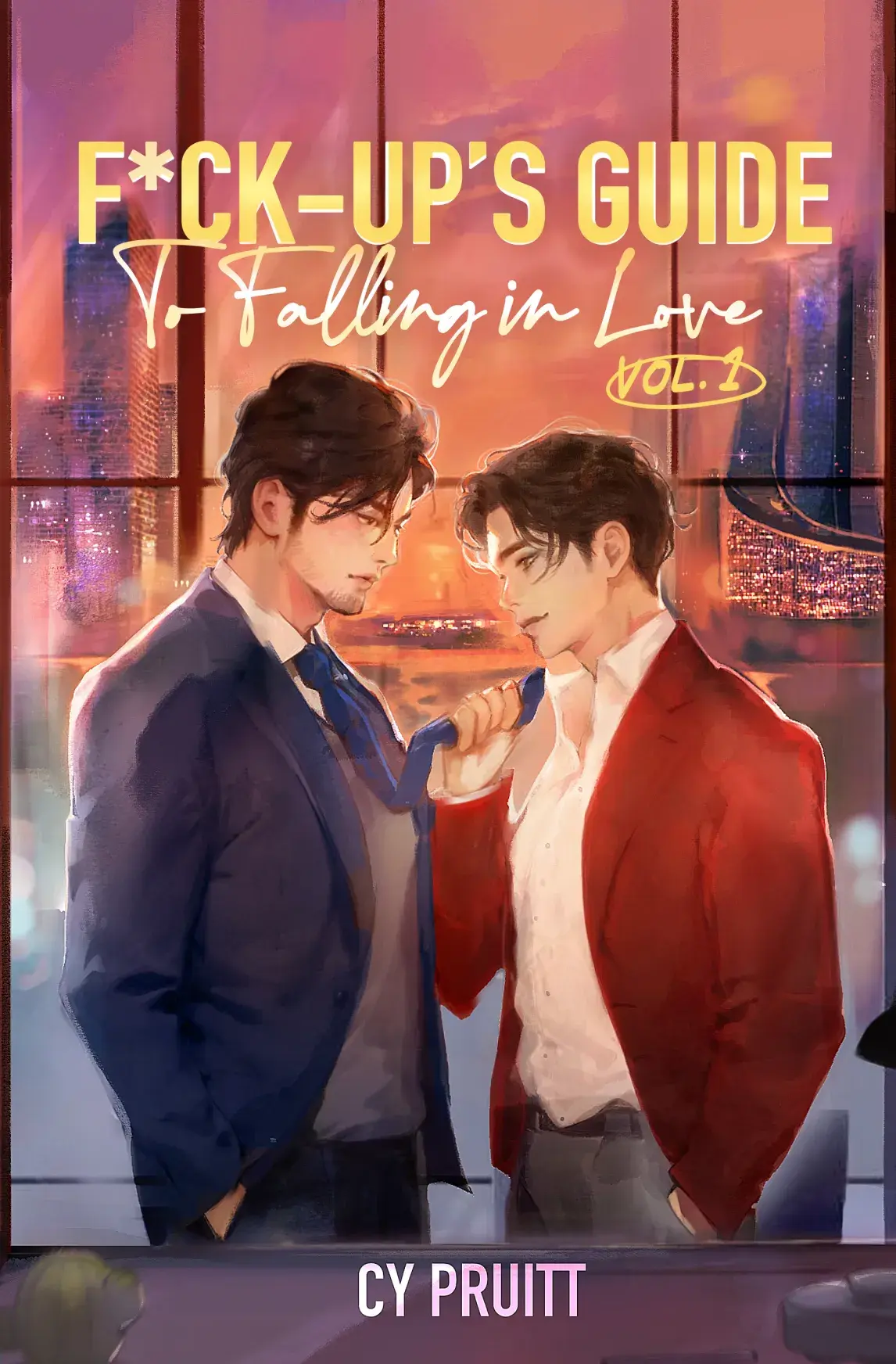
Writing started as reading—I was reading a lot of novels I loved, but I couldn’t find myself in. In particular, I was looking for works where the first love wasn’t the last, and that didn’t make the last any less beautiful. I looked for so long that it ended up appearing in my mind instead, so I wrote it out and discovered a dedicated group of readers who had the same desire.
The cast of F*ck-Up’s Guide to Falling in Love goes through major transformations throughout the course of the story. Was there a favorite relationship and character you found yourself unexpectedly invested in?
Wei Qiwan was unquestionably my dark horse. Originally, his whole story was just about Wei Qing, but as he grew, his emotional life did too. Although he certainly has his flaws, I think seeing him become happy through this second chance was almost as important as Wei Qing’s transformation. His romance with Long Shouning is unquestionably my favorite unplanned addition.
Within your author notes, you highlighted how some aspects of the plot were different from how you envisioned it originally. Did these changes occur during the planning stage or while writing the draft? How do you adapt to these changes in your plotline?
Most plot changes occurred during the draft, while some occurred based on reader feedback while posting. One of the benefits (and dangers) of serialization is that you get feedback as you post, and I was lucky I had some excellent readers to guide me with their comments and help me embrace the idea of characters as living, changing individuals.
Your fresh writing style brings out the characters and story in such a heartfelt and immersive manner. How did your present style emerge? Are there other styles you wish to experiment with?
For me, the inner world is the true story, and the outer world is just what propels it forward. (I think I have to blame Dante for that.) When reading, I gravitate towards indulgent, elaborate descriptions, and in writing, I have the same compulsion—I want my readers to be able to melt into not just the scene, but the hearts of the characters inside it. I doubt I will ever escape this style, but for the sake of word counts, I would like to learn how to say less with more and leave it to the reader’s imagination.
F*ck-Up’s Guide to Falling in Love shines light on the importance of belonging, family, and authenticity. With your dad being a huge supporter of your writing career, were there moments in the story inspired by your experiences with him? Were there any moments dedicated to him?
Growing up, I had the habit of deleting all my works as derivative, and it was only my dad and piles of Joseph Campbell books that stopped that. My pen name is a riff on his last name because I really wouldn’t be a writer without him, but his influence is more subtle when it comes to actual story beats. I will say that Lord Twelve, who enables the story but is mostly off-screen, has a lot in common with my dad. When I picture him exasperated with these silly humans but still conveniently arranging their happiness, I think of my dad.
As with Wei Qing’s and Yue Fei’s story, writing realistic romances and characters with happy endings is the cornerstone of your work. Why is this important to you?
The world is a hard place to live in, and perfection is impossible to attain. We all make mistakes, and we all face injustices out of our control. I want stories where we see familiar characters making familiar mistakes but give them the power and luck to fight back. Fairy tales tell children dragons can be killed; I hope my romances show readers love can be found, and you don’t have to be perfect to deserve it. You just have to be a little brave and treat those struggles as your prologue, not your end.
As an author with a day job, what advice would you give to writers trying to balance those two roles while thriving in both careers?
Find a good boss? (Mine actually bought Guide to Falling and would read it at work, which was hilarious and embarrassing given the content). But on a more serious note, you have to love your characters and consider yourself a writer. Even if it’s just a few words a day, think of your story as a pet you love and want to see grow. Even after a long day at work, you have to feed your cat and play with it a little, right? It’s non-negotiable. Your story is the same. Feed your story. Pet your story. Treat it as self-care and be proud of what progress you make.
How and where can we support you? Is there anything readers can look forward to in the upcoming year?
All my links are available on my modest little author’s site, cypruitt.com. If you’re local to New Orleans or just stopping by, I’m in Blue Cypress Books and also sell via Amazon and my site. This year, I’m hoping to finish a third book with a supernatural edge but a familiar brand of romance!